
Bitcoin's Critical $60.4K Support Zone: Weekly Market Outlook and Five Key Factors
BTC reached its strongest position in almost two weeks during the weekly close, though market analysts indicate that a decisive move past $65,000 remains essential for a genuine trend reversal, according to the most recent Bitcoin price analysis.

As the second week of June commences, Bitcoin (BTC) hovers near two-week peak levels, with market participants anticipating sustained bullish momentum.
Key points:
- BTC's price movement focuses on adjacent liquidity pools while one trader identifies what they consider the "most important" support area that must be maintained moving forward.
- Performance metrics from US equity markets provide analysts with grounds to anticipate continued positive momentum alongside "record" levels of retail investor risk appetite.
- Fresh warnings suggest a potential stock-market downturn remains possible, though Bitcoin appears to have already factored in such potential consequences.
- Data tracking exchange inflows demonstrates diminishing panic behavior among both retail participants and major holders.
- Sentiment across cryptocurrency markets has climbed to monthly peaks, approaching an exit from "extreme fear" territory.
Critical Bitcoin support level identified as bulls target $64,000 territory
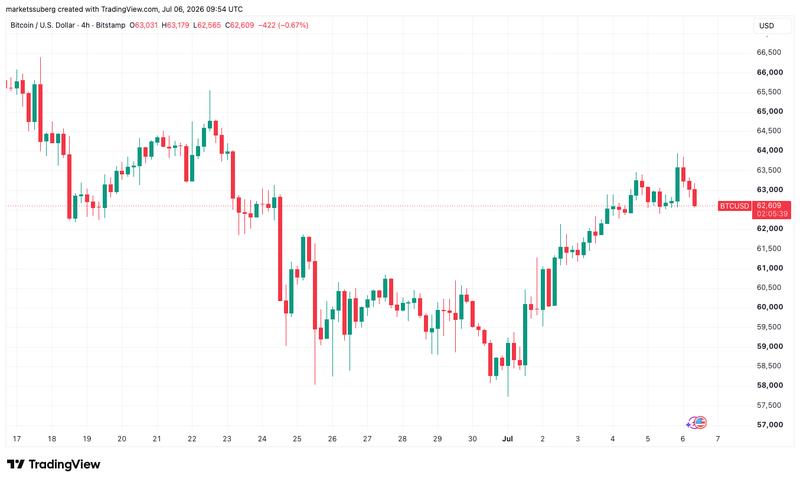
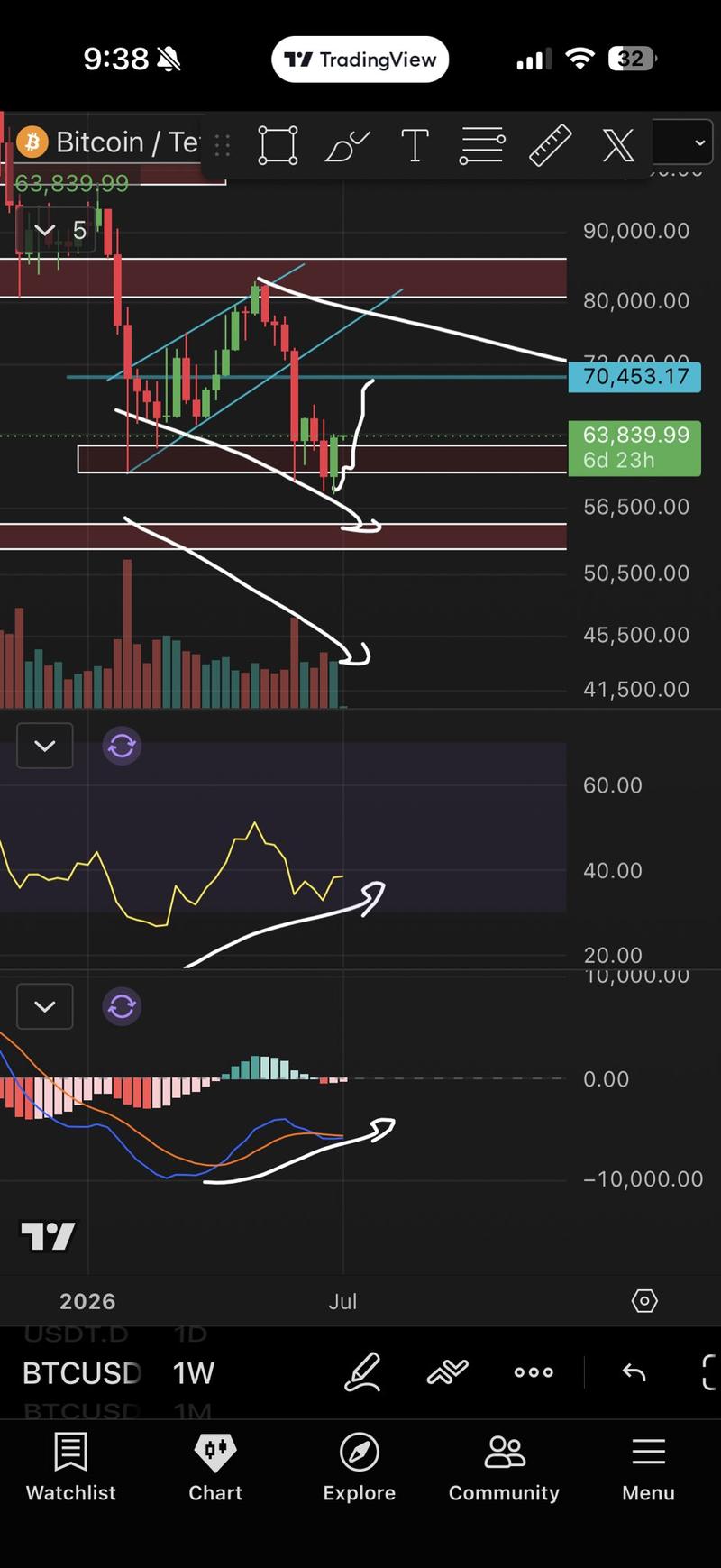
Pressure on short positions remained intact through Bitcoin's weekly close, with prices touching $63,960 — marking the highest point since June 23, according to TradingView data.
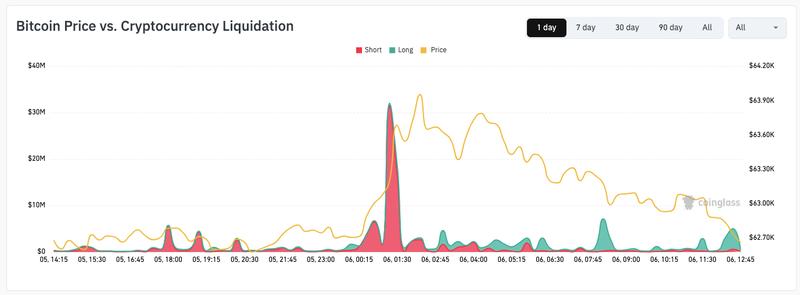
Cryptocurrency short liquidations totaled slightly above $100 million during the 24-hour period leading up to publication time, according to CoinGlass reporting.
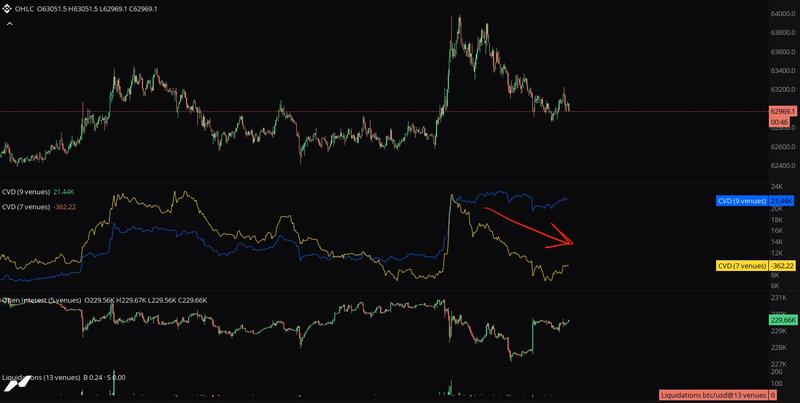
Analyzing shorter timeframes, the X account Exitpump was among the voices attributing these price movements to liquidity-seeking behavior.
"Seeing aggressive selling from spot markets, spot CVD (yellow) trending down while perps CVD (blue) is flat," their Monday report stated, making reference to cumulative volume delta across exchange order books.
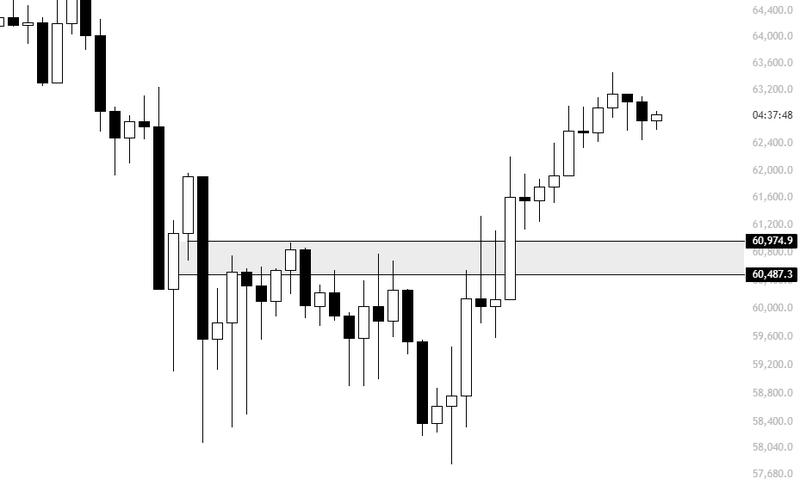
Should a downward reversal materialize, trader Killa identified the $60,400 to $60,900 range as Bitcoin's "most important" area.
"If we cannot hold this price region on a revisit, I'm afraid we are going to trend directly to the lows again. Something to watch out for next week," the analyst communicated to X followers.
Cointelegraph's ongoing coverage indicates that market participants continue to anticipate Bitcoin's bear-market bottom has yet to materialize — notwithstanding an increasing number of signals pointing toward bullish trend reversal.
Trader Roman, who had maintained a bearish stance on BTC/USD, expressed optimism regarding longer timeframes during the current week.
"Still looking excellent to continue our reversal to see higher prices in the interim," one X post communicated.
"I still have a feeling we put in one more macro low before the bottom is officially in, but there are dozens of macro reversal signs all over HTF."
Record-breaking levels observed in retail risk appetite
The diminishing correlation between Bitcoin and equity markets draws attention this week as US stock futures opened higher following the holiday weekend break.
While BTC/USD achieved a climb to nearly two-week highs, Nasdaq 100 futures registered a 1% gain as market analysts maintain their bullish perspective on the broader US economic outlook.
"But the S&P 500 trading within a bullish continuation pattern and has been finding support at a key level."
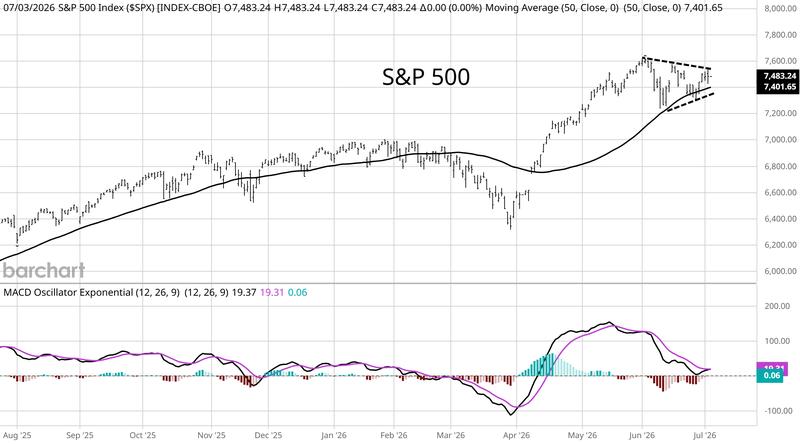
Mosaic further noted that the typical stock "has been rallying to new record highs."
"That includes the equal-weight S&P 500, small-cap stocks with the Russell 2000 Index, and the NYSE advance/decline line. New highs minus new lows across major exchanges are jumping higher as well," the firm observed.
According to Cointelegraph's previous reporting, recent inflation data and labor-market statistics from the US contributed to moderating market expectations regarding hawkish Federal Reserve policy during the previous week.
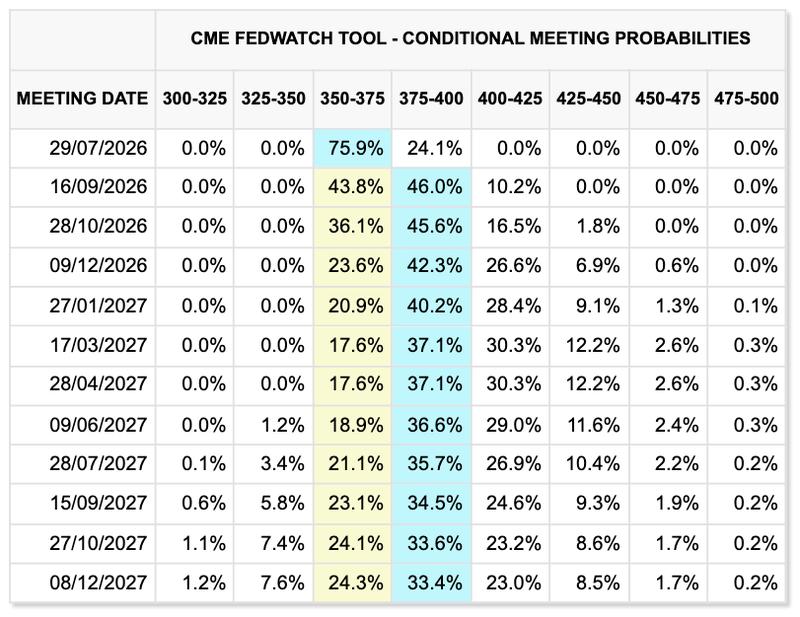
Current projections from CME Group's FedWatch Tool indicate the Fed will maintain interest rates at existing levels throughout both July and September.
An additional potential macroeconomic catalyst for Bitcoin emerges from retail investor appetite for risk exposure — notwithstanding this group's withdrawal from crypto markets throughout the current year. Through options data analysis, trading resource The Kobeissi Letter characterized retail risk appetite as residing "at record levels."
"Retail demand for short-term options has never been higher," their X report stated.
During the upcoming week, the Fed plans to publish minutes from its June meeting, during which it similarly maintained rates unchanged. Market participants will also process Purchasing Managers Index (PMI) figures, alongside additional employment statistics.
"We expect another volatile week ahead as markets brace for earnings season," Kobeissi stated.
Alerts issued regarding potential stock market correction before Midterm elections
With an eye toward future developments, not every market participant maintains confidence that the ongoing equity bull market will persist. Andre Dragosch, European head of research at cryptocurrency asset manager Bitwise, stands among the skeptics.
"What if there is a bigger stock market correction right before the Midterms?" he posed in Monday X posts, referencing the approaching US elections.
Dragosch highlighted recent data from the MacroQuant Equity Risk Model produced by macro analytics firm BCA Research. This indicator, he cautioned, was "flashing a bear market warning signal."
An accompanying visualization drew parallels between current measurements and those last observed during late 2021, when Bitcoin achieved the peak of its preceding bull market.
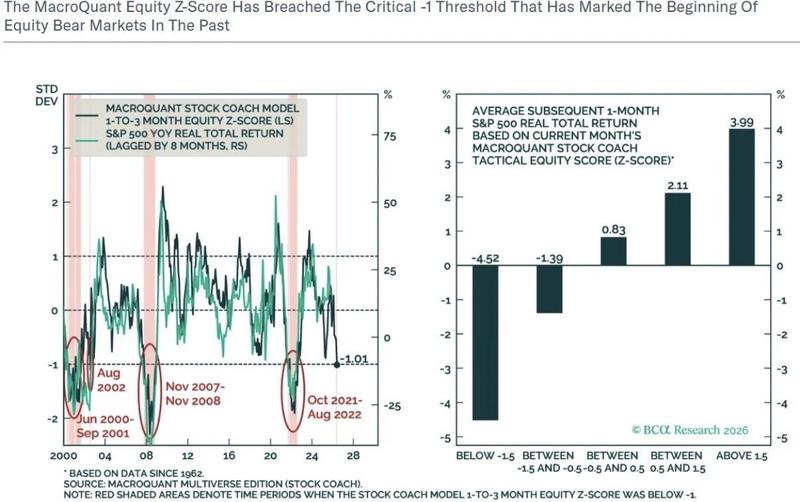
In an extended X post from the previous week, Dragosch nevertheless argued that cryptocurrency markets had already incorporated much of the worst-case scenario that might impact macro conditions going forward: an equity market decline and a US economic recession.
"In other words, even if a AI crash and a subsequent US recession materialized, much of that pain appears to be already reflected in Bitcoin prices, which points to reduced downside from here," he concluded.
Dragosch assessed Bitcoin as having a "decent chance" of surpassing the Nasdaq "on a relative basis over the coming months."
Exchange inflows decline led by whale activity
Fresh data demonstrates that Bitcoin investors substantially reduced selling activity during June's second half — even as prices established new multi-year lows.
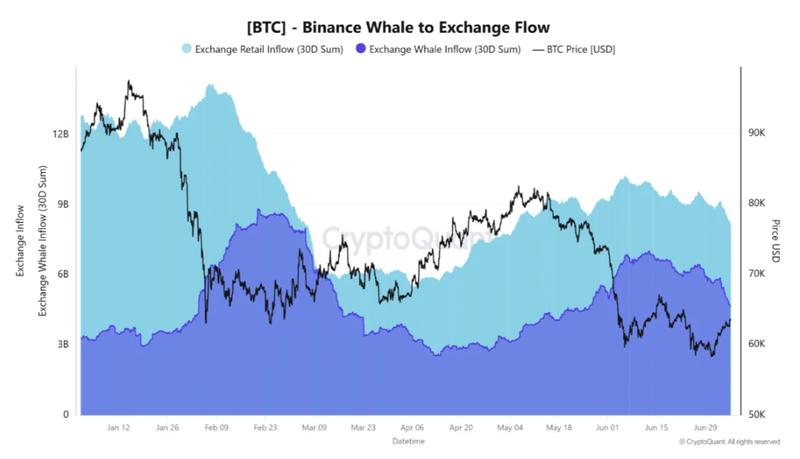
Through a QuickTake blog post, onchain analytics platform CryptoQuant verified that exchange inflows had diminished from both retail and whale investor segments.
"Bitcoin whale activity on Binance has cooled sharply since mid-June, with the rolling 30-day value of whale inflows falling by nearly $2.4 billion," contributor Amr Taha verified.
Retail investor inflows exhibited a more gradual decline trajectory, decreasing from $10.02 billion on June 12 to $8.2 billion on July 6.
"Whale inflows fell at nearly twice the rate of retail inflows, reducing the relative role of large holders in exchange-bound Bitcoin supply. Meanwhile, the gap between retail and whale inflows widened from about $2.98 billion to $3.55 billion," Taha elaborated.
Previously, Cointelegraph documented improvements in whales' overall market conviction surrounding the price lows.
CryptoQuant emphasizes that exchange inflows do not provide a foolproof indication of investors' selling intentions.
"The key question now is whether Binance whale inflows stabilize around the current $4.65 billion level or continue moving lower," Taha concluded.
"A further decline would reinforce the view that large Bitcoin holders are becoming less active on the exchange compared with the retail cohort."
Cryptocurrency market fear showing signs of improvement
Bitcoin's moderate recovery proved sufficient to substantially elevate crypto market sentiment during the current week.
Current measurements from the Crypto Fear & Greed Index indicate that collective sentiment stands on the threshold of departing "extreme fear" territory for the first occasion in more than one month.
Fear & Greed registered 24/100 on Monday, representing more than double its reading from early July.
"That's a clear improvement from recent lows. But the market is still in Extreme Fear," trader Master of Crypto commented on X.
"Fear is easing, not gone."
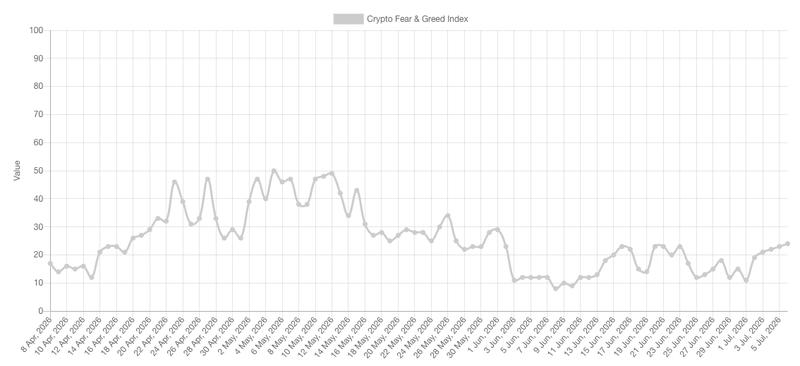
Functioning as a lagging indicator, Fear & Greed typically reflects existing market behavior shifts after they occur. Although the Index derives its calculation from multiple factors, it lacks predictive capabilities regarding future trend persistence.
Within his most recent analysis released during the current week, commentator and blockchain advisor Anndy Lian contended that Bitcoin bulls must support their optimistic outlook through concrete price movements.
"A successful breakout above that US$65,000 threshold would open the door to a broader test of the 100-day moving average, which currently hovers near US$69,500," he wrote.
"Conversely, failing to sustain the current momentum carries severe downside risks."