
Bitcoin faces headwinds as US bond yields surge, Iran conflict escalates, and inflation concerns mount
A combination of declining technology sector valuations and climbing Treasury yields has triggered a flight to cash, blocking Bitcoin's path to bullish price action.

Key takeaways:
- Market participants liquidated gold holdings and bond positions in favor of cash reserves as conflict-induced oil price surges and inflationary pressures prompted defensive positioning.
- Climbing yields coupled with a 20% probability of interest rate increases point to restrictive conditions ahead, exposing Bitcoin to vulnerability against a backdrop of expanding US debt.
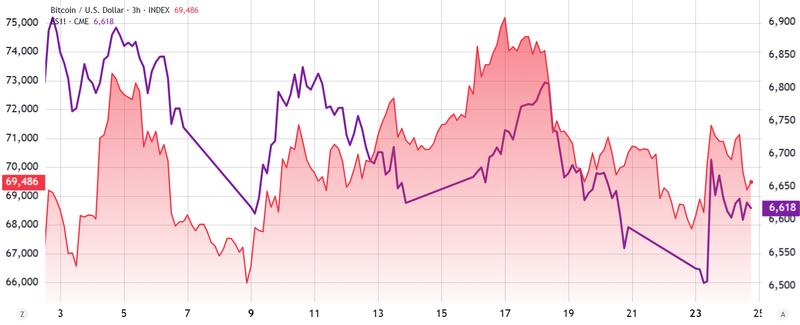
On Monday, Bitcoin (BTC) once again tested the $67,500 support threshold, a decline that occurred simultaneously with gold experiencing its most severe price correction in more than five decades. Concerns about an extended military conflict in Iran combined with inflationary consequences from oil prices sustained above $85 compelled market participants to reduce exposure to risky assets.
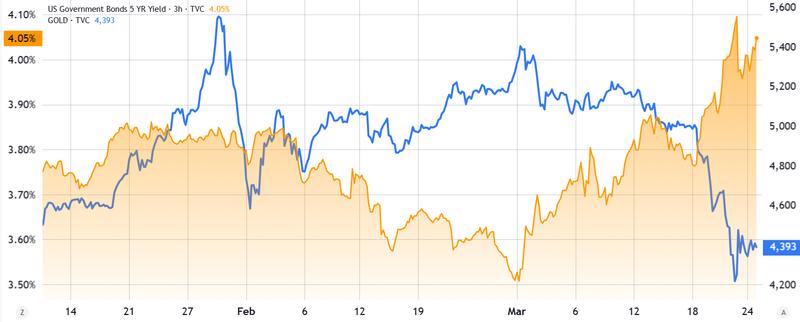
Throughout the same timeframe, US Treasuries experienced significant selling pressure, indicating that market participants were rapidly accumulating cash holdings. The US 5-year Treasury yield climbed to 4.10%, reaching its highest level in nine months as investors demanded improved compensation for risk. As the S&P 500 declined to its weakest level in more than half a year on Monday, the data pointed to a widespread scramble for liquid assets.
Liquidity takes priority during economic turbulence as Bitcoin faces additional downside pressure
Market participants seemed to be accumulating cash reserves either to offset recent portfolio losses or to prepare for additional declines throughout risk-sensitive markets.
The continuing military engagement in Iran drove oil valuations beyond $90, generating inflationary headwinds. According to a report from the Wall Street Journal, the US intended to send approximately 3,000 military personnel to the Middle East region as a response to Iran's strategic position regarding the Strait of Hormuz. A portion of the selloff in precious metals was probably connected to diminishing market expectations for accommodative US monetary policy adjustments in the immediate future.
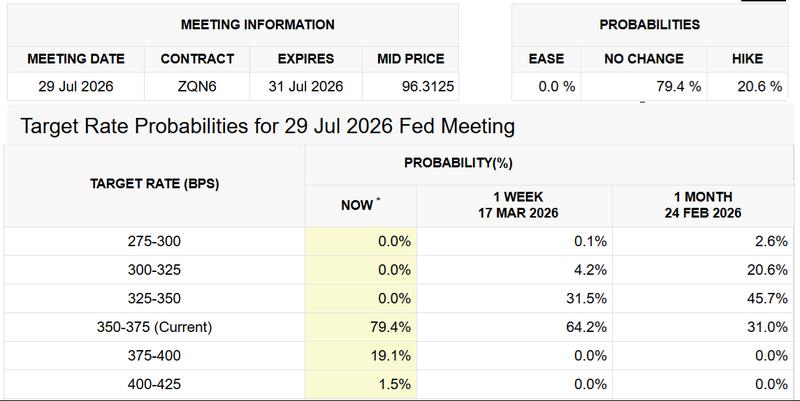
Futures markets for bonds indicated that the likelihood of the Federal Open Market Committee (FOMC) raising interest rates by July jumped to 20.5%, a dramatic increase from 0% merely seven days earlier. Market participants expected a slowdown in employment growth as elevated interest rates persisted in diminishing incentives for corporate growth and investment.
Technology equities decline as inflation pressures consumers
According to The Washington Post, US policymakers engaged in discussions regarding an extra $200 billion in appropriations to fund operations related to the war in Iran. Kevin Hassett, director of the US National Economic Council, confirmed that $12 billion had been expended already. The military action lacked congressional authorization, and members of Congress expressed increasing concerns about the strategic approach, as reported by AP.
At the same time, the US national debt climbed above $39 trillion, which intensified the cost-of-living challenges facing consumers. Concerns regarding excessive speculative capital allocation in the artificial intelligence industry surfaced after Reuters disclosed that ChatGPT developer OpenAI presented private-equity investors with a guaranteed minimum return of 17.5% despite the company continuing to operate without profitability.
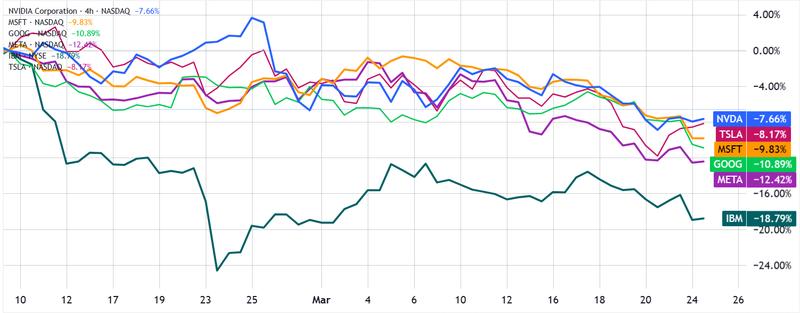
Several of the planet's most prominent technology corporations experienced declines exceeding 10% during the previous six-week period, with Google (GOOG US), Meta (META US), and IBM (IBM US) among those affected. Consequently, despite the dramatic pullback in gold valuations, market participants increasingly worried about the possibility of economic recession or an acceleration in inflation surpassing the 4% fixed income yields.
The convergence of weakening equity valuations and ongoing inflationary dynamics clarified why investors vigorously pursued the security of cash holdings.
Despite positive Bitcoin onchain indicators, the wider macroeconomic environment continued to be inhospitable for sustained upward price momentum. The retreat in gold prices occurring concurrently with investors divesting US Treasuries functioned as an indicator of heightened risk aversion. The likelihood of a retest of the $66,000 level constitutes a meaningful concern, particularly as long as inflationary forces and military expenditures keep US monetary policy restrictive for an extended duration.