
Bitcoin ETF Withdrawals Exceed $490M: Could BTC's Upward Trend Be Stalling?
American spot Bitcoin ETFs experience $490M in withdrawals, though elevated inflation maintains prospects for a push to $80,000.

Key takeaways:
- US-listed spot Bitcoin ETFs recorded $490 million in net withdrawals across a three-day period, indicating a short-term decline in institutional appetite.
- Climbing inflation rates are diminishing real returns on fixed-income securities, which could drive sustained demand for limited-supply assets such as BTC.
Bitcoin (BTC) experienced a three-day streak of withdrawals from exchange-traded funds (ETFs) listed in the United States. These outflows occurred simultaneously with an unsuccessful effort to break back above $78,000. Market participants worry about additional downside pressure, though escalating inflation in the United States is expected to serve as a driver for continued upward price action.
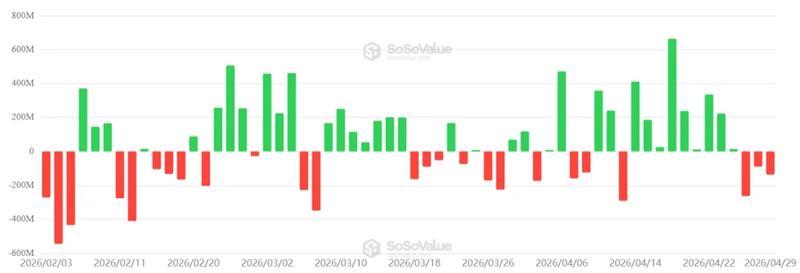
Spot Bitcoin ETFs trading in the United States recorded $490 million in net withdrawals spanning Monday through Wednesday, marking a reversal from the previous two-week pattern and suggesting diminished institutional interest. Nevertheless, examining a broader timeframe reveals $3.3 billion in net inflows beginning in March.
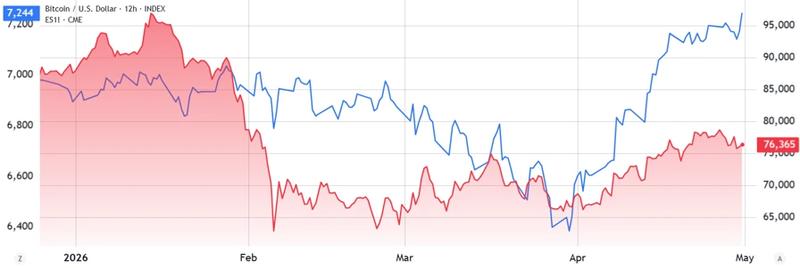
Some of the diminished confidence among market participants stems from Bitcoin's 14% year-to-date price decline, even as the S&P 500 reached an all-time high. That said, the technology sector faced increased scrutiny after quarterly earnings reports disappointed investors. Meta (META US) experienced a 9% correction on Thursday, whereas Microsoft (MSFT US) stock fell 4%.
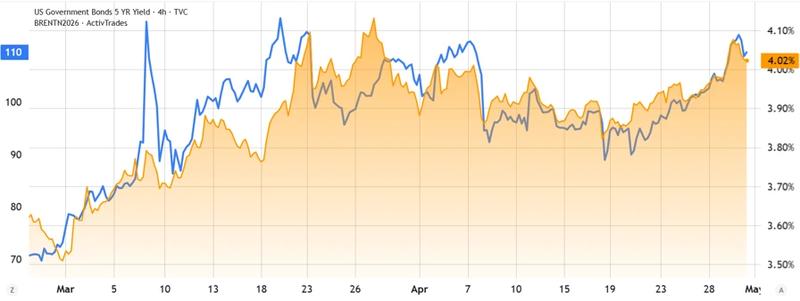
Following the outbreak of war in Iran during late February, crude oil prices emerged as a significant factor influencing risk appetite. The most recent Brent crude oil surge to $126 aligned with US 5-year Treasury yields climbing to 4.02%, rising from 3.51% two months earlier. Market participants required higher returns on government-backed securities given upward inflationary pressures, which sparked risk-averse behavior.
Higher inflation favors Bitcoin's bullish momentum
The absence of bullish momentum for Bitcoin around the $78,000 level can also be traced to deteriorating economic fundamentals. According to the US Commerce Department, gross domestic product expanded at a 2% seasonally adjusted annualized rate during the first quarter, marginally beneath the 2.3% rate that economists had forecast, as reported by CNN.
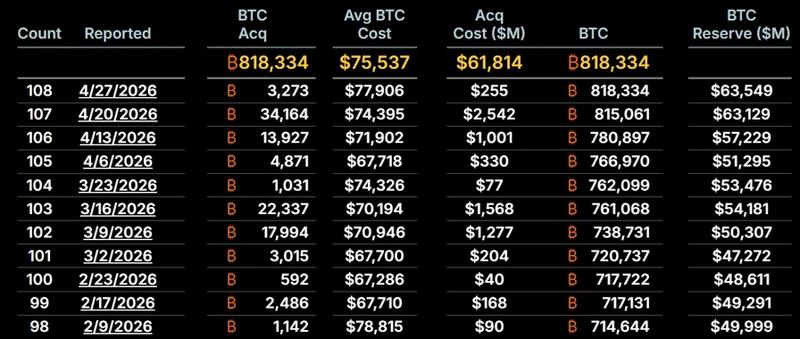
Strategy, the corporation headed by Executive Chairman Michael Saylor, disclosed the purchase of 56,235 BTC during the initial four weeks of April, pushing its average acquisition cost to $75,537. Market participants express concern that Bitcoin's price could face pressure should the Strategy accumulation rate fail to maintain its current pace, even if such a slowdown proves temporary.
Cryptocurrency market activities involving US President Donald Trump's family have additionally damaged the sector's reputation. Three US Senators called for an investigation into Trump and his family members regarding profits generated from their cryptocurrency business interests.
The threats posed by elevated inflation combined with reduced economic expansion are not expected to diminish in the immediate future, yet the brief three-day period of net withdrawals from Bitcoin ETFs should not generate undue alarm. In the final analysis, declining inflation-adjusted returns on fixed-income investments will probably stimulate appetite for scarce alternative investment vehicles. Therefore, the trajectory for Bitcoin reaching $80,000 remains viable.