
Bitcoin Developers Seek Priority AI Model Access in Industry-Wide Appeal
Industry stakeholders led by the Bitcoin Policy Institute have called on artificial intelligence firms to provide priority access to advanced models for Bitcoin and open-source developers to strengthen cybersecurity defenses.

An alliance of digital asset firms has called upon cutting-edge artificial intelligence (AI) laboratories to provide Bitcoin developers with priority access to their most advanced technological models.
The correspondence, released by the Bitcoin Policy Institute (BPI) on Monday, noted that numerous defenders of digital assets, including those working on Bitcoin Core, do not have access to laboratory cyber programs and face restrictions from safeguards on publicly accessible frontier systems, forcing them to depend on less sophisticated open-weight models.
Those who signed the document called on frontier AI laboratories to "establish or expand standing trusted-access programs for qualified defenders of open-source financial infrastructure."
The correspondence noted that open-source software underpins vital digital and financial infrastructure, while Bitcoin (BTC) by itself protects over $1 trillion in value. It further stated that a security flaw in open-source infrastructure could put people's life savings in jeopardy.
Multiple cryptocurrency firms and organizations co-signed the open letter, including the African Bitcoin Institute, Anchorage Digital, BitGo, Bitwise, Blockstream, Bull Bitcoin, MARA, Kraken, Ledger and Trezor, among others.
Open-source defenders need access to frontier AI
The correspondence stated that frontier AI is transforming the cost-benefit analysis of security research and cyber operations due to the fact that sophisticated models can examine extensive codebases, detect potential vulnerabilities and expedite complex technical work for both defenders and adversaries.
It stated that frontier AI has the potential to become one of the "most powerful defensive technologies ever developed," adding:
"Without dedicated access programs, defenders may lack the tools needed to keep pace with evolving threats to the infrastructure they maintain."
The BPI stated it has obtained several independent reports from open-source maintainers detailing sophisticated actors, including potential foreign adversaries, utilizing advanced AI capabilities to sustain attacks.
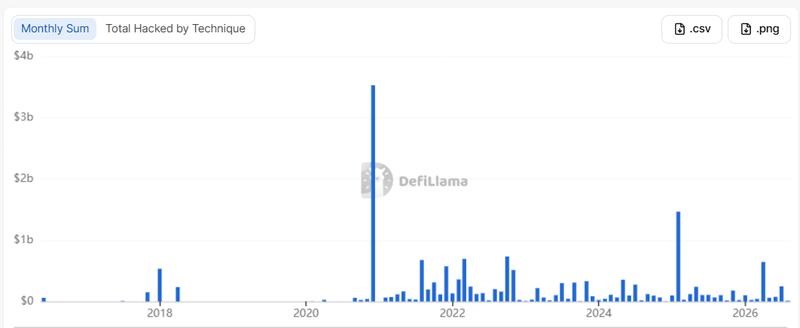
Malicious hacking activity throughout the industry experienced a significant spike in April 2026, with bad actors successfully stealing more than $634 million from cryptocurrency platforms, marking the largest monthly total since the Bybit hack, which contributed to driving losses to approximately $1.4 billion in February 2025, based on DefiLlama data.
Developments in AI-assisted vulnerability discovery have sparked concerns throughout the crypto security industry. Recent models such as Claude Opus 4.8 and ChatGPT 5.5 have played a role in what Mitchell Amador, CEO of bug bounty platform Immunefi, characterized as a "vulnerability apocalypse" for the crypto industry.