
Bitcoin Bottom May Not Arrive Until Late 2026: Five Key Insights for BTC Investors This Week
Analysis suggests Bitcoin remains several months from reaching a bear-market floor as the $60,000 level remains under pressure.

The second week of June commences with Bitcoin (BTC) in defensive mode — while fresh macro lows remain anticipated before year's end.
- Market participants anticipate a temporary relief rally for BTC pricing, though consensus suggests the floor remains elusive.
- Upcoming inflation statistics from the United States will challenge market stability amid the continuing US-Iran conflict.
- Diplomatic commitments from President Donald Trump regarding peace agreements have done little to restore confidence in risk assets.
- Several blockchain-based metrics provide analysts with optimism that the most severe selling pressure has concluded.
- Market sentiment within cryptocurrency circles has plummeted to historically low readings.
The Bitcoin bear cycle bottom remains several months distant
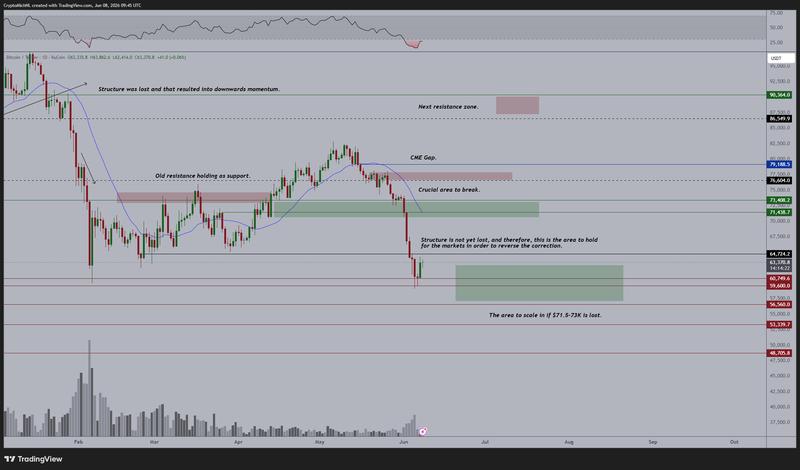
Bitcoin experienced a minor recovery surrounding its most recent weekly closing price, according to TradingView data, though traders have noted a conspicuous absence of significantly positive developments.
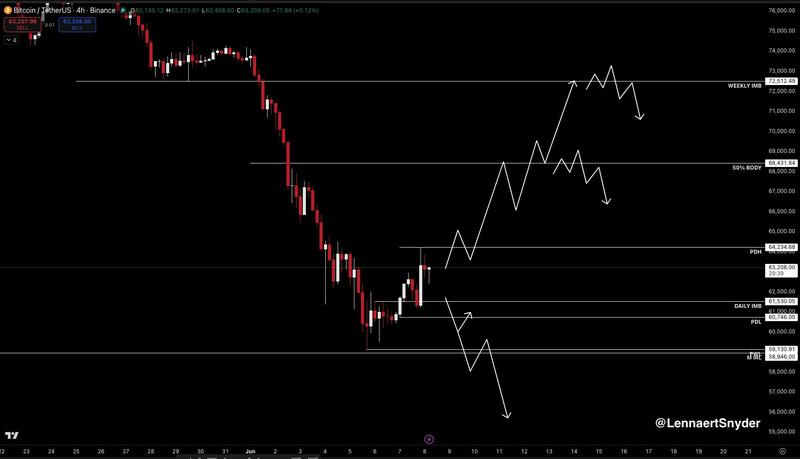
"The prior weekly candle concluded in a very bearish manner, creating an imbalance at the 72.5K level. Provided we maintain the 59.1K previous weekly low, my ultimate long position target for this week sits at that 72.5K imbalance," trader Lennaert Snyder stated in a recent analysis post shared on X.
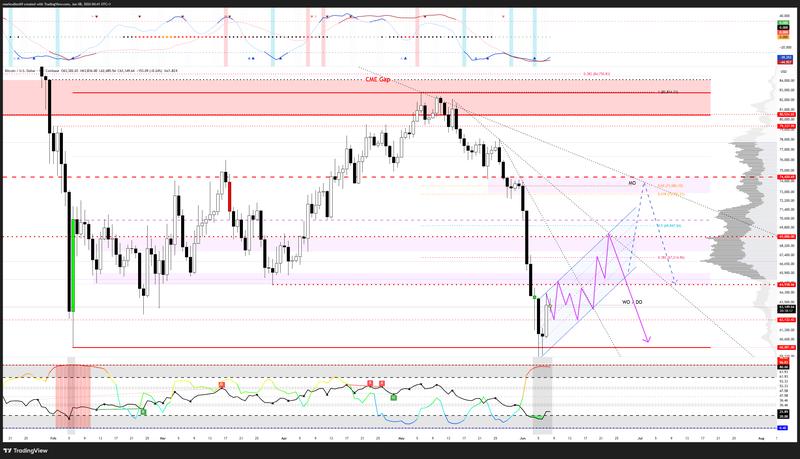
Trader Mark Cullen cautioned that even should a relief rally materialize, the bear-market floor would still lie ahead.
"At this point $BTC has swept through the 60K threshold, occurring somewhat faster than my initial projections," he communicated to X followers.
"My expectation is for additional sideways movement and upward action throughout the remainder of June. The ultimate market low isn't anticipated until the middle to late portion of Q3."
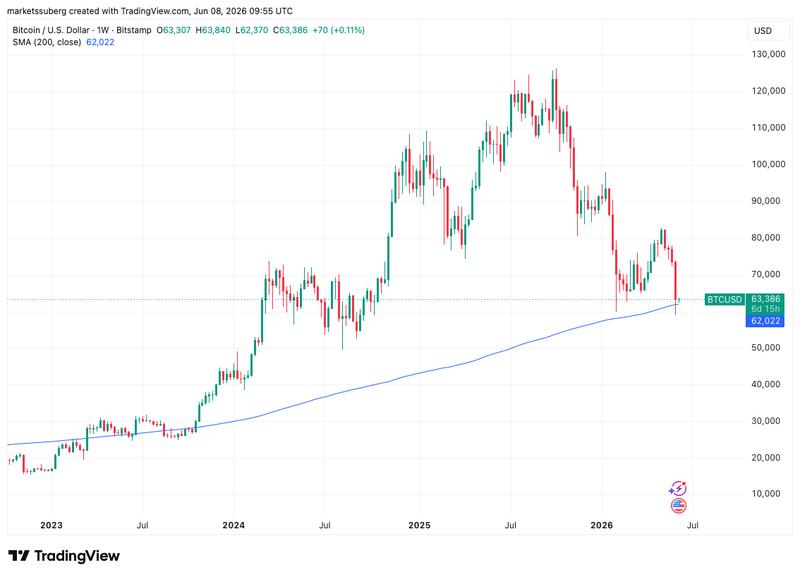
With marginally different projections regarding timing, cryptocurrency analyst ColinTalksCrypto shared comparable predictions. He observed that BTC/USD had settled beneath a critical long-term trendline, specifically the 200-week simple moving average (SMA).
"Consequently, we're likely to experience a rebound lasting 1-3 months followed by a decline to fresh lows in Q4," he contended.
According to ColinTalksCrypto, Q4 "possesses strong probability of marking the cycle bottom."
Consumer and producer inflation metrics set to test multiyear peaks
Inflation statistics from the United States for May will intensify market anxiety this week, with markets already anticipating interest-rate increases.
The May readings for both the Consumer Price Index (CPI) and Producer Price Index (PPI) are expected to demonstrate the continuing impact of the US-Iran conflict on economic conditions.
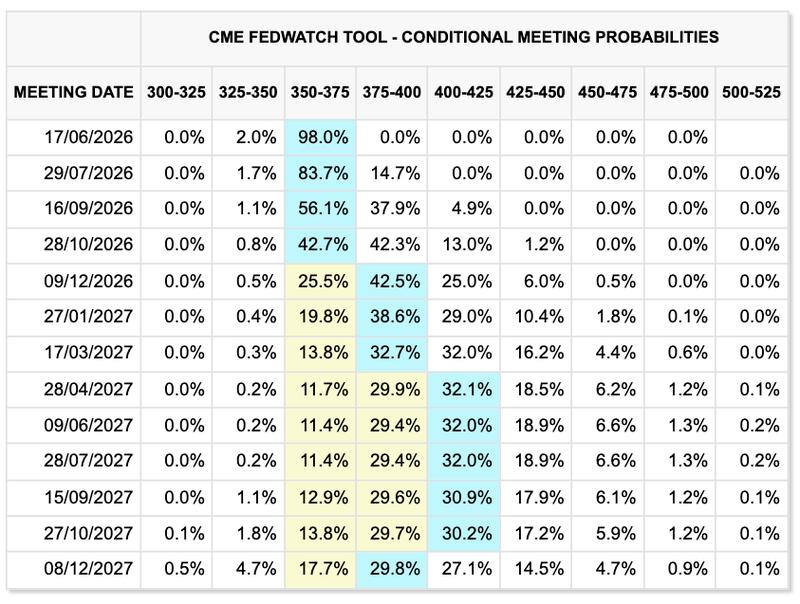
Both measurement tools reached multiyear peaks during their most recent April updates, while current data from CME Group's FedWatch Tool indicates rapidly shifting expectations regarding Federal Reserve policy.
"The BASE case scenario indicates two rate HIKES occurring by early 2027. Additionally, there's an emerging 17% probability of 3 rate HIKES materializing by April 2027," trading resource The Kobeissi Letter observed in late-week analysis.
"Merely months earlier, market participants anticipated up to 4 rate CUTS throughout 2026 alone."
According to Cointelegraph's reporting, equity markets in the United States have generally dismissed inflation concerns, achieving successive all-time peaks as technology sector stocks fuel positive sentiment.
This scenario appears increasingly precarious this week as concerns surrounding rate increases permeate markets. On Monday, South Korea's stock exchange experienced a volatility-triggered halt following an 8% decline at market opening.
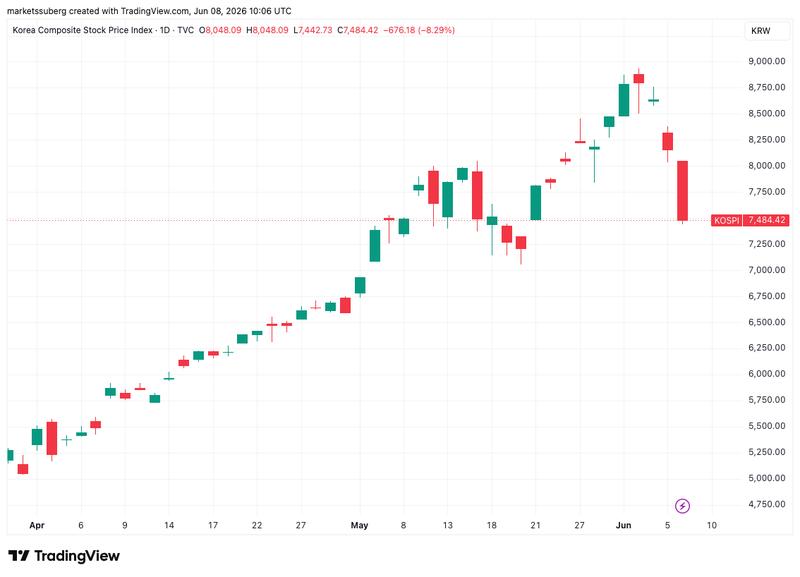
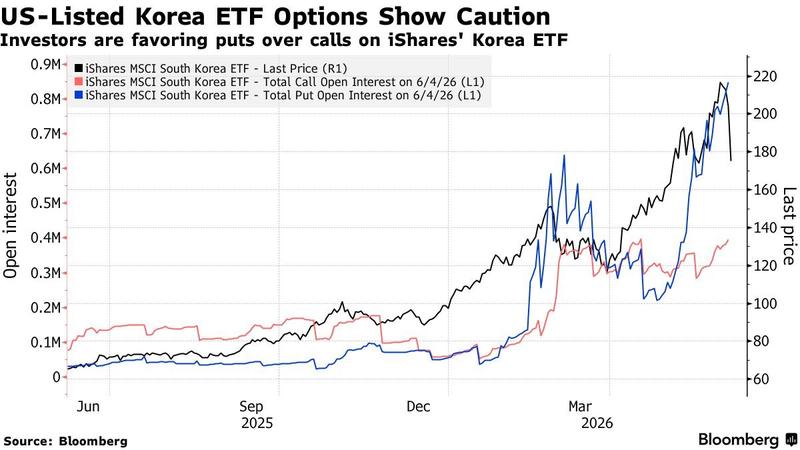
"A significant shift has just occurred in the globe's most robust stock market," remarked Nic Puckrin, founder of cryptocurrency platform Coin Bureau, on Sunday.
"Korean equities have climbed 90% year-to-date. However, the options chart for the Korea ETF has transitioned from bullish positioning to downside hedging. This represents a signal that market participants still holding the trade have lost confidence."
Peace commitments regarding Iran conflict fail to stabilize trading
Arriving simultaneously with macroeconomic pressure are ongoing developments in the US-Iran conflict, which continues serving as an unpredictable source of market volatility.
During the previous week, US President Donald Trump indicated that the situation would "work out well," though these reassurances proved insufficient to prevent fresh multiyear lows for BTC/USD.
Continued military exchanges in the meantime ensured that the atmosphere of uncertainty persisted.
In statements reported by the Financial Times and additional outlets on Sunday, Trump once again attempted to project optimism regarding events, asserting that recent strikes would not influence continuing peace negotiations.
"The deal's success will depend on its own merit, or it won't, but this will not have any effect on it," he stated during a telephone interview.
Bitcoin appeared to respond favorably to Trump's statements, which featured an assertion that Israel would have "no choice" but to accept an Iran deal.
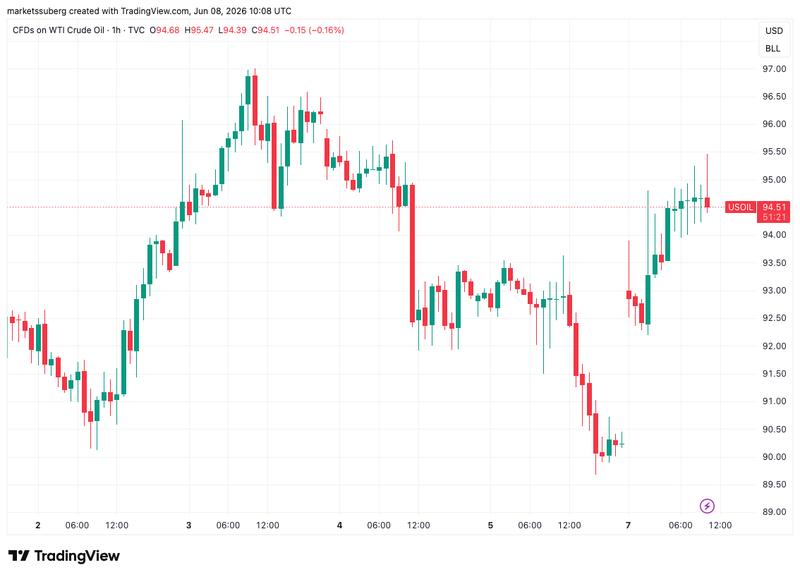
Oil pricing strengthened entering the new week, with WTI crude recovering above the $95 per barrel threshold.
Providing commentary, cryptocurrency trader and analyst Michaël van de Poppe cautioned that the new trading week would commence with turbulence.
"My expectation is to observe prices declining somewhat lower heading into Monday's opening, given that equity markets experienced significant declines Friday evening," he communicated to X followers.
"Following the US market open, or potentially on Tuesday, this reverses upward and we'll begin observing indications of upward momentum developing in Bitcoin."
Blockchain indicators suggest diminishing selling pressure
Within Bitcoin communities, discussion continues centering on whether BTC has established its bear-market floor with the latest descent beneath $60,000.
During the previous week, Cointelegraph published coverage of analysis determining that the majority of conditions necessary for market recovery were already established.
In its most recent research findings, blockchain analytics platform CryptoQuant expanded the catalog of factors suggesting the worst of the selloff should be complete.
"Collectively, these metrics indicate that speculative excess has been substantially eliminated from the market," contributor XWIN Japan stated in a QuickTake blog post.
"Market psychology has transitioned from euphoric conditions to cautious positioning, and investors are entering a phase characterized by patience and accumulation."
The trio of indicators under consideration consists of the spent out profit ratio (SOPR) for both long-term (LTH) and short-term (STH) market participants, alongside the aggregate BTC supply currently held at a loss, in addition to the 200-day simple moving average (SMA).
The final metric is already receiving attention from traders following BTC/USD's return to this level for the first instance since 2023 during the previous week.
"The LTH-SOPR / STH-SOPR ratio has experienced substantial decline, demonstrating that long-term holders are no longer capturing the substantial profits observed during the preceding bull market," XWIN elaborated regarding the additional components.
"Supply in Profit has contracted to approximately 47%, signifying that more than half of Bitcoin holders currently find themselves at break-even levels or holding unrealized losses. This presents a stark contrast to bull market environments, when greater than 90% of supply typically registers profits."
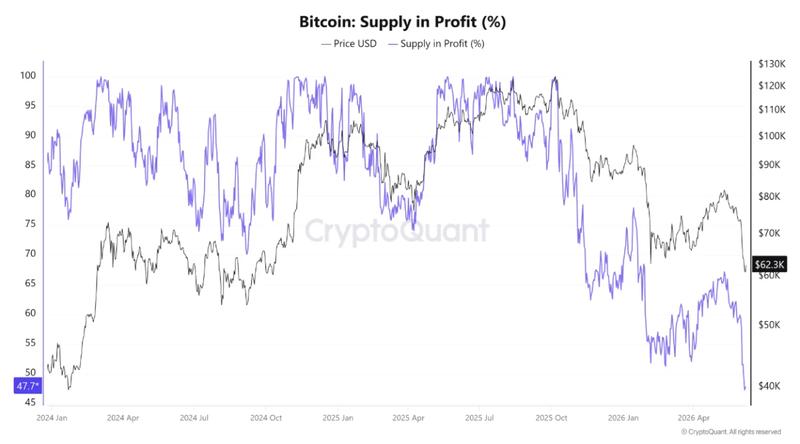
CryptoQuant additionally highlighted a "demand shortage" attributable to technology sector equities capturing attention away from the broader cryptocurrency market.
Market sentiment readings reflect conditions of "widespread despair" creating opportunity
Cryptocurrency market sentiment has retreated to single-digit territory, according to readings from the Crypto Fear & Greed Index — though a purchasing opportunity may already be presenting itself.
The Index, which employs a collection of variables to quantify overall market mood, registered 8/100 on Monday — firmly positioned within its "extreme fear" zone.
Such a depressed reading was previously observed at the beginning of April, representing one of the lowest measurements ever documented.
Through monitoring social media signals, research platform Santiment characterized the "highest level of pessimism since mid-February."
"Historical patterns demonstrate that these moments characterized by widespread despair have frequently materialized in proximity to market bottoms," it communicated to X followers.
"When market participants begin proclaiming an asset class 'dead,' particularly something predominantly speculation-driven like crypto, it generally signals that numerous sellers have already liquidated their holdings, resulting in reduced supply available to drive prices meaningfully lower."
During February, when the $60,000 level first reentered focus, a sentiment collapse preceded a recovery rally toward the mid-$70,000 range.
"While sentiment measurements alone cannot forecast precise turning points, historical precedents suggest that periods when investors demonstrate the strongest conviction that crypto is 'finished' have regularly provided safer-than-average entry opportunities for patient traders prepared to assume the contrarian position relative to crowd emotions," Santiment concluded.