
Bitcoin and Gold Face Mounting Challenges as US Inflation Exceeds 4% Mark
May's US Consumer Price Index reached 4.2% amid rising energy prices linked to Iran conflict, weakening prospects for rate cuts and creating headwinds for Bitcoin and similar assets.
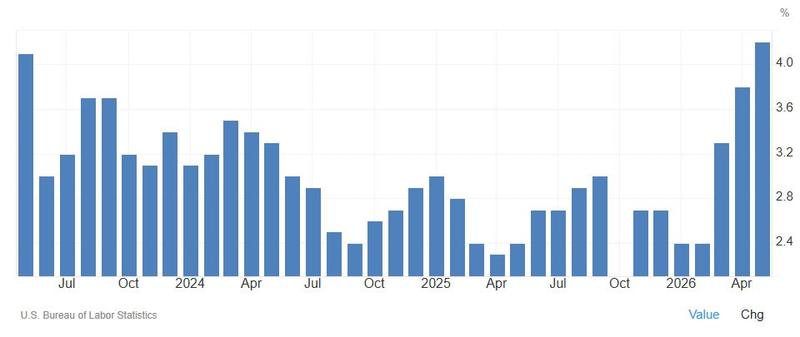
Financial experts have issued warnings that both Bitcoin and gold could encounter additional challenges throughout the remainder of the year after the US Consumer Price Index (CPI) recorded a 4.2% year-over-year rise in May, based on data published on Wednesday.
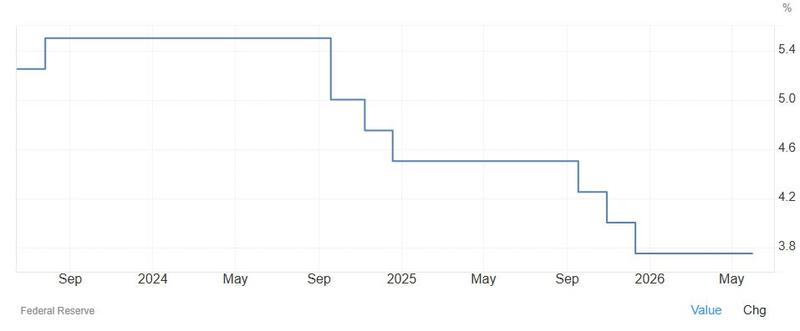
The increase in this consumer price index, which measures the cost fluctuations of goods and services throughout the American economy, has dampened expectations that the Federal Reserve will implement rate cuts, with certain experts now anticipating potential rate increases before year's end — negative developments for higher-risk investments including cryptocurrency.
The cryptocurrency has experienced a challenging opening six months of the year. Bitcoin valuations have decreased 36% since the start of January, whereas gold has declined 23% from its peak in January. During this identical timeframe, crude oil valuations have jumped more than 50%.
"Today's in-line CPI print keeps the Fed cautious, data-dependent, and in no rush to cut," Iggy Ioppe, chief investment officer at institutional trading firm Theo, told Cointelegraph.
The Consumer Price Index measures temporal changes in the cost of a collection of goods and services routinely purchased by individuals and serves as one of the Federal Reserve's critical metrics for determining monetary policy.
"For Bitcoin, an in-line print is unlikely to be a clean catalyst either way," he added. "It keeps liquidity expectations capped and risk assets trading more on positioning than on a fresh dovish impulse."
According to Ioppe, gold continues to face downward pressure. "Real yields are still the key variable, and without imminent cuts, the opportunity cost of holding a non-yielding asset stays elevated," he said.
No institutional reallocation to Bitcoin
Markus Thielen of 10x Research told Cointelegraph he sees the current macro environment as a continued headwind for Bitcoin.
"We do not believe this data is sufficiently encouraging to prompt Wall Street investors to meaningfully reallocate into Bitcoin," he said.
"Institutional investors will likely want to see further evidence that inflation is moving sustainably lower before increasing exposure. At the same time, the escalating conflict involving Iran introduces additional uncertainty, particularly given the risk of ongoing oil supply disruptions."
According to Thielen's forecast, these supply disruptions may become "more pronounced" throughout the summer period, "placing renewed upward pressure on inflation expectations."
The leading cryptocurrency "remains vulnerable," he stated, forecasting that a decline beneath the $60,000 threshold seems "increasingly likely" in the upcoming days.
Risk appetite will return only when inflation drops
Tim Sun, a senior researcher at HashKey Group, indicated that although expectations for rate hikes are "heating up," the likelihood of the Federal Reserve implementing interest rate increases this year remains "relatively low."
"Only when inflation drops, rate cuts become viable, and liquidity improves alongside lower capital costs, will the overall risk appetite truly reverse."
According to CME futures markets, there is a 98.4% probability that interest rates will remain unchanged at the Federal Reserve's upcoming meeting scheduled for June 17.