
Base Network Implements Cobalt Enhancement, Introduces Advanced Tokenized Asset Features
The Cobalt enhancement on Base enables traders to establish specific transaction parameters and provides asset issuers with capabilities for regulatory compliance, share adjustments and authorized token movements.
The Base network implemented its Cobalt enhancement on Wednesday, introducing conditional transaction capabilities and enhanced issuer management features for tokenized assets as the layer-2 Ethereum solution strengthens its commitment to onchain financial services.
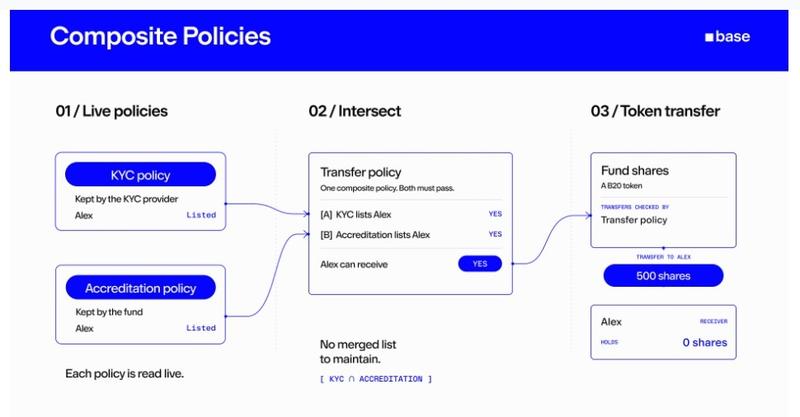
Representing the third significant enhancement to Base, Cobalt extends the functionality of its B20 token standard by enabling issuers to implement multiple compliance requirements simultaneously on a single asset. As an illustration, an issuer might mandate that token recipients complete identity verification procedures, demonstrate accredited investor status and maintain clean sanctions screening records.
The enhancement also enables issuers to program automated modifications for corporate events like stock splits. This functionality alters the share quantities shown in digital wallets and applications without the need to mint new tokens, burn existing ones or modify the foundational balance structure.
Additionally, the upgrade permits issuers to grant designated administrators authority to transfer tokens from holder wallets without requiring holder consent, while attaching publicly visible explanatory notes to such transfers. According to Base, issuers maintain control over whether this functionality is activated and which parties receive authorization to execute it. Base clarified that the platform itself lacks the capability to execute these transfers independently.
These enhancements provide issuers with expanded compliance and operational capabilities essential for migrating conventional financial instruments to blockchain infrastructure.
The Cobalt enhancement also launches Validity Transactions, a feature enabling users to submit transactions that only qualify for blockchain inclusion once predetermined onchain criteria are satisfied, providing traders with enhanced control over when their transactions execute.
For instance, a trader might submit a token exchange that only becomes eligible for execution if a particular asset achieves a designated price point prior to a specified block deadline. Base retains the transaction in queue and assesses the conditions against the blockchain's current state during the construction of each successive block. According to Base, transactions processed through this mechanism can maintain privacy until their inclusion in a block occurs.
Base sharpens focus on tokenized finance
The implementation of the Cobalt enhancement reinforces Base's ongoing expansion into tokenized financial services. On July 8, Base introduced B20 as an integrated token standard designed for stablecoins, tokenized real-world assets and additional fungible tokens, enabling issuers to launch assets without developing proprietary token contracts.
On July 16, Jesse Pollak, the creator of Base, acknowledged the network had placed a "wrong bet" by concentrating resources on creator-focused applications, content platforms and messaging services, resulting in the network lagging in sectors such as prediction markets and perpetual futures trading.
According to Pollak, financial applications encompassing trading and payment systems would receive increased priority as Base works toward establishing itself as a blockchain infrastructure for worldwide financial services.
The standard has subsequently attracted a notable implementation. On Aug. 25, Coinbase introduced tokenized United States equities on Base, creating B20 tokens that represent ownership in Apple, Nvidia, Meta and Alphabet shares.