
Asian Markets Face Legal Uncertainty as Prediction Platforms Expand Regionally
As prediction platforms push into Asia's biggest economies, stringent gambling regulations and ambiguous legal frameworks could restrict their growth potential across the region.

Platforms facilitating prediction markets are making aggressive moves into Asia's most significant economies, despite facing stringent local regulations that impose severe restrictions on wagering-related activities.
The Asian region presents an attractive opportunity characterized by massive scale, engaged retail investor participation and a scarcity of domestic alternatives, creating a market too compelling to overlook even when confronted with substantial regulatory uncertainties.
This growth trajectory mirrors patterns previously observed within the cryptocurrency sector, where technological innovation outpaced the development of regulatory and licensing structures, leading exchanges to establish operations in jurisdictions before comprehensive legal frameworks were established.
Following a path similar to many emerging technology companies, the sector's dominant players embraced the philosophy of "better to ask for forgiveness than permission" as a strategy for rapid expansion.
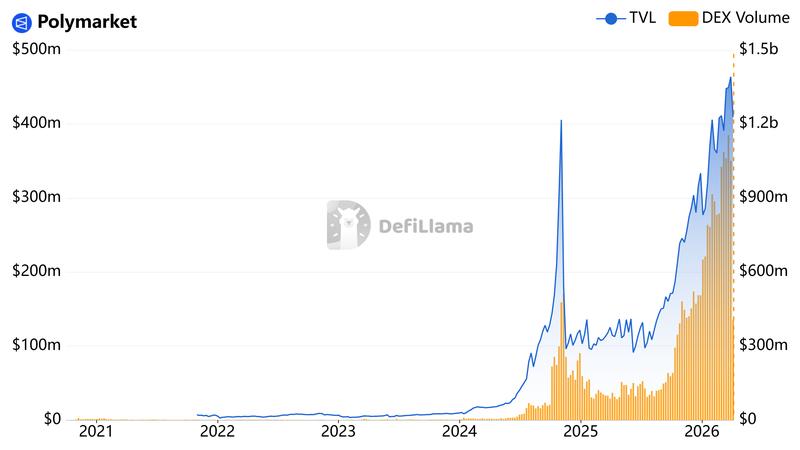
Polymarket, among the most rapidly expanding platforms in the space, now processes more than $1 billion in weekly transaction volume. The platform has rolled out support for the Chinese language, while emerging competitors such as PredicXion are concentrating on locally relevant events as a strategy to encourage wider user adoption.
Yet looking deeper, the regional landscape reveals significant fragmentation and legal complexity, creating situations where platform accessibility, language capabilities and regulatory frameworks often fail to align with the sector's worldwide expansion objectives.
Regional obstacles confront prediction markets across Asia
Among the world's five largest economies measured by gross domestic product in 2024, three nations — China, Japan and India — are located in Asia, based on World Bank data.
Neither India nor China has established dedicated regulatory frameworks specifically governing blockchain-based prediction platforms, yet both nations maintain highly restrictive policies concerning cryptocurrency activities. India enforces substantial tax obligations on crypto transactions, whereas China has implemented a comprehensive prohibition on activities including trading and mining operations.
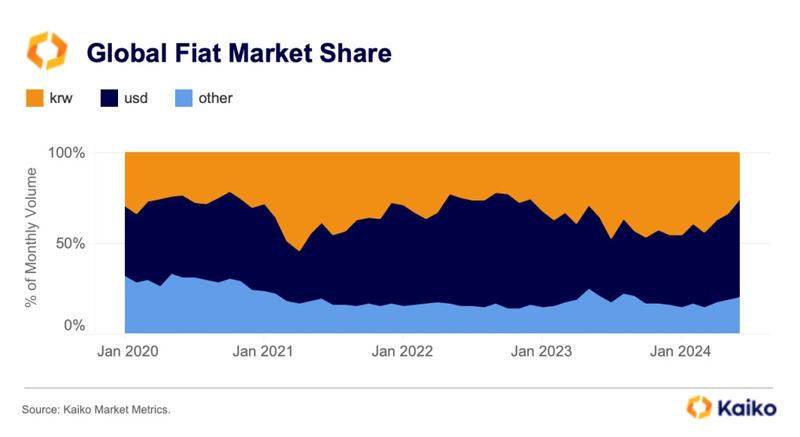
Ranking as the world's 12th largest economy, South Korea is frequently recognized as one of the most vibrant retail cryptocurrency markets globally. According to Kaiko data, the South Korean won consistently maintains a position among the top two currencies by worldwide fiat trading volume in crypto markets.
"Prediction markets could be a very big opportunity in the Korean market. But I think many prediction markets are having difficulty capturing audiences because their predictions are mostly focused on Western themes."
Heechang Kang, co-founder at research company Four Pillars
Similar localization obstacles affect Japan, where language barriers and insufficient coverage of regionally relevant events constrain the potential for widespread platform adoption.
This deficiency has opened opportunities for platforms based within the Asian region. Prediction market platforms originating from Asia, including PredicXion, are working to customize their content offerings by emphasizing events that hold specific relevance to regional audiences.

Nevertheless, Andy Cheung, the platform's founder and CEO, identified local gambling laws across critical markets as representing a "significant concern" for the industry.
"In these jurisdictions, authorities often classify activities involving wagering on uncertain outcomes as gambling, which is heavily restricted or outright prohibited outside of tightly controlled state-run lotteries or exceptions."
Andy Cheung, founder and CEO of PredicXion
Distinguishing prediction markets from traditional gambling activities
Within China's borders, online gambling faces absolute prohibition, and user access to platforms including Polymarket encounters substantial restrictions. Certain users circumvent these controls by employing VPN technology to navigate around the nation's internet censorship infrastructure, frequently referred to as the Great Firewall, though such workarounds fail to eliminate underlying legal risks.
"Many in the industry are aware of the strict legal environment in these regions, and aggressive user acquisition there does carry risks, not just for operators, but potentially for users themselves under local laws that can treat participation as illegal gambling."
Andy Cheung
Authorities in South Korea and Japan have similarly not issued direct guidance regarding blockchain-based prediction platforms, with most such platforms remaining technically accessible. Both nations, however, enforce stringent limitations on gambling-related activities.
Within South Korean jurisdiction, the majority of gambling formats are forbidden for domestic residents outside a limited selection of state-operated exceptions, with legal prohibitions extending to participation on international platforms operating abroad. Government authorities have actively prosecuted operators of illegal online betting services and, under certain circumstances, the users participating on these platforms.
Japan implements a comparably restrictive regulatory stance, with gambling activities generally prohibited except through authorized channels including lotteries, horse racing and additional public betting mechanisms.

This regulatory environment places prediction markets within an ambiguous gray zone, creating circumstances where platform access remains feasible yet legal classification continues without resolution.
"Some argue that prediction markets are no different from gambling. I would dispute that."
Jaewon Kim, researcher at Four Pillars
According to Kim, the critical distinction exists in the nature of output these platforms generate. Traditional gambling functions primarily as a self-contained system where participants wager against the house, producing outcomes holding minimal significance beyond the game's immediate context. In contrast, prediction markets function to aggregate collective expectations regarding real-world events and outcomes.
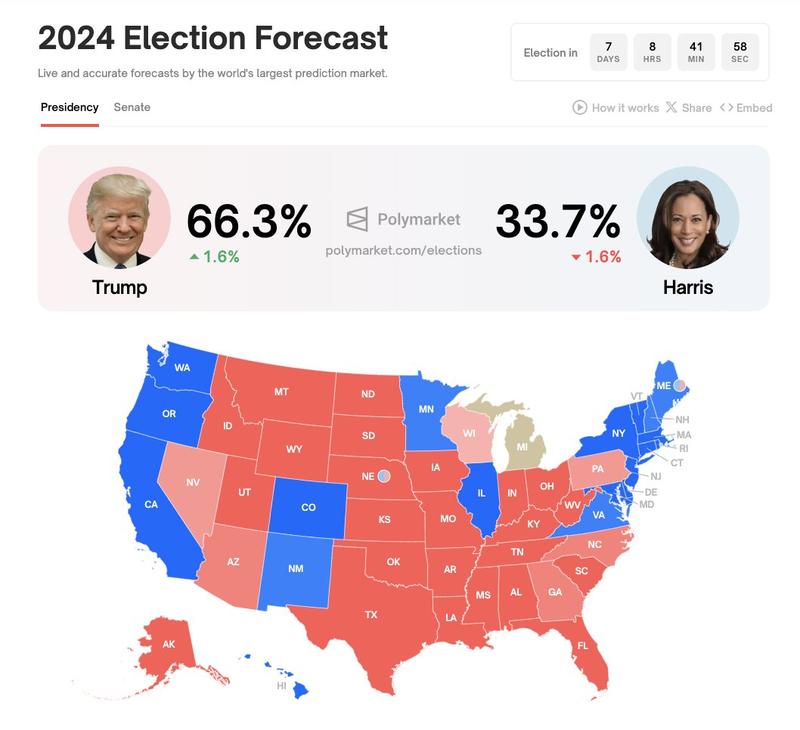
"During the 2024 US presidential election, prediction markets gained significant traction and, in some cases, were more accurate than polls or expert forecasts. That ability to reflect collective expectations is what sets them apart and gives them informational value beyond simple wagering."
Jaewon Kim
How legal classification will shape prediction markets' Asian trajectory
Multiple prediction platforms are entering Asian markets employing the identical strategic playbook that characterized earlier cryptocurrency growth phases, prioritizing demand capture initially while deferring regulatory clarity considerations. The region delivers an exceptional combination of market scale, active retail participation and insufficiently developed domestic competitor platforms.
Evidence of this strategic tension is becoming increasingly apparent in practical implementation. Platforms successfully reach target users through language support features and technical workarounds including VPN access, yet these tactical approaches fail to address the fundamental challenge of legal classification. Furthermore, major Asian economies maintain some of the world's most restrictive legal environments for any activity bearing resemblance to gambling operations.

Regionally-based competitors are starting to probe this regulatory boundary through product customization tailored to regional user bases, though Cheung indicated platforms including PredicXion are attempting to steer clear of "heavily restricted markets." The vast majority of regional jurisdictions have yet to make definitive determinations regarding whether prediction markets should fall under gambling classifications.
The industry's position that prediction markets constitute a distinct category introduces an additional dimension of regulatory uncertainty. Should these platforms receive treatment as information markets aggregating collective expectations about real-world events, they might ultimately secure a regulatory pathway resembling oversight frameworks governing financial instruments.
Alternatively, if regulators reject this distinction, these platforms face the risk of incorporation into existing gambling regulatory frameworks that provide minimal opportunity for market expansion and development.