
Andreessen Horowitz Backs Federal Regulator Over States in Prediction Market Battle
Investment giant a16z contends that state-level enforcement actions targeting prediction market operators like Kalshi and Polymarket violate federal regulatory authority and restrict access for retail participants.
Andreessen Horowitz has entered the fray in an escalating dispute between federal and state authorities regarding prediction markets, supporting the Commodity Futures Trading Commission (CFTC) against state regulators attempting to close down platforms such as Kalshi and Polymarket.
The prominent venture capital firm filed its letter on Thursday as part of its response to the CFTC's advance notice of proposed rulemaking concerning prediction markets. The submission contends that enforcement actions at the state level, which include cease-and-desist orders and criminal prosecutions, are establishing obstacles that work against the federal regulator's obligation to ensure "impartial access to its markets and services."
Within just the past several weeks, the CFTC has initiated legal proceedings against Illinois, Arizona, Connecticut, New York and Wisconsin, asserting that these states exceeded their authority by attempting to regulate markets under federal purview. Andreessen Horowitz endorsed this stance, contending that requiring exchanges to restrict users according to their state location directly contradicts the CFTC's impartial access requirements.
Being forced to deny impartial access to users in states that seek to license or prohibit certain event contracts will likely severely circumscribe available liquidity.
CFTC gets to define gaming: A16z
Attorneys general at the state level have argued that platforms providing contracts on sporting events and political outcomes are operating illegal gambling businesses without proper licensing. Andreessen Horowitz rejected this characterization, contending that the CFTC, rather than state lawmakers, possesses the jurisdiction to determine what qualifies as "gaming" under federal commodities legislation, considering the agency's multi-decade history of supervising event contracts.
Apart from the jurisdictional dispute, a16z also presented arguments for the societal benefits of prediction markets, characterizing their pricing systems as a unique method of price discovery that reveals collective intelligence regarding uncertain future events. The venture firm additionally expressed backing for blockchain-powered platforms, asserting that the on-chain transparency and auditability of transactions enables more efficient regulatory supervision.
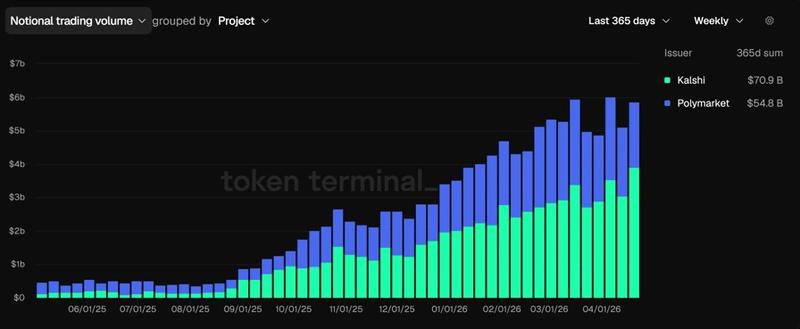
The submission comes at a time when these platforms are experiencing surging popularity. According to Cointelegraph's reporting, monthly trading volume hit $25.7 billion in March, with retail traders representing more than 80% of users, defined as participants trading under $10,000.
Polymarket wants back into the US
Polymarket is currently engaged in discussions with the CFTC to remove the prohibition that has prevented American users from accessing its primary platform following a 2022 settlement, under which the platform paid a $1.4 million penalty and committed to blocking US customers due to unregistered event contracts.
A complete return to the United States market would necessitate a formal commission vote, although the approval process could potentially accelerate considering that four of the CFTC's commissioner positions are presently unfilled.