
Analyst: New SEC cryptocurrency framework marks definitive end of Gensler's regulatory approach
A newly released SEC taxonomy categorizing digital assets and tokens, with the majority designated as non-securities, represents a significant regulatory milestone for American authorities.

New regulatory guidance issued by the United States Securities and Exchange Commission (SEC) alongside the Commodity Futures Trading Commission that creates a classification system for digital assets represents the "final nail" in the regulatory framework championed by former SEC Chairman Gary Gensler, says Alex Thorn, head of firmwide research at Galaxy investment firm.
Published this past Tuesday, the SEC's guidance created a comprehensive taxonomy for categorizing digital assets, breaking them down into five distinct classifications: digital commodities, digital collectibles such as non-fungible tokens (NFTs), digital tools, stablecoins, and tokenized securities.
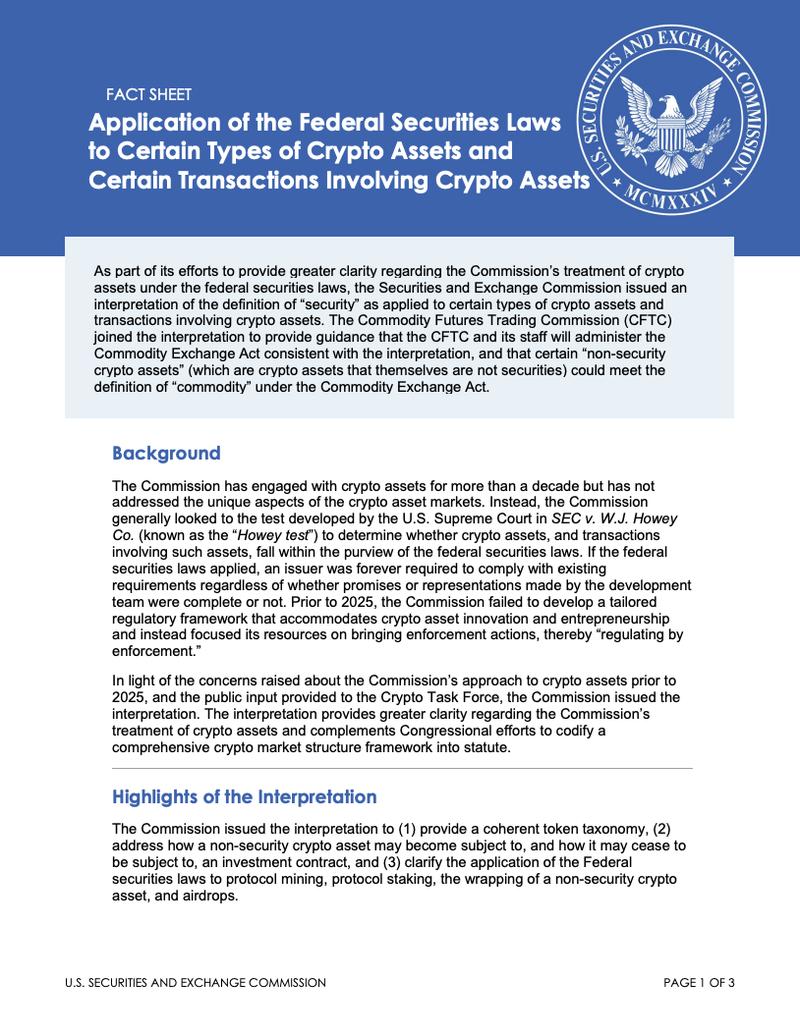
The previous SEC regulatory policy framework treated the rules determining which cryptocurrencies satisfied the legal definition of "investment contracts" as legislative rules, contrasting sharply with the new 2026 guidance that has been filed as an interpretive rule, according to Thorn. He elaborated on why this matters:
"The distinction matters enormously under the Administrative Procedure Act (APA). A legislative rule or substantive rule goes through notice-and-comment rule-making, has the force and effect of law, and binds both the agency and regulated parties."
"An interpretive rule is exempt from notice-and-comment requirements, does not have the force of law, and merely explains how the agency understands existing statutory provisions," he continued.
Because the interpretive rule lacks legal authority to bind courts in enforcement of these policies, it provides both the SEC and the cryptocurrency industry with adaptability when responding to future regulatory modifications, he noted.
According to Thorn, this fresh regulatory strategy delivers essential clarity to the crypto industry for the coming 30 months; nevertheless, he emphasized that lasting permanence over the next several decades requires the CLARITY crypto market structure bill to be enacted into federal law.
The CLARITY Act stalls, but rumors emerge of a tentative deal between White House and lawmakers
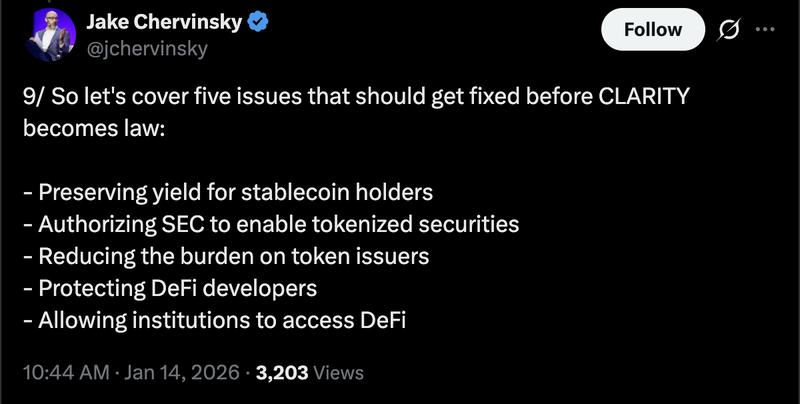
In January 2025, the CLARITY Act encountered a roadblock after cryptocurrency exchange Coinbase along with additional industry participants raised objections regarding the ban on stablecoin yield and insufficient safeguards for developers working on open-source software.
Cryptocurrency businesses and prominent industry thought leaders additionally identified stipulations that would essentially dismantle the decentralized finance (DeFi) ecosystem through the imposition of reporting obligations and know-your-customer controls on DeFi platforms as a primary source of disagreement.
This past Friday, Politico released a report indicating a preliminary agreement between the White House and congressional lawmakers to advance the CLARITY bill.
The precise terms of the proposed agreement remain undisclosed at this time, though Senator Angela Alsoboooks stated the preliminary deal contains a prohibition on stablecoin yield generated from "passive balances."