
Aave Integration Allows Grvt Users to Generate Returns on Perpetual Futures Margin
Data from DefiLlama reveals derivatives platforms play a major role in DeFi's quarterly revenue exceeding $1 billion as trading and lending protocols merge operations.

A decentralized exchange for perpetual futures contracts known as Grvt has announced its integration with Aave, a leading lending protocol, enabling users to generate returns on their margin collateral while simultaneously maintaining open positions in derivatives markets.
In a Thursday announcement, the platform explained that this new capability addresses the opportunity cost associated with margin collateral that would otherwise remain unutilized on trading platforms. Perpetual futures contracts are derivative instruments that mirror the price movements of underlying assets without having expiration dates.
"On most platforms, your capital can only do one thing at a time. Your stablecoins are either earning yield or available to trade, but not both." - Hong Yea, CEO of GrvtAccording to him, the new integration is intended to enable users to make a single deposit and utilize identical capital both as active trading margin and as a source of lending income.
This development arrives at a time when cryptocurrency derivatives remain one of the primary revenue drivers throughout the decentralized finance ecosystem. According to information from DefiLlama, an analytics service, DeFi platforms have produced over $1 billion in revenue on a quarterly basis during recent time frames, with exchanges offering derivatives representing a substantial share of this total.
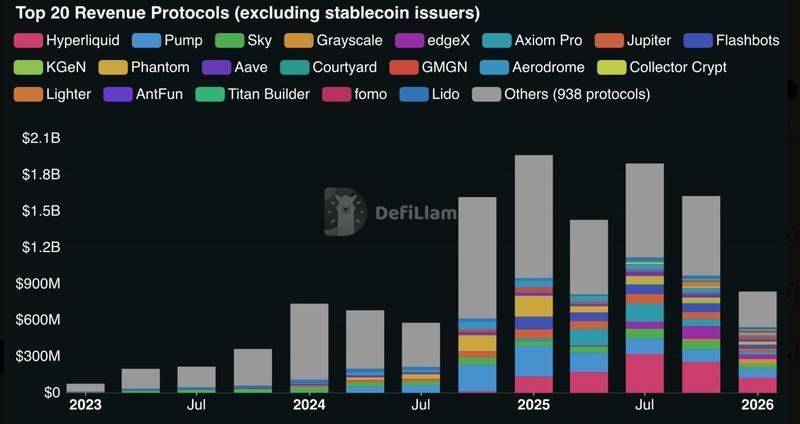
In a post on X, Patrick Scott, who serves as DefiLlama's head of revenue and growth, commented that blockchain-based businesses are successfully identifying their product-market fit.
Capital efficiency becomes a competitive focus
Traders utilizing perpetual futures contracts generally deposit stablecoins to serve as collateral and maintain these funds in place to satisfy margin obligations. During the initial rollout, Grvt indicated that this functionality supports USDt (USDT) collateral, which undergoes tokenization on a 1:1 basis relative to deposits allocated into Aave's lending pool infrastructure.
"When liquidation happens, we take over their positions and liquidate just like it would happen with USDT." - Hong YeaAccording to his explanation, capital can be retrieved from Aave in approximately 10 minutes to handle withdrawal requests.
The yields are derived from Aave's variable-rate lending markets and change in response to shifts in borrowing demand levels. Yea indicated that Grvt is not taking any percentage of the Aave-generated yield "as of now," and mentioned that participants may collect both returns from lending activities and a portion of trading platform fees.
Earlier this week on Monday, Michael Egorov, the founder of Curve, stated that DeFi protocols "cannot live without real revenues flowing," making the case that sustainable yield generation needs to be connected to genuine economic activity instead of relying on token emissions.