
$2.6B Short Position Buildup Could Trigger Massive Bitcoin Squeeze as Funding Rates Turn Negative
As Bitcoin slumped toward $60,000, bearish traders accumulated substantial short positions. Could the accumulated $2.6 billion in short-side leverage trigger a powerful upward squeeze?

Key takeaways:
- Excessive Bitcoin short leverage concentrated in the $63,000 to $66,000 price zone has established the conditions for a possible $2.6 billion bear trap.
- Perpetual funding rates turning negative signal complete deleveraging among bullish traders, substantially lowering the potential for further downside moves.
Friday's Bitcoin (BTC) plunge to $61,100 liquidated $335 million worth of leveraged bullish positions. Nevertheless, following a 21% price correction in Bitcoin, bullish traders may have inadvertently created an ideal trap as bearish market sentiment reached elevated levels. Short positions accumulated substantially within the $63,000 to $66,000 range, establishing the groundwork for a possible $2.6 billion squeeze targeting bears.
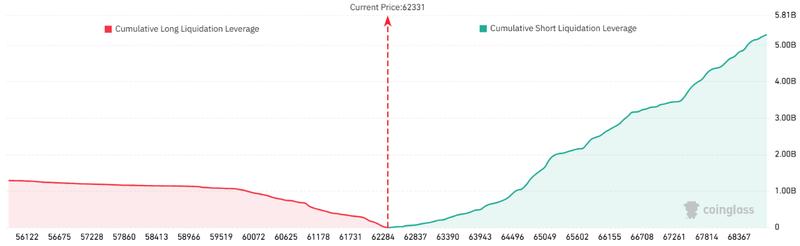
Projected liquidations accompanying an additional 8% decline in Bitcoin from $62,000 to $57,000 total approximately $1.2 billion. By comparison, an upward move toward $66,000 would expose $2.6 billion in bearish positions to liquidation risk. This squeeze scenario could generate sufficient momentum to restore buyer conviction after an unprecedented 13-day consecutive period of net withdrawals from spot Bitcoin exchange-traded funds (ETFs).
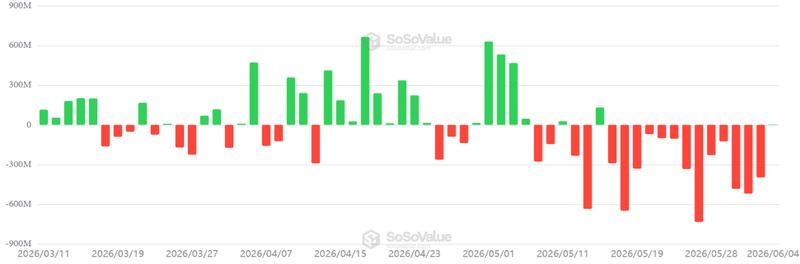
Thursday's modest $3 million net inflow might signal a brief reprieve following 15 consecutive days of outflows that withdrew $5.1 billion from the market. Nevertheless, it's premature to determine whether market dynamics have definitively shifted to favor bullish participants. In the end, should bearish traders have maintained conservative leverage levels, the genuine risk of a substantial short squeeze could prove limited.
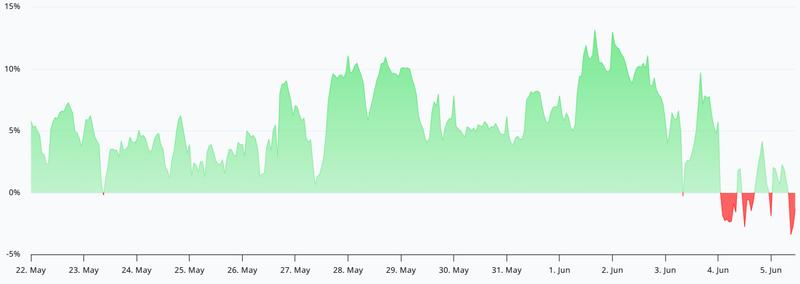
Funding rates are considered neutral when they fall within the 6% to 12% range, where bullish position holders pay fees to maintain their trades. The present negative 2% Bitcoin perpetual futures funding rate indicates increasing bearish conviction among traders. Therefore, even should Bitcoin require substantial time to recover the $66,000 price level, bullish traders have completely reduced their leverage exposure, minimizing further downside vulnerability.
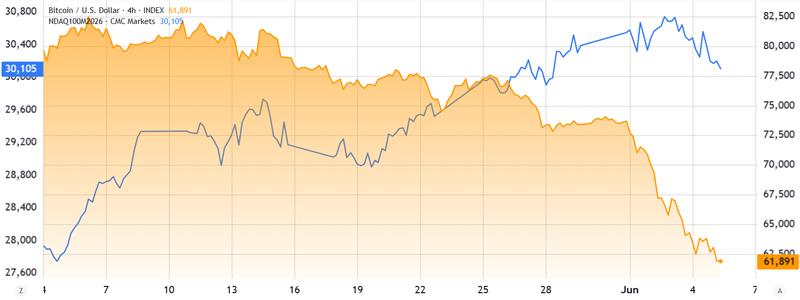
Bitcoin has dramatically lagged behind the Nasdaq 100 index performance, though the technology sector is starting to show signs of fragility after Broadcom (AVGO US) finished Thursday's session down 12.6%, wiping out $280 billion in market capitalization. The chipmaker reduced its AI chip revenue projections for the latter half of 2026, triggering investor concerns.
Impact of the tech sector IPOs and Strategy's 32 BTC sale
Additional leading companies within the AI space experienced similar pressure. Micron (MU US) declined 7.8% while Arm (ARM US) fell 4.5%. Given the highly anticipated initial public offerings from SpaceX, Anthropic, and OpenAI on the horizon, market participants probably decided to liquidate positions to raise capital in preparation for these launches. Market analysts suggest this liquidity withdrawal has also played a role in Bitcoin's recent price deterioration.
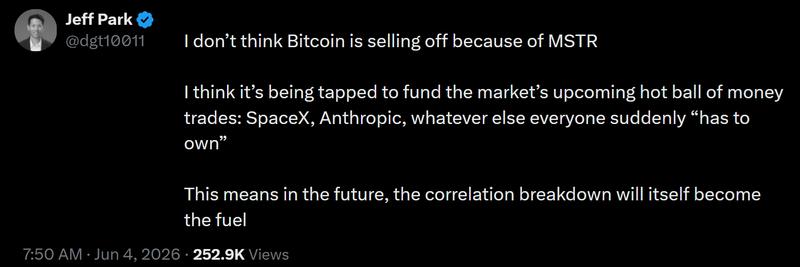
Jeff Park, partner at ParaFi Capital and Bitwise advisor, contends that the AI industry is siphoning capital away from alternative investments as the sector transforms into a "hot ball of money" that market participants suddenly "has to own". Nevertheless, Park emphasizes that when this current AI enthusiasm phase exhausts itself, investment capital will ultimately flow back toward Bitcoin as its relatively discounted price level becomes advantageous.
Irrespective of whether Bitcoin's recent underperformance originates from AI sector enthusiasm, the overconfidence displayed by bearish traders represents a significant vulnerability should spot Bitcoin ETF inflows resume or concerns regarding the recent 32 BTC sale from Strategy (MSTR US) subside. A price recovery toward $66,000 may appear improbable initially, but an unexpected short squeeze has the potential to rapidly reverse momentum toward bullish participants.