
Supreme People's Court of China to Develop Guidelines for Cryptocurrency and AI Litigation
The Supreme People's Court of China is working on developing adjudication guidelines for cases involving cryptocurrency and artificial intelligence, despite maintaining the nation's prohibition on crypto activities.

The Supreme People's Court (SPC) of China has announced its intention to develop new adjudication guidelines for cases involving virtual currency and cross-border financial matters, representing part of a wider effort to establish clearer procedures for courts managing digital economy-related disputes.
During a Wednesday press conference covered by Chinese media outlet Yicai, Liu Guixiang, a member of the SPC's Judicial Committee, stated: "We will conduct in-depth research on the adjudication rules for new cases such as virtual currencies and cross-border finance, formulate judicial interpretations on civil compensation involving insider trading and market manipulation as soon as possible."
Additionally, the court intends to examine judicial protection guidelines for cases concerning artificial intelligence and data property rights, encompassing disputes related to data ownership, transactions involving data and content generated by AI systems.
This initiative seeks to establish more transparent internal judicial frameworks governing how courts should determine disputes and assign liability in lawsuits related to cryptocurrency and AI intellectual property rights. These forthcoming guidelines could enhance consistency in how the court handles the increasing volume of cases linked to crypto and AI within the nation.
These remarks follow several months after a prominent legal case involving Chen Zhi, the Cambodia-based Prince Group's founder and chairman who was born in China. Zhi was taken into custody in Cambodia on Jan. 6, 2026, and subsequently extradited to China, where he is facing allegations connected to running pig butchering scam operations. In October 2025, approximately $15 billion worth of Bitcoin (BTC) was confiscated by the US Department of Justice from operations suspected to be linked to Zhi.

Crypto transaction prohibition continues in China
The relationship between Mainland China and the cryptocurrency sector has been turbulent over the years.
The People's Bank of China (PBOC) took its initial significant restrictive action against the crypto sector in December 2013, prohibiting financial institutions from providing services related to Bitcoin and declaring that Bitcoin lacked recognition as a legitimate currency.
A comprehensive prohibition on all cryptocurrency transactions, mining of Bitcoin, and activities related to initial coin offerings (ICOs) within the nation was issued by ten Chinese agencies, including the securities regulators and central bank, in September 2021.
The PBOC issued a ban in February on the unauthorized issuance of offshore stablecoins pegged to the Chinese yuan and the unapproved creation of tokenized real-world assets (RWAs).
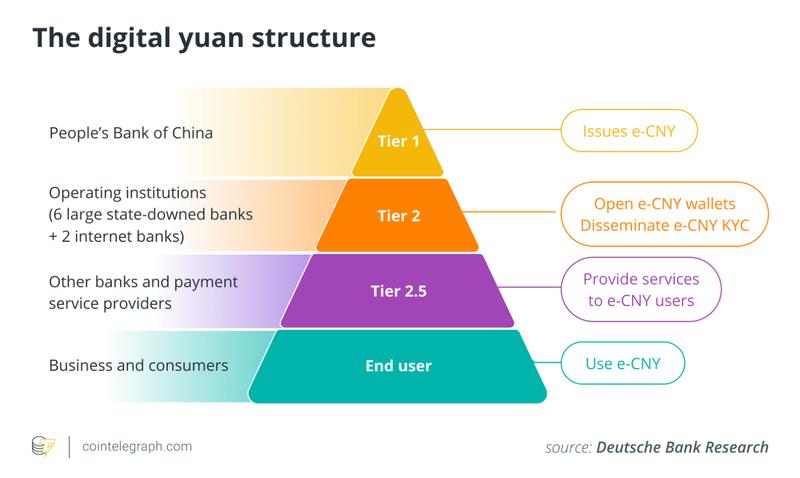
This most recent prohibition arrived soon after the Chinese government granted authorization for commercial banks to provide interest payments to clients who hold the nation's digital yuan, which is a central bank digital currency (CBDC) under the management of state authorities.
This development indicates that the PBOC is intensifying its commitment to deploying its own CBDC backed by the yuan as an innovative form of digital fiat currency, rather than relying on stablecoins.