
Senate Banking Committee May Mark Up CLARITY Act Within Days, Says Coinbase Policy Chief
Banking and cryptocurrency industry groups continue examining the digital asset market structure legislation as fresh polling data reveals strong cross-party public backing for the measure.

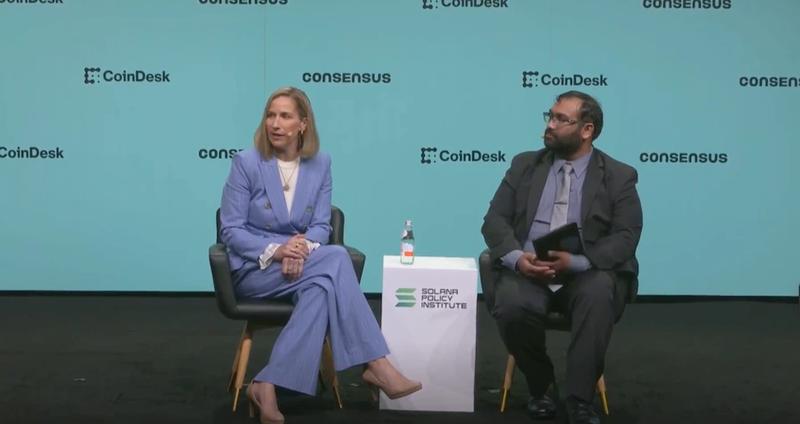
According to Kara Calvert, who serves as vice president of US policy at cryptocurrency exchange Coinbase, the US Senate Banking Committee could conduct a markup of the CLARITY crypto market structure legislation as soon as next week.
During her appearance at the Consensus 2026 cryptocurrency industry conference taking place in Miami, Florida, Calvert shared her forecast with attendees: "My prediction is that we have a markup next week."
Calvert explained that achieving passage in the Senate requires a minimum of 60 votes, emphasizing that the CLARITY legislation must garner support from both political parties to successfully become law. According to her statement:
"That means you need Democrats. You need a bipartisan bill, and we have all been working really hard to make sure that bipartisanship holds. I think the big question is, how do these votes shape up over the next few days?"
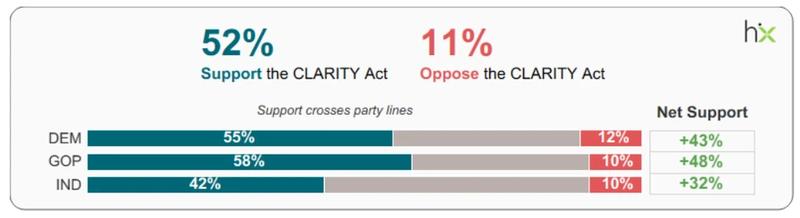
Research conducted by HarrisX and released on Thursday demonstrated widespread, robust and sustained public appetite for definitive federal regulations. The survey found that 70% of voters believe the United States should have already enacted comprehensive cryptocurrency legislation, while 62% indicate it is crucial for the US to establish the worldwide standards for digital finance.
Progress on the CLARITY legislation came to a halt in January following Coinbase's decision to retract its endorsement of the bill, expressing multiple reservations that included insufficient legal safeguards for developers working on open source software, restrictions on stablecoin yield generation, and regulatory provisions affecting decentralized finance (DeFi).
Coherent tax policy remains a barrier to institutional adoption
According to Calvert, the absence of unified tax policies represents the primary "barrier" preventing institutional crypto adoption, noting that reforming tax regulations poses a more significant challenge for institutions than establishing market structure legislation.
She explained that numerous institutional players simply seek to purchase and hold digital currencies or engage in trading digital assets, yet find themselves constrained by burdensome tax compliance obligations and reporting mandates.
She further noted that current regulatory requirements for tax reporting compel the Internal Revenue Service (IRS) to mandate that cryptocurrency exchanges record every single crypto transaction through 1099-DA documentation forms.
Calvert stated, "We're sending out millions of 1099-DA's for things like $1 transactions — that makes zero sense."
Looking ahead, she expressed optimism that tax reform legislation could make headway through Congress during 2026, referencing multiple crypto-related tax proposals that have been put forward by US lawmakers, including the Digital Asset PARITY Act, which was introduced by Representatives Max Miller and Steven Horsford in March.
"I think that we will see action in the Senate. I think we will see legislation, probably in the next month or two, in the House," she said.