
Quantum Protection for Ethereum Wallets Available at 7-Cent Price Point, Kohaku Lead Reveals
The SPHINCS- initiative seeks to lower the expense of quantum-resistant signature verification on the Ethereum network as developers pursue a more permanent resolution.

According to Nicolas Consigny, who leads the Ethereum Foundation's Kohaku initiative, Ethereum has the potential to implement quantum-resistant security measures for user accounts at a minimal cost of just $0.07, and this can be achieved without the need to wait for a network hard fork.
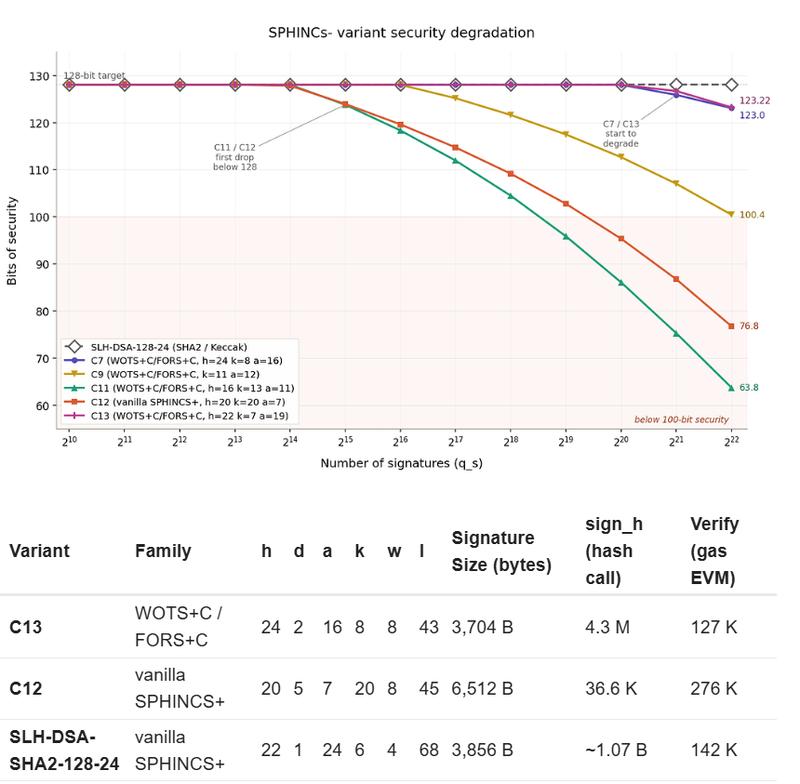
Through a post shared on X this past Saturday, Consigny unveiled a research paper outlining a more economical method for Ethereum account holders to safeguard their wallets against emerging quantum computing dangers. The methodology modifies SPHINCS+, a quantum-resistant cryptographic signature standard created by the United States National Institute of Standards and Technology, making it function more effectively within the Ethereum ecosystem.
Named "SPHINCS-," this innovative proposal is designed to decrease the costs associated with onchain verification while avoiding the need for a protocol modification or precompile implementation. Consigny characterized SPHINCS- as a transitional solution leading to an upcoming quantum-resistant signature framework called "leanSPHINCS," which seeks to achieve additional cost reductions in verification through the use of aggregation techniques.
The initiative attempts to tackle the extended timeline threat that quantum computing poses to Ethereum's Elliptic Curve Digital Signature Algorithm by providing an economically viable solution that can be implemented prior to the development and deployment of a specialized hard fork.
Emerging quantum computing dangers spark concern across cryptocurrency sector
Back in April, a startup focused on post-quantum security called Project Eleven granted an award to researcher Giancarlo Lelli for successfully employing a quantum computer to compromise a 15-bit elliptic-curve cryptographic key.
The keys used by Bitcoin measure 256 bits in length, considerably more extensive than the 15-bit key that Lelli succeeded in breaking. He was able to derive the corresponding private key from its paired public key by utilizing a modified version of Shor's algorithm, a quantum computational method that in theory presents a danger to the cryptographic systems employed by Bitcoin.
Based on data from Glassnode, approximately 1.92 million Bitcoin, which accounts for nearly 10% of the cryptocurrency's total supply, are deemed "structurally unsafe" when considering a potential quantum attack scenario in the future. An additional 4.12 million BTC, representing 20.6% of the overall supply, fall into the category of "operationally unsafe" as a result of key management or address handling practices.
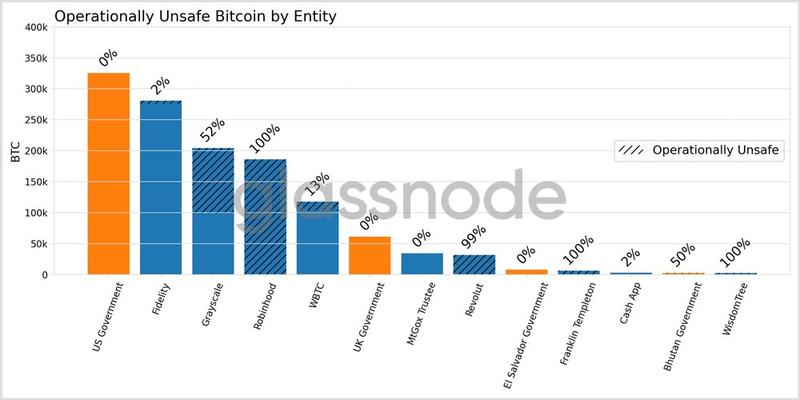
The blockchain analytics firm calculates that the remaining 69.8% of Bitcoin's supply, equivalent to 13.99 million Bitcoin, continues to be protected from quantum computing threats, which aligns closely with Ark Invest's assessment from March suggesting that 65% of the supply maintained adequate security.