
Kate Fraher of Silvergate Speaks Out Following SEC Settlement Agreement
Kate Fraher, who previously held an executive position at Silvergate, described the restriction preventing her from publicly discussing her perspective as violating constitutional rights. The SEC removed this restriction earlier this week.

The individual who previously served as Silvergate's chief risk officer has disclosed that her choice to reach a settlement agreement with the United States securities regulatory body in 2024 was made to sidestep what would have been a "multi-year battle" through the legal system, where allegations were brought against her for misleading investors regarding anti-money laundering regulations and the bank's monitoring procedures for cryptocurrency clients.
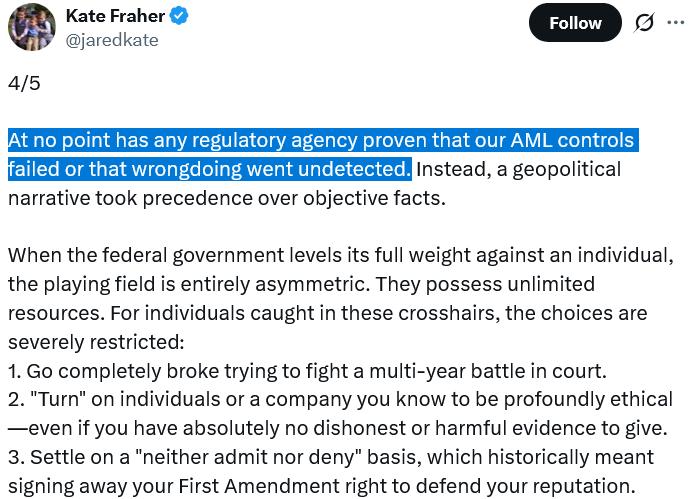
During her initial public statements regarding her settlement agreement with the SEC on Wednesday, Kate Fraher asserted that no financial regulatory agency successfully demonstrated that Silvergate's anti-money laundering controls had experienced failures, and that her decision to settle was solely motivated by a desire to "move forward."
The settlement terms required Fraher to pay a civil penalty totaling $250,000 and included a prohibition preventing her from holding positions as a company executive or serving on a board of directors for a period of five years.
The process itself is designed to apply maximum pressure, and the human costs are real. I was personally de-banked and had credit lines summarily closed—an aggressive tactic used to disrupt daily life and force compliance.
These public statements offer additional perspective regarding the events and circumstances that led to Silvergate's wind-down, a financial institution known for its crypto-friendly approach that made the voluntary decision to cease operations in the aftermath of FTX's collapse. According to Fraher, her newfound ability to discuss the matter publicly became possible after the SEC reversed its longstanding "gag rule" on Monday.
According to Fraher, the decision to wind down operations was not the result of a "bank run" or financial market volatility stemming from FTX's November 2022 collapse, despite the fact that the institution experienced a withdrawal of deposits amounting to approximately 70%.
Rather, according to Fraher's account, the institution made the decision to cease operations because the "broader administrative and regulatory pressure levied against the digital asset industry made operating a viable business impossible."
Numerous voices within the crypto industry characterized this regulatory approach as "Operation Chokepoint 2.0," referring to an alleged but unconfirmed strategy whereby US financial regulatory bodies systematically cut off access to banking services for cryptocurrency companies as a means to limit their capacity to function within the larger financial ecosystem.
The crypto-friendly banking institution Silvergate was not alone in facing the consequences of these stringent regulatory measures, which became more intense in the period following FTX's November 2022 collapse.
Both Signature Bank and Silicon Valley Bank ceased operations in the early months of 2023, with contributing factors including deposit runs, stress related to liquidity, and contagion effects connected to FTX and multiple cryptocurrency lending platforms that filed for bankruptcy during 2022.
However, according to Fraher's account, by early 2023, the institution had successfully navigated through the FTX collapse by implementing business restructuring measures that included "appropriate capital levels" and a "right-sized workforce" that would have enabled the continuation of safe operations.
Fraher Contends Gag Policy Violated Constitutional Rights
Fraher expressed appreciation for the current SEC leadership under Paul Atkins for terminating the gag rule, which she characterized as an "unconstitutional policy."
I am glad the right to speak the truth has finally been restored. We must continue to talk about the long-term professional and personal toll exacted on individuals by regulation through enforcement.