
BTC Resists Tech Sector Downturn: Could $70K Be the Next Target?
While derivatives markets remain cautious, Bitcoin's independence from traditional markets and Strategy's capital infusion create conditions for a possible climb to $70,000.

Key takeaways:
- Large-scale traders continue to favor protective positions in Bitcoin futures and options markets as global socio-economic uncertainties intensify.
- Increasing yields on Treasury bonds and weakness in artificial intelligence equities drive cautious market sentiment, though Bitcoin's resilience indicates ongoing separation from traditional assets.
Over the previous seven days, Bitcoin (BTC) demonstrated notable resilience, though it was unable to surpass the $65,500 threshold. What's particularly significant is the digital currency's divergence from conventional financial markets as market participants locked in gains from semiconductor manufacturers, driven by concerns over inflated valuations within the artificial intelligence industry. However, when examining derivative market indicators for Bitcoin, institutional investors appear hesitant about a potential advance to $70,000.
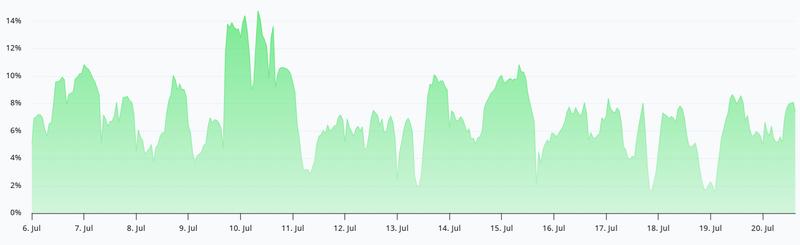
On Monday, the annualized funding rate for Bitcoin perpetual futures maintained a neutral position at 8%, unchanged from the previous week's measurement. When traders exhibit excessive appetite for long positions with leverage, this metric typically climbs beyond the 12% threshold, a level that was last recorded on July 10. Whether the subdued optimism among Bitcoin market participants stems from spillover concerns related to the technology stock decline or escalating tensions involving Iran remains ambiguous.
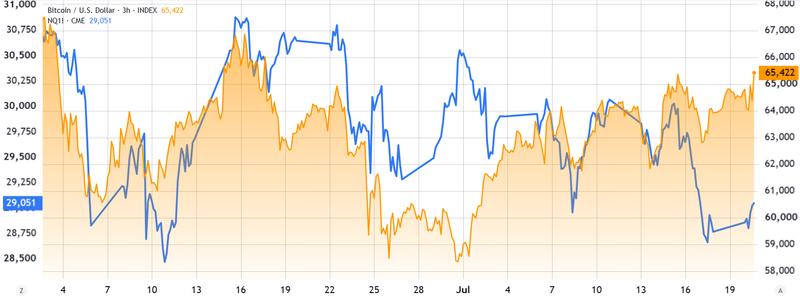
The Nasdaq-100 Index, dominated by technology companies, fell beneath the 28,800 level on Friday, marking its lowest point in five weeks, whereas Bitcoin exhibited robust performance throughout the weekend and ultimately climbed above $65,000 on Monday. During the preceding week, Strategy successfully secured $263 million through the sale of common stock, alleviating worries about possible Bitcoin liquidation pressure.
Market participants had grown significantly concerned regarding Strategy's annual perpetual preferred equity dividend obligations of $1.76 billion, alongside convertible debt instruments totaling $2.6 billion scheduled to mature in 2028 and 2029. Through bolstering its cash position to a substantial $3.22 billion, the organization aims to remove doubts arising from unrealized losses on Bitcoin holdings reflected in its financial statements.
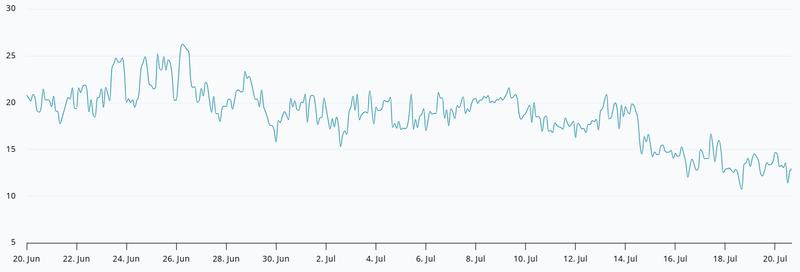
On Monday, the delta skew for Bitcoin 30-day options registered at 13%, indicating that put options (bearish bets) commanded higher premiums compared to call options (bullish positions). During balanced market conditions, this measurement typically fluctuates between -6% and +6%. Even with the moderate advancement from the 19% delta skew observed in the previous week, major institutional players and market makers continue to show reluctance toward maintaining exposure to potential price declines.
BTC's Strength Persists Despite AI Stock Weakness and Growing Risk Aversion
The downturn affecting artificial intelligence-related equities has additionally prompted investors to embrace more conservative positioning. Significant share price reductions across IBM, SanDisk, Oracle, ARM, SpaceX and Intel occurred simultaneously with an upward movement in 5-year US Treasury yields. Market participants are requiring elevated returns for holding government debt instruments, suggesting expectations of additional expansionary monetary policies stemming from persistent fiscal deficit challenges.
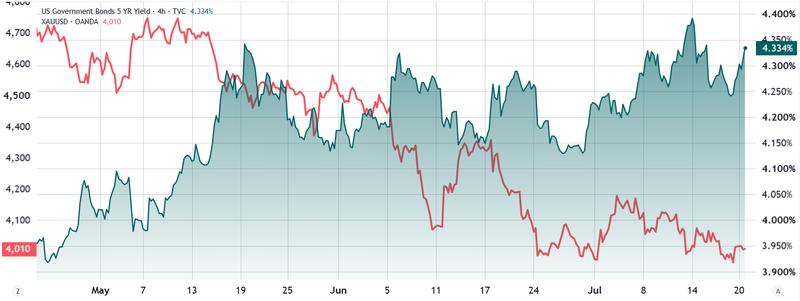
By Monday, the yield on US 5-year Treasury instruments had climbed to 4.33%, representing an increase from the 4.22% level recorded two weeks earlier. Interestingly, gold valuations have followed a descending trajectory since the middle of May, implying that virtually every asset category has experienced pressure from the weakening worldwide economic expansion prospects and persistent geopolitical instability throughout the Middle East region.
US President Trump pledged on Monday to launch retaliatory measures against Iran following a missile attack that resulted in the deaths of US military personnel in Jordan, placing risk-sensitive assets under heightened scrutiny. The advance of Bitcoin to $65,500 bolsters the argument for continued separation from conventional financial instruments, particularly as indicators point toward monetary base growth. Even without pronounced bullish sentiment evident in BTC derivative markets, a movement toward $70,000 might be triggered by disappointing corporate financial results, particularly within the AI industry segment.