
$67K Bitcoin Target Holds Strong: Weekly BTC Preview Highlights Five Key Factors
Despite escalating tensions between the US and Iran pushing oil prices higher, Bitcoin analysts remain committed to bullish BTC price projections as a new macroeconomic trading week begins.
As Bitcoin (BTC) enters the final full trading week of July, the cryptocurrency maintains crucial support levels even as macroeconomic uncertainties loom on the horizon.
Key points:
- The flagship cryptocurrency maintains its position above the 200-week trend line following the weekly close, with near-term Bitcoin price objectives reaching as high as $67,000.
- Tensions between the United States and Iran intensify, pushing crude oil values to five-week peaks as markets prepare for a wave of corporate earnings announcements.
- Spot market demand for Bitcoin pulls back from the uptick witnessed in early July, even as exchange-traded fund inflows continue.
- The Puell Multiple indicator for Bitcoin trends upward, though market observers remain hesitant to declare a "generational low."
- Sentiment across cryptocurrency markets reaches its strongest point since early June.
Analyst anticipates "further relief" for BTC bulls
Following a now-familiar pattern, Bitcoin experienced selling pressure immediately after the weekly candle close and into Monday's Asian session, with price action touching local support at $63,700, according to data sourced from TradingView.
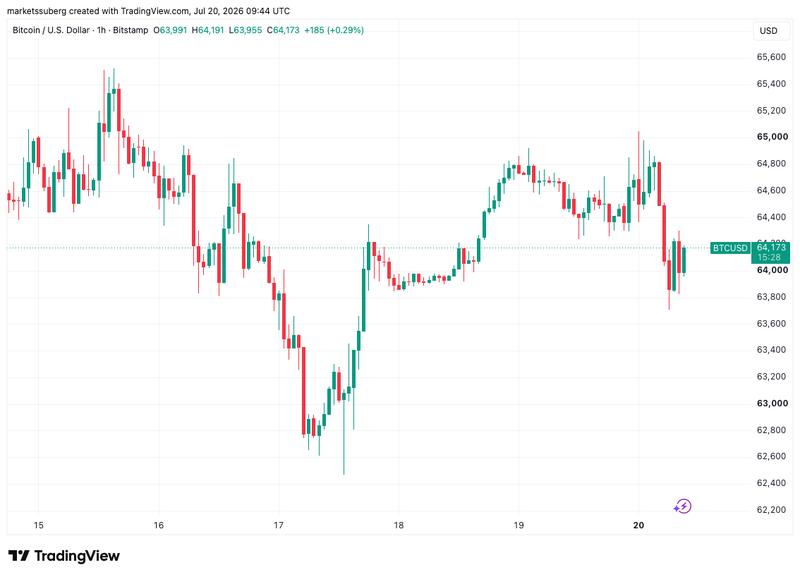
Nonetheless, market participants are growing progressively more bullish on shorter timeframes as the lower bounds of the current range remain intact.
"Wouldn't surprise me if we see some further relief this week - towards 65-67k," trader Jelle forecasted in his most recent market assessment shared Monday morning via X.
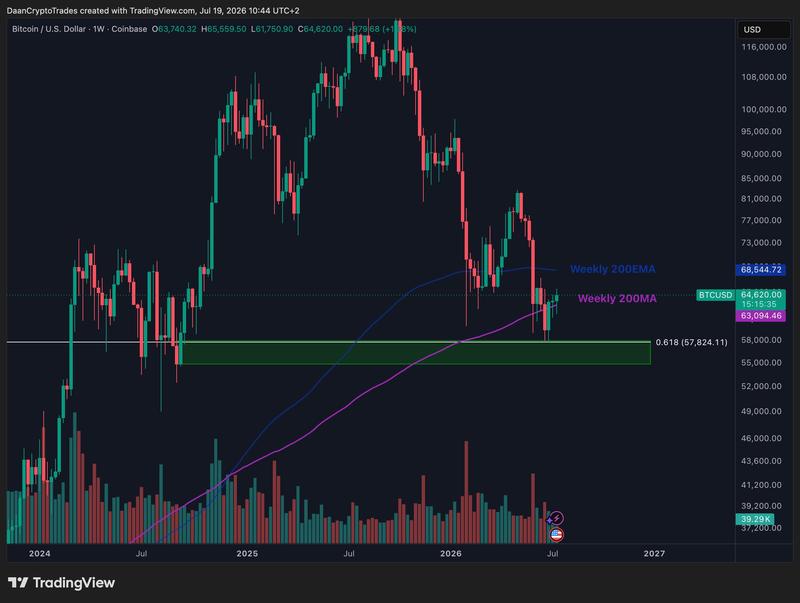
Market analyst Daan Crypto Trades highlighted that BTC/USD had successfully secured its third successive weekly close positioned above the 200-week simple moving average (SMA), which currently sits at $63,322.
"To really get this interesting you want to see a strong push higher now to retrace that last leg down and get back above the Weekly 200EMA," he communicated to his X audience, making reference to the 200-week exponential moving average (EMA) currently positioned at $68,521.
"Until then, we're just caught in this $60K choppy price range."
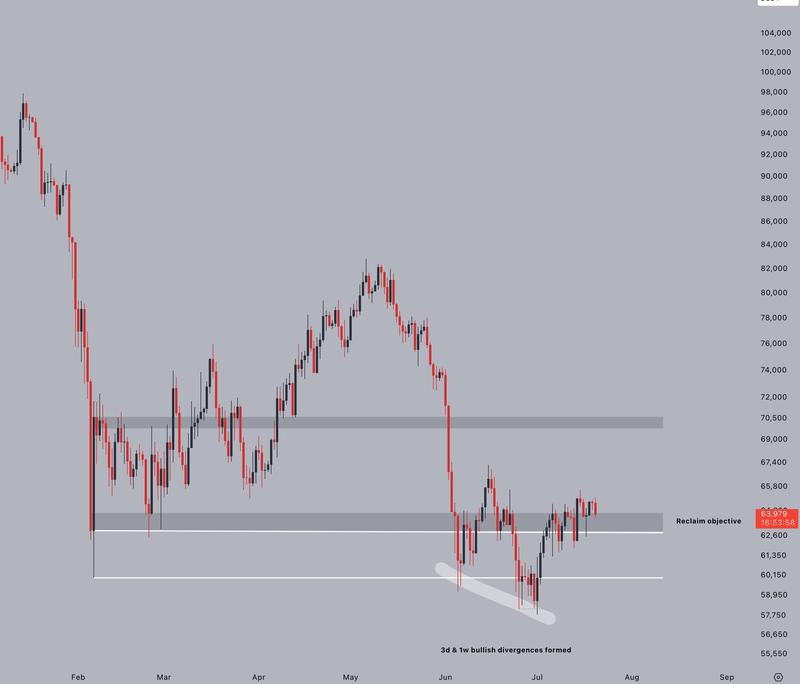
Additional market participants reinforced their bullish outlook, with trader Roman once more identifying numerous bullish divergences throughout BTC price indicators, including the relative strength index (RSI), a traditional leading technical signal.
Providing a counterpoint to the prevailing optimism was the seasonal analysis, with historical BTC price cycle patterns suggesting another year of bearish market dynamics.
"Bitcoin is more than halfway through its second year in the current BTC Four Year Cycle. 2025 proved to be the year of the $BTC Bull Market peak. And 2026 has proven itself to be the year of the Bitcoin Bear Market," market trader and analyst Rekt Capital outlined.
"2027 will be the Bottoming Out year to precede an entirely brand new future Bitcoin Bull Market."
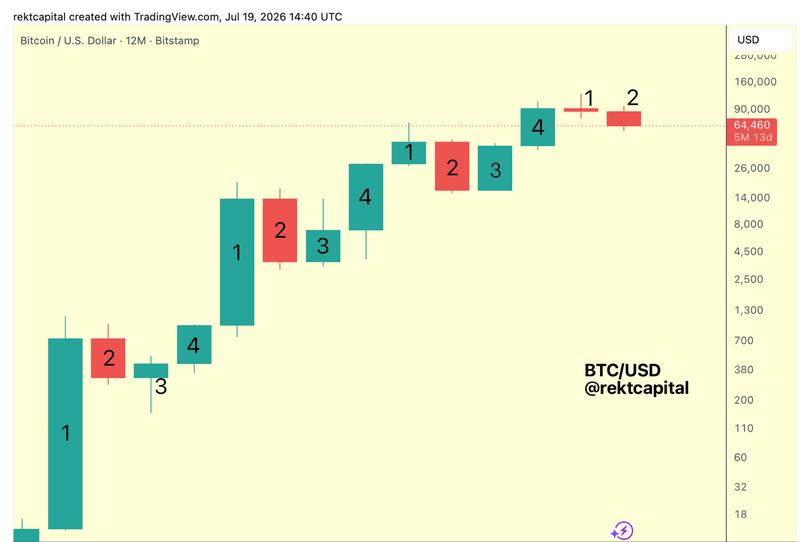
According to Cointelegraph's previous coverage, Rekt Capital presently estimates the ongoing bear market to have progressed just beyond 70% of its expected duration.
Escalating Iran tensions drive crude oil markets higher
Geopolitical uncertainty takes center stage for traders of risk assets throughout the week as confrontations between the United States and Iran intensify once more.
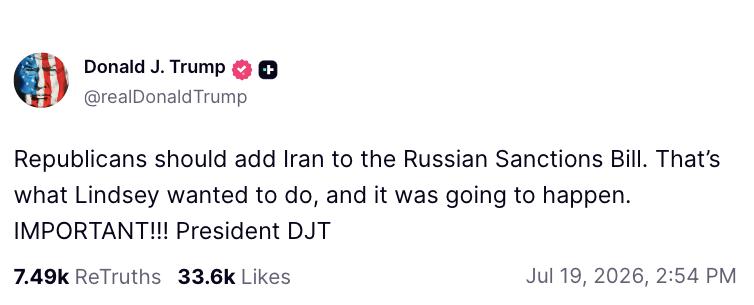
The Iranian foreign minister issued warnings regarding potentially "unresolvable" disagreements over nuclear matters while United States President Donald Trump urged legislators to incorporate Iran into a sanctions package that had initially targeted Russia.
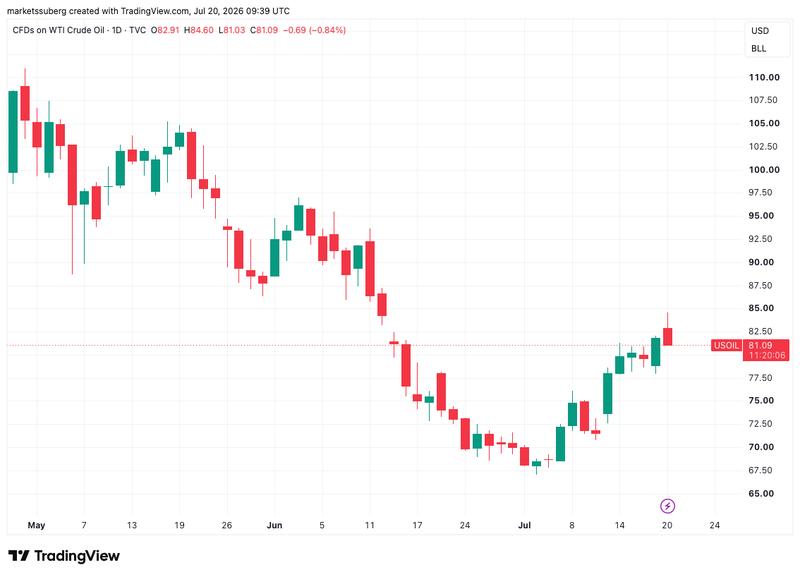
Crude oil futures experienced sharp upward movement at the start of the week, with West Texas Intermediate (WTI) crude reaching five-week peaks above the $80 per barrel threshold and Brent crude surpassing $90.
As previously documented by Cointelegraph, the renewed escalation of hostilities resulted in the rapid closure of the Strait of Hormuz, a critical global petroleum transit route, which had been temporarily reopened for commercial traffic as part of the now-collapsed peace agreement between the US and Iran.
These recent developments involving Iran create a turbulent environment for the week's macroeconomic landscape, which centers on significant corporate earnings releases as technology sector equities confront fresh challenges.
In the days ahead, Tesla, Alphabet and Intel are all scheduled to publish their earnings reports, potentially serving as short-term catalysts for volatility throughout risk asset markets.
"Earnings season is officially in full-swing," market research resource The Kobeissi Letter noted in a series of posts on X.
In the wake of the previous week's inflation figures from the United States coming in below expectations, President Trump expressed optimism, characterizing the data as "great news."
"As Investment pours into our Country, Factory Construction surges, Manufacturing Jobs rise, and Prices fall, there is so much to be proud of — The Golden Age of America is here!" he declared in a post shared on Truth Social.
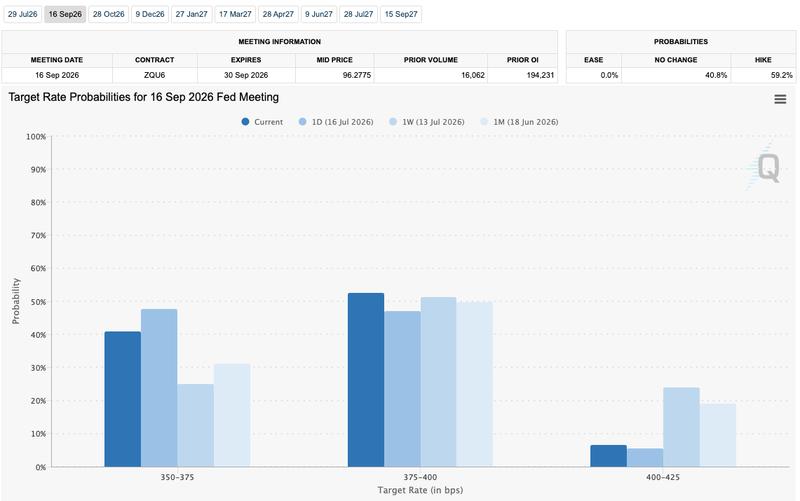
Financial markets maintained a cautious stance regarding potential policy adjustments from the Federal Reserve, with the most recent information from CME Group's FedWatch Tool indicating market consensus favoring a 0.25% interest-rate hike when policymakers convene in September.
Spot market demand for Bitcoin weakens again
Underwhelming demand within spot markets continues to represent a significant obstacle on the pathway toward a sustained bull market recovery, according to recent research findings.
In a detailed blog post published Monday, blockchain analytics platform CryptoQuant disclosed that a moderate uptick in demand observed during early July had already reversed course.
"Bitcoin's 30-day Spot Demand recovered sharply to around -80K BTC in early July but has since deteriorated again to nearly -170K BTC," analyst ScenarioX documented.
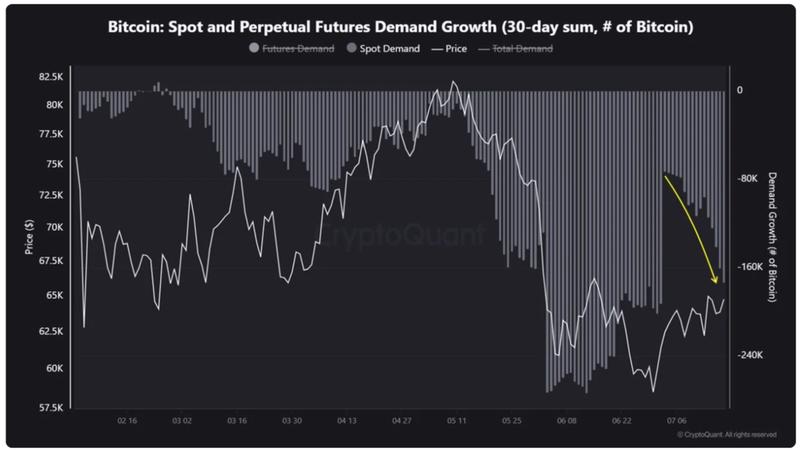
Previously, Cointelegraph documented spot demand remaining in negative territory while experiencing substantial improvement on a rolling 30-day measurement as BTC/USD approached $64,000. Simultaneously, futures markets witnessed a more substantial surge of trading interest.
This trend was mirrored in the net capital flows directed toward United States spot Bitcoin exchange-traded funds (ETFs), which recorded positive inflows during four of the five trading sessions last week, based on data compiled by Farside Investors, a UK-based investment management firm.
"Despite this significant decline in spot demand, Bitcoin's price has remained relatively stable, mainly due to easing short-term selling pressure and short covering in the derivatives market,' ScenarioX explained.
"However, derivatives demand remains insufficient to support a sustainable uptrend on its own. This leaves the market in a structurally fragile state, where renewed spot selling could trigger a sharp downside move."
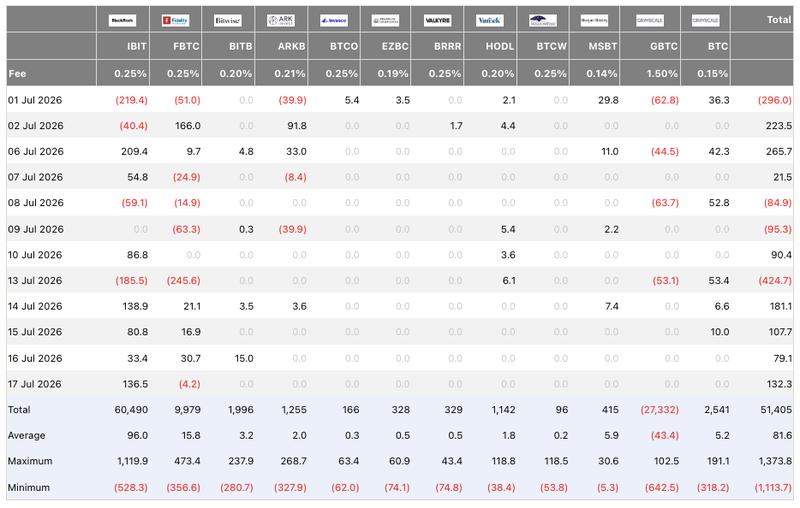
CryptoQuant indicated that market momentum could potentially persist "for a while" before demand from futures participants becomes depleted.
"However, the rally without meaningful spot demand is likely to end in a significant long liquidation event," ScenarioX cautioned.
Low Puell Multiple readings fail to signal conviction
A traditional Bitcoin price indicator is displaying indications of a potential reversal during this month, but CryptoQuant cautions that declaring a "generational low" would be premature.
The Puell Multiple, an indicator that compares the USD value of daily Bitcoin issuance against its 365-day moving average, continues its upward trajectory following macro-level lows recorded during early June.
"A low reading means miner income is well below normal," CryptoQuant analyst TheChessOnChain clarified in a comprehensive blog post.
The Puell Multiple consequently provides insight into the financial health of Bitcoin mining operations, and the 0.87 reading from June represented the lowest level observed since September 2024. When examining longer timeframes, however, each Bitcoin price cycle has produced progressively higher lows for the Puell Multiple, potentially increasing the likelihood that the most recent low establishes the next support floor.
"These bottoms are getting shallower, and the four-year supply cut (the halving) is not the cause: the metric scales both sides of its ratio, so cutting new supply cancels out. The real driver: price falls less each cycle (down 83% in 2018, 77% in 2022, less since), so miner income never sinks as deep," TheChessOnChain observed.
Although Puell Multiple lows do not necessarily coincide precisely with BTC price bear-market floor levels, TheChessOnChain proposes that anticipating new, deeper readings — including the indicator's traditional deep value zone — might prove to be a misguided approach.
"The 2024 and 2026 lows came with price still high, so they are Puell lows, not price bottoms. Waiting for the classic sub-0.5 zone, where miners sell at a loss, may mean waiting for a level that no longer prints," they noted.
"Today reads as easing miner pressure, not a generational low. It turns decisive only if it holds beneath recent lows for weeks."
Cryptocurrency sentiment indicator approaches two-month peak
Notwithstanding macroeconomic challenges that emerged over the weekend, sentiment across cryptocurrency markets continues displaying a consistent recovery pattern.
The most current measurements from the Crypto Fear & Greed Index demonstrate that panic is gradually subsiding among the wider investor population.
On Monday, the indicator registered 29/100 — remaining within its "fear" classification but representing its strongest reading since early June commenced. Throughout the majority of the time period in between, cryptocurrency markets were dominated by "extreme fear."
In analytical commentary addressing the rebound during the previous week, research platform Santiment emphasized its correlation with the resumption of ETF inflows.
"After a long outflow stretch throughout May and June, this shift signals ETF demand is back and confidence in crypto is starting to pick up again," the platform stated on X.
Santiment maintained that "encouraging" inflation data originating from the United States had contributed to strengthening risk appetite, while "crypto policy optimism added another reason for sidelined buyers to re-enter."