Why Bitcoin's Path Above $80K Remains Blocked
BTC's attempt to sustain trading above $80,000 encounters obstacles from limited capital deployment and hesitant futures market participation, with blockchain data indicating that strong bullish sentiment has yet to make a full comeback.


Bitcoin (BTC) faces challenges in achieving a more robust upward movement beyond the $80,000 mark, with capital flowing into the cryptocurrency market remaining significantly lower than volumes observed during previous bullish cycles. Participants in BTC futures markets continue to exercise restraint, and an increasing cohort of holders who have maintained positions over the last six months could potentially liquidate near critical resistance zones, fresh analysis reveals.
Glassnode reports subdued Bitcoin capital deployment
According to Glassnode's Week On-chain analysis, Bitcoin's realized cap net position change over a 30-day period has recently reached $2.8 billion monthly. This indicator measures the volume of fresh capital making its way into the BTC marketplace within a 30-day window.
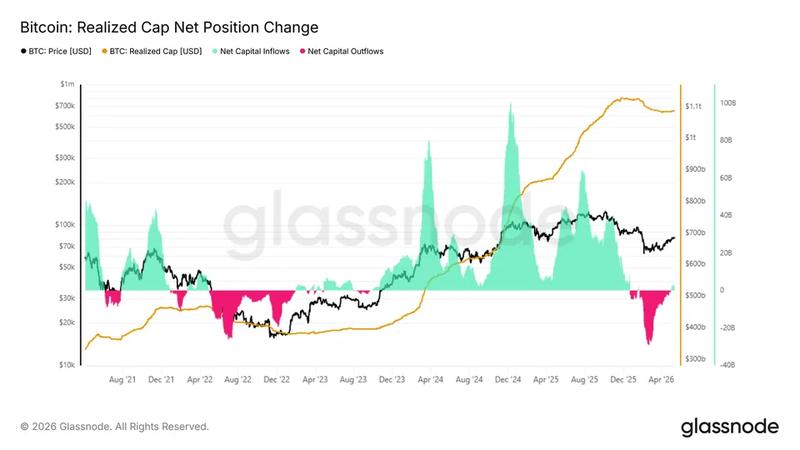
These positive capital movements provided crucial support for BTC's rebound from the April bottom near $65,000. However, earlier upward breakout movements throughout the 2023–2025 bull run witnessed substantially larger capital rotations. This year's reduced velocity of capital deployment into the market has sparked questions regarding Bitcoin's ability to push beyond the $80,000–$82,000 trading band.
Glassnode's research additionally highlighted a concentrated accumulation of position holders clustered around the $86,900 price point. This group of investors purchased BTC throughout the November-to-February timeframe and are now nearing their cost basis. Following prolonged price declines, these market participants may choose to exit positions close to their original entry prices, establishing a substantial overhead resistance zone that could impede Bitcoin's upward trajectory.
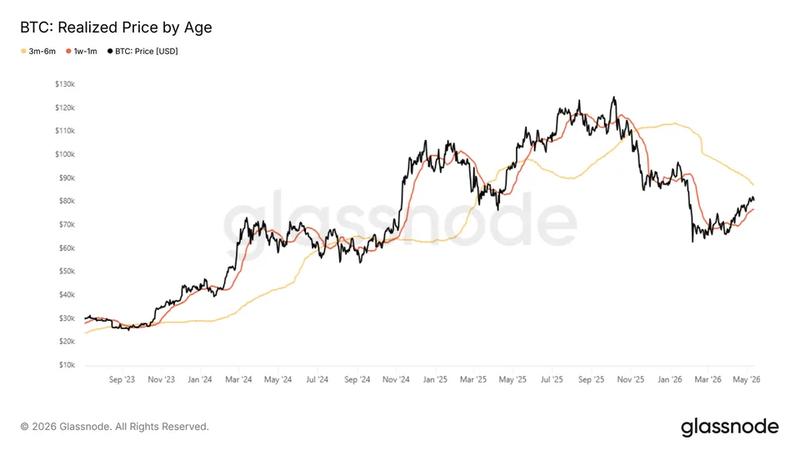
Market support from recent purchasers persists around the $76,900 level, representing the mean cost basis for coins bought during the previous 30 days. This suggests that new purchasing interest continues to materialize at these lower price ranges, while significant overhead supply remains concentrated near $87,000.
Futures market participants maintain cautious stance
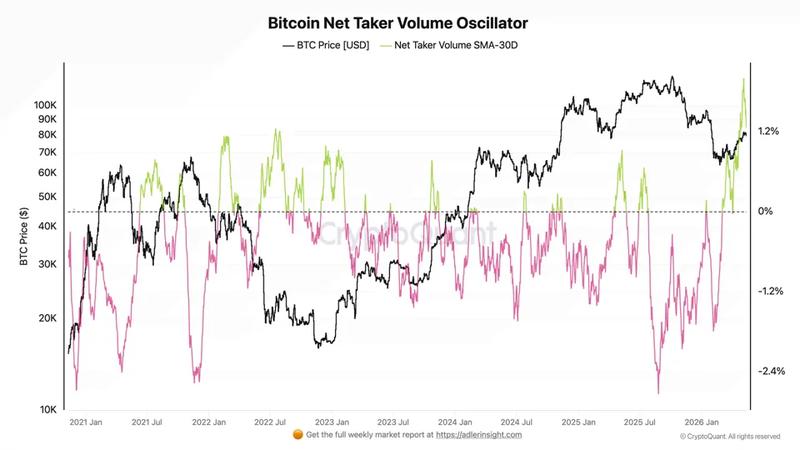
Bitcoin analyst Axel Adler Jr. observed that purchasing momentum across both spot and derivatives markets has begun to moderate following Bitcoin's latest advance past $80,000. The 30-day net taker volume measurement climbed to +2.0 on May 6 before declining to +1.25 on Wednesday. This indicator reveals whether market buyers or sellers hold dominance.
Buying pressure from BTC traders has declined approximately 35% compared to the previous week, demonstrating that market participants are exhibiting less aggressive behavior as Bitcoin hovers near $80,000. Adler highlighted that historical pullbacks to the +0.3 territory frequently align with reduced price momentum or consolidation phases.
Concurrently, Bitcoin's 30-day funding rate has stayed in negative territory since March. When funding rates turn negative, short position holders compensate long position holders for maintaining their trades, revealing that pessimistic traders continue to control futures market activity.
Despite Bitcoin's recapture of the $80,000 price range, participants in BTC futures markets have failed to establish the long position accumulation required to fuel a convincing breakout. According to Adler, a return to positive territory in funding rates would represent the first more convincing indication of revitalized bullish market positioning.
Separately, Alphractal CEO Joao Wedson indicated that Bitcoin requires more substantial capital flows before a broader bull cycle can commence. Wedson referenced the Realized Cap Impulse indicator, which monitors whether new capital is flowing into or exiting from the Bitcoin ecosystem.
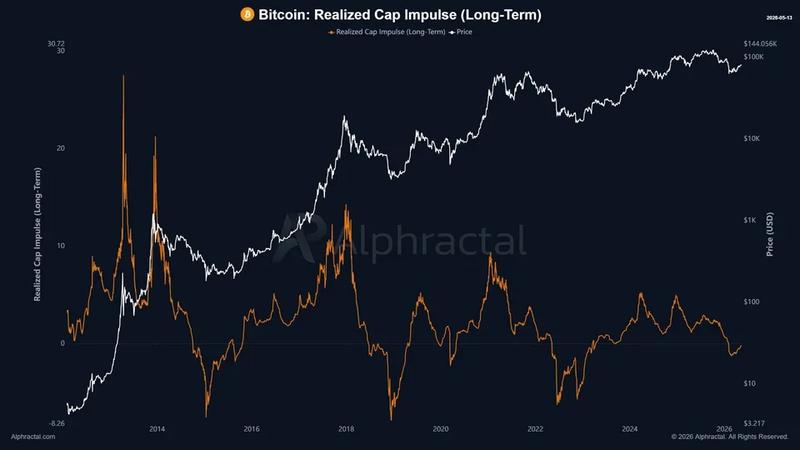
This measurement currently sits marginally below the zero threshold, demonstrating that new capital entering the market has not yet recovered to volumes characteristic of more powerful Bitcoin upward breakout movements. Wedson stated that a climb above zero would confirm that market participants are deploying fresh capital back into Bitcoin.