Valeo Partners with Solana's Natix Network to Integrate DePIN Into Autonomous Vehicle AI
Through a strategic collaboration, Natix and Valeo are developing a decentralized camera model for self-driving technology, establishing a transparent framework to enable the secure widespread adoption of physical artificial intelligence systems.

Natix Network, a decentralized physical infrastructure network (DePIN) provider operating on Solana, has joined forces with automotive technology supplier Valeo to develop an open-source, multi-camera artificial intelligence (AI) model designed to enhance autonomous vehicle driving systems.
In an announcement made on Thursday, the collaborating companies revealed their plans to create what they're calling the World Foundation Model (WFM), a system designed with the capability to learn from and predict actual real-world movement patterns, while dynamically adjusting to various traffic conditions and scenarios.
According to an announcement provided to Cointelegraph, the multi-camera model seeks to expand the capabilities of AI models beyond text-based comprehension into real-world applications within physical environments. Additionally, the initiative aims to further research and development in the autonomous driving sector.
Both Valeo and Natix have committed to making their models, datasets and training tools publicly available, allowing developers to customize and refine these functionalities. A Natix spokesperson informed Cointelegraph that the initial release of the WFM model is anticipated to be completed in the coming months.
WFM to accelerate advent of self-driving vehicles
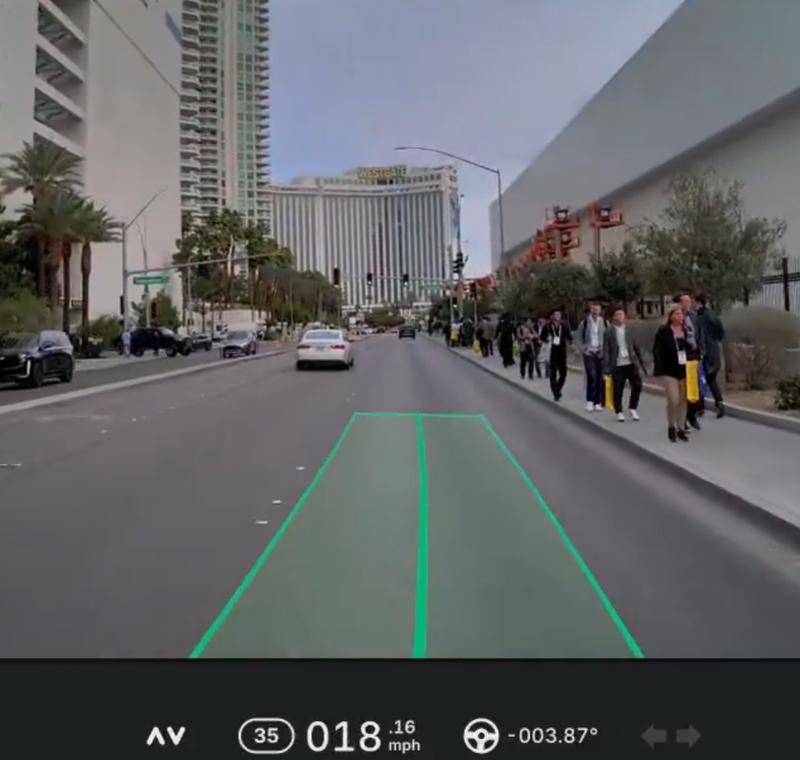
The autonomous driving company Wayve has already begun implementing WFMs in its fleet of vehicles, which included a demonstration where a vehicle successfully drove through sections of Las Vegas without any previous training specific to that city, based on information provided by the company's CEO, Alex Kendall, on Friday.
The WFM represents a component of the broader DePIN sector, which combines blockchain technology with community-driven physical infrastructure to establish decentralized networks where participants contribute resources, including computing power, receiving cryptocurrency as compensation for their contributions.
According to Marc Vrecko, CEO of Valeo's Brain Division, the primary objective of the WFM self-driving camera model is to safely and responsibly "advance mobility intelligence" while accelerating the emergence of autonomous vehicles in the marketplace.
For Alireza Ghods, co-founder and CEO of Natix, WFMs represent a once-in-a-generation opportunity comparable to the emergence of large language models (LLMs) that occurred between 2017 and 2020.
The teams that build the first scalable world models will define the foundation of the next AI wave: Physical AIs.
In contrast to existing perception-focused AI models, the multi-camera world model aims to develop predictive functionalities that will speed up the widespread commercial rollout of self-driving vehicles.

According to Natix, making the WFM decentralized and open-source could enable physical AI systems to undergo training and testing across a broader spectrum of real-world conditions prior to their deployment. "Transparent frameworks allow the ecosystem to move faster," stated a company spokesperson, emphasizing that comprehensive testing is essential for ensuring safety.
Competitive landscape and scale of Valeo–Natix bet
Among the primary competitors facing Valeo and Natix is Alpamayo, an open-source family of vision-language-action models developed by chipmaking giant Nvidia. This competing solution utilizes camera and sensor data for making decisions through reasoning-based autonomy systems.
Established in 2020, Natix operates a decentralized network of multi-camera data collection which, based on research from industry analyst firm Messari, comprises hundreds of thousands of participants and has accumulated hundreds of millions of kilometers worth of recorded driving data.