The Future of DAOs Requires Evolution, Not Extinction: Aave's Kulechov
Stani Kulechov, founder of Aave, argues that decentralized autonomous organizations need structural transformation to overcome governance challenges and inefficient decision-making processes, as discussions continue regarding the Aave Will Win proposal and the protocol's future trajectory.

According to Stani Kulechov, who founded the decentralized lending platform Aave, decentralized autonomous organizations (DAOs) require fundamental restructuring, particularly regarding the balance between tokenholder voting rights and guidance from leadership figures.
These remarks followed ongoing governance controversies surrounding the protocol's future trajectory.
In a Tuesday post on X, Kulechov stated that DAOs in their present configuration are "extraordinarily difficult" to manage due to internal disagreements and governance proposals that can require weeks of discussion threads, preliminary polls, and successive voting rounds before approval.
The design philosophy behind DAOs envisions operations without central leadership, relying instead on community-driven consensus for all choices; nevertheless, typical participation levels in DAOs hover between 15% and 25%, potentially resulting in challenges including concentrated authority and suboptimal governance outcomes.
"DAOs also become politicized very quickly and it's easy for voting to become about attention. Participants take sides, lean toward the loudest voices, and form political alliances to get their own proposals passed later," Kulechov said.
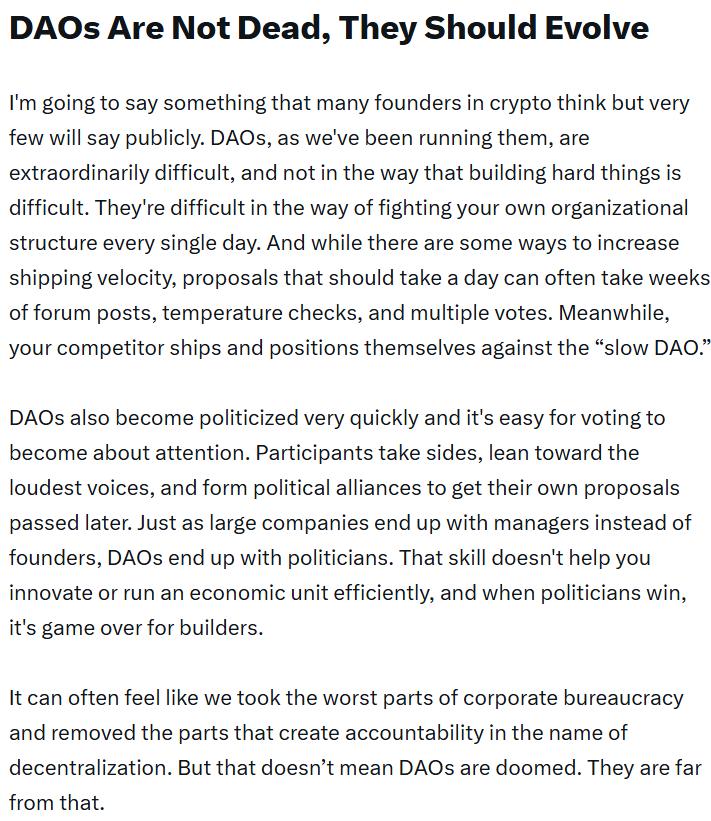
"It can often feel like we took the worst parts of corporate bureaucracy and removed the parts that create accountability in the name of decentralization. But that doesn't mean DAOs are doomed. They are far from that," he added.
DAOs should keep what works, leave the rest
According to Kulechov, the solution moving forward requires DAOs to retain the elements they "got right" while remedying "what they got wrong."
His vision includes maintaining rules encoded in software, as DAOs traditionally execute decisions via smart contracts deployed on blockchain networks, ensuring treasury transparency remains accessible to all stakeholders, and preserving tokenholder influence over significant strategic choices.
That said, Kulechov maintains that moving forward, token holders shouldn't vote on everything, as the day-to-day management of the protocol demands dedicated teams and leadership figures, rather than thousands of individual voters.
"Someone needs to wake up every morning with the full context in their head and make hard calls," he said.
"The difference is that their decisions and performance are all on-chain and transparent, and token holders can fire the team when objectives are not met. Accountability is verifiable, and that is what separates this from a traditional company. There is no vendor lock-in."
Aave governance proposals spark exit
These observations from Kulechov arrive during ongoing discussions surrounding a governance initiative, the "Aave Will Win Framework," which successfully cleared a temperature check on March 1.
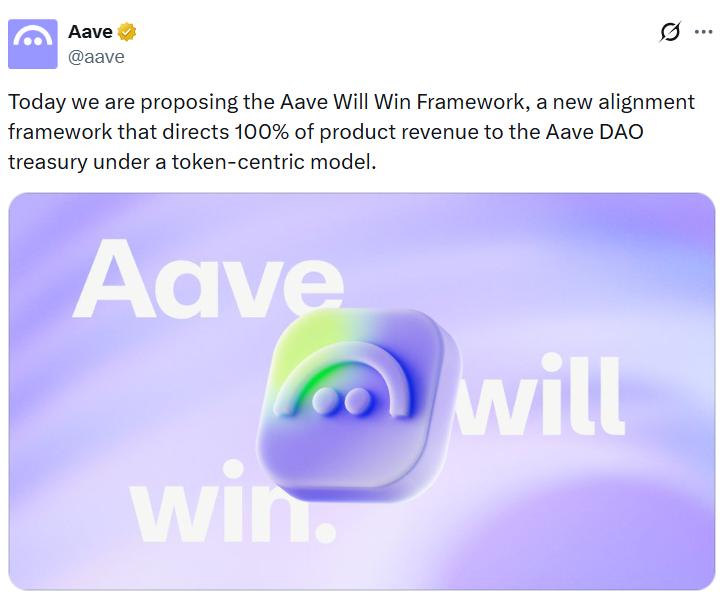
Shortly thereafter, a prominent governance delegate, the Aave Chan Initiative, revealed plans to conclude its participation with the Aave DAO due to apprehensions regarding governance protocols and the voting patterns observed throughout the proposal's progression.
Earlier in January, another governance initiative seeking to transfer oversight of Aave's brand assets and intellectual property to its DAO was rejected, triggering fresh discussions among the Aave community concerning the protocol's strategic direction and governance framework for the long term.