Revenue surges at Polymarket following fee restructuring despite mounting regulations
Following a fee restructuring implemented on March 30, Polymarket has seen significant increases in daily fees and revenue, though sustainability remains questionable as regulatory challenges intensify.

Following its latest fee structure revision, the prediction market platform Polymarket has witnessed a notable impact on its financial metrics, with both daily fee intake and revenue experiencing significant increases in the immediate aftermath of the March 30 pricing restructure.
Data sourced from DefiLlama indicates that the platform's daily fee collection surged from approximately $363,000 recorded on Monday to surpass the $1 million threshold on both Wednesday and Thursday. Meanwhile, the actual revenue figure—representing the amount the platform retains following the distribution of incentives—peaked at $995,000 on Wednesday and then moderated slightly to approximately $899,000 on Thursday.
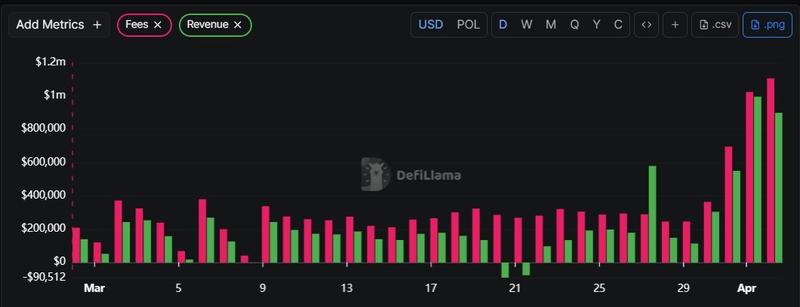
This dramatic increase occurred following the introduction of an expanded fee structure on Monday, during which the platform implemented taker fees across additional market categories beyond the previously fee-bearing crypto and sports sections. The new fee structure now encompasses finance, politics, economics, culture, weather and tech categories, though geopolitical and world events continue to remain exempt from fees.
The dramatic increase in revenue demonstrates the aggressive approach Polymarket is taking toward monetizing its trading volume as it seeks to sustain investor confidence during a period of intensifying regulatory examination across the US, European Union and numerous other global jurisdictions. The previous week saw a major vote of confidence when Intercontinental Exchange, which owns the New York Stock Exchange, committed $600 million to Polymarket.
Prediction markets face growing regulatory scrutiny
This surge in both fees and revenue arrives at a time when prediction market platforms, Polymarket among them, are confronting increased regulatory examination from authorities in numerous jurisdictions worldwide.
Across Europe, Polymarket has encountered increasing limitations, with both Hungary and Portugal implementing measures to block or restrict platform access during January due to concerns that it functions as an unlicensed gambling operation. Authorities in both nations pointed to licensing deficiencies and, specific to Portugal, raised additional concerns regarding political betting markets.
On March 17, an Argentine court mandated a countrywide prohibition on Polymarket, contending that the platform permitted users to place wagers without adequate identity verification and age authentication protocols. The judicial ruling emphasized that this created a situation where minors, including children and adolescents, could gain platform access and engage in betting activities without appropriate oversight.
Based on information published on Polymarket's official website, the platform currently faces restrictions in 33 countries. In comparison, Kalshi, on the other hand, indicates that its services are prohibited in 52 jurisdictions.
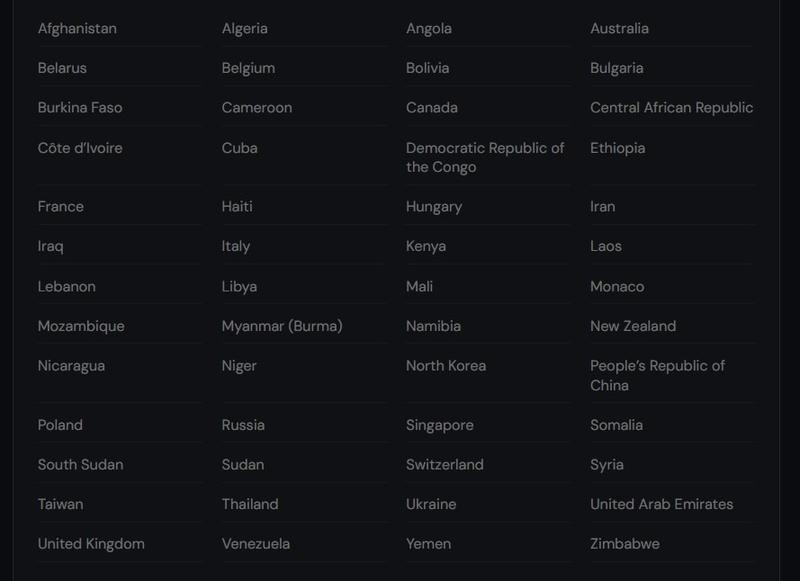
Within the United States, no fewer than 11 states have pursued legal measures against prediction market platforms including Polymarket and Kalshi, with multiple states issuing cease-and-desist directives or actively evaluating new legislative frameworks.
Notwithstanding these regulatory obstacles, both Polymarket and Kalshi continue pursuing expansion strategies, with reports suggesting that both platforms are actively pursuing additional funding rounds that could establish valuations in the vicinity of $20 billion for each company.
On March 24, both Polymarket and Kalshi rolled out new trading limitations designed to prevent insider trading activity in response to criticism surrounding suspiciously well-timed wagers and escalating questions about market integrity standards.