MoneyGram Introduces MGUSD Stablecoin Built on Stellar Blockchain
The introduction arrives amid efforts by remittance providers to explore stablecoin infrastructure as a solution to expensive transfer fees and sluggish international payment systems.

The remittance giant MoneyGram unveiled MGUSD, a stablecoin pegged to the US dollar and built on the Stellar blockchain, signaling the company's intensified commitment to blockchain-powered international payment systems.
In a Tuesday announcement, the company revealed that MGUSD will become part of the MoneyGram application via a self-custodial wallet feature, enabling customers to maintain dollar-based balances, transfer money internationally and exchange funds into various local currencies. The digital currency has debuted in the United States market initially, with ambitions to expand its reach globally.
Supporting MGUSD is a significant technology infrastructure foundation. Bridge, the stablecoin platform owned by Stripe, issues the tokens and secured conditional authorization from the US Office of the Comptroller of the Currency to function as a federally chartered national trust bank in February.
Bridge, Stripe's stablecoin platform, handles MGUSD issuance, while M0 provides the mint-and-burn smart contract infrastructure and Fireblocks supplies wallet infrastructure.
This introduction represents a more substantial advancement in the remittance sector's adoption of stablecoins, moving beyond backend settlement and payout collaborations toward application-integrated digital-dollar accounts for end consumers.
According to MoneyGram, MGUSD expands upon its established collaboration with the Stellar Development Foundation. The company characterized the stablecoin as a more comprehensive entry into issuance, balance infrastructure and expanded network functionality.
Remittance costs drive onchain push
This introduction arrives as remittance providers progressively experiment with blockchain technology for international payments, an industry segment that continues to be expensive and inefficient when compared to domestic payment systems.
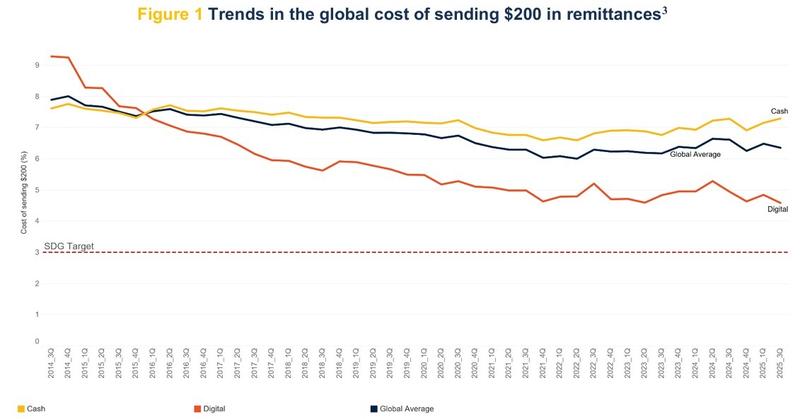
According to a 2026 paper from the Bank for International Settlements (BIS), cross-border payments continue to be "more costly, less accessible, slower, and less transparent" compared to domestic payments, notwithstanding new payment arrangements. Retail cross-border payments can also require several days, while transparency can be limited.
According to World Bank data, the average cost of transmitting $200 internationally stood at 6.36% during the third quarter of 2025, indicating that fees and foreign-exchange margins ate up approximately $12.72 from a $200 transfer. This figure remains more than twice the United Nations Sustainable Development Goal target of 3%.
Blockchain settlement via stablecoin transfers can lower the blockchain settlement portion of a payment to a tiny fraction of a cent, although users may still incur on-ramps, off-ramps, foreign exchange spreads and local payout fees. According to Stellar's developer documentation, the network minimum fee stands at 100 stroops, equivalent to 0.00001 XLM (approximately $0.000002) per operation.
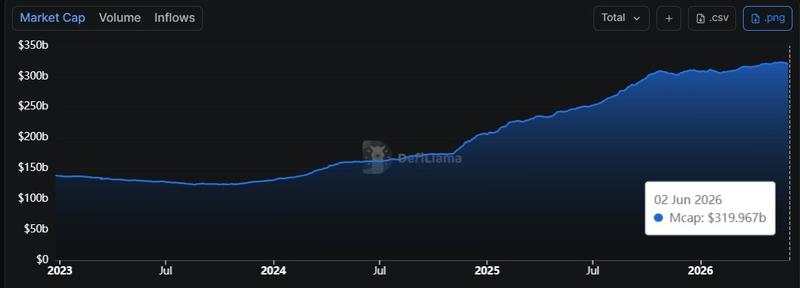
The stablecoin market has also expanded to a sufficient size to attract interest from payment companies. According to DefiLlama data, the overall stablecoin market cap stands at approximately $320 billion, while Citi projected in September 2025 that stablecoin issuance could achieve a base case scenario of $1.9 trillion by 2030.
This cost differential and stablecoin market expansion provide context for why remittance providers are experimenting with stablecoin infrastructure. On May 5, MoneyGram formed a partnership with cryptocurrency exchange Kraken to enable users to transform crypto into cash available for pickup throughout 100 countries. On May 20, the company established a partnership with Tempo, the Stripe-incubated blockchain, to facilitate stablecoin settlement and assist with validating remittance transactions.
Western Union, its business competitor, has likewise entered the stablecoin space. On May 5, the company commenced the rollout of its USD stablecoin named USDPT on Solana, starting in Bolivia and the Philippines, with intentions to extend to over 40 countries in 2026.