Meta's 2026 Stablecoin Strategy: Why Collaboration Trumps Currency Ownership
In its 2026 stablecoin initiative, Meta prioritizes collaborative partnerships instead of launching its own digital currency. Discover the reasoning behind the tech giant's focus on distribution networks and infrastructure development.

Key takeaways
- Meta's blueprint involves rolling out stablecoin payment systems pegged to the dollar throughout its suite of platforms by the end of 2026. Departing from its previous Libra initiative, the social media giant will forgo creating its own digital asset, choosing instead to incorporate established stablecoins.
- The Libra/Diem venture faced intense regulatory pushback that revealed governmental concerns about Big Tech companies launching private currencies with global reach. Meta's revised approach incorporates these critical lessons by steering clear of direct currency governance.
- Rather than taking responsibility for stablecoin reserve management or token creation, Meta's intention is to collaborate with third-party providers who manage infrastructure elements, regulatory adherence and transaction settlement, allowing Meta to concentrate on distribution capabilities and user interface design.
- Leveraging its multi-billion user base spanning Facebook, Instagram and WhatsApp, Meta possesses the capability to weave stablecoin transactions into routine social and e-commerce activities, potentially building one of the most expansive digital payment networks globally.
Meta is making a comeback in the stablecoin sector armed with a fundamentally different game plan. After regulatory hurdles forced the closure of its Libra initiative, the tech behemoth intends to launch dollar-pegged digital payment capabilities throughout its social networking platforms during the latter part of 2026.
The company has abandoned plans to build its own cryptocurrency, instead choosing to enable third-party stablecoin transactions within its applications. This pivot signals a fundamental change in priorities. Rather than controlling the actual currency, the corporation seeks to capitalize on its enormous user network to determine the channels and methods through which these financial exchanges take place.
This piece examines the rationale behind Meta's 2026 stablecoin blueprint that emphasizes collaborative arrangements over proprietary currency creation. It analyzes how insights gained from the Libra experience, evolving stablecoin regulations and Meta's unparalleled platform reach are molding a framework centered on payment facilitation rather than monetary authority.
The enduring lesson of Libra
Understanding Meta's current conservative stance on digital payments requires examining its previous venture.
During June 2019, Meta, operating then as Facebook, unveiled Libra, a sweeping initiative to establish a worldwide digital currency backed by a reserve of multiple fiat currencies. The vision centered on facilitating rapid, affordable payment transactions throughout Facebook, WhatsApp and Instagram, ultimately constructing a novel international payment infrastructure accessible to billions globally.
Yet regulatory authorities swiftly mounted opposition.
Government officials across the US, Europe and additional jurisdictions voiced multiple objections. They expressed alarm that a major private corporation introducing a currency might undermine sovereign monetary authority and generate financial stability threats. Additional worries centered on insufficient protections against criminal financial activities and money laundering. Meta's historical controversies surrounding user data privacy, particularly the Cambridge Analytica episode, intensified regulatory skepticism.

The prospect of a social networking platform controlling billions of accounts launching what amounted to a private worldwide currency triggered serious concern among regulators. Facing intense political opposition, numerous corporate partners withdrew from the initiative. Following a rebranding to Diem, the venture ultimately collapsed in 2022.
The experience demonstrated conclusively that regulatory bodies would resist Big Tech companies issuing proprietary currencies. Meta's present approach embodies that crucial understanding. Rather than developing a novel coin, the company now intends to facilitate existing regulated stablecoins through partnerships while functioning primarily as a transaction platform.
An alternative stablecoin approach for 2026
Meta is making another push into stablecoins, though this iteration involves incorporating stablecoin transaction capabilities straight into its platforms while avoiding issuing a proprietary token.
The corporation has distributed requests for proposals (RFPs) to potential external collaborators with the capacity to manage underlying stablecoin technology infrastructure. Meta's contribution would concentrate on designing an effortless payment user interface throughout its applications instead of administering the actual currency.
This might include deploying an integrated digital wallet capability, permitting users to transmit and accept stablecoin transactions across Meta's entire network, encompassing Facebook, Instagram and WhatsApp.
The anticipated launch window targets the second half of 2026.
This blueprint represents a substantial departure from the previous Libra/Diem framework. Rather than pursuing the creation of a fresh global financial system, Meta is currently positioning itself as a primary distribution channel and user-facing interface for established, compliant stablecoins such as USDC or USDt, potentially via partnerships with entities like Stripe.
Did you know? The term "stablecoin" was first widely used around 2014 and 2015, as crypto developers experimented with tokens designed to maintain stable value against fiat currencies, long before large tech platforms began exploring their payment potential.
Why partners may matter more than owning the power
Initially, Meta's choice to delegate stablecoin infrastructure management might appear to represent diminished authority. The reality suggests it may actually magnify the company's competitive advantages.
Meta commands exceptional distribution capabilities. Counting billions of engaged users throughout Facebook, Instagram and WhatsApp, it manages among the planet's most extensive communication and social media networks. Integrating stablecoin transaction features seamlessly into these ubiquitous applications could swiftly create one of the globe's largest digital financial ecosystems. This enables Meta to accomplish its goals without needing to create a proprietary coin.
Within this framework, genuine power migrates from currency creation toward controlling transaction flows and destinations. Stablecoin creators manage reserve assets, backing mechanisms and compliance obligations, while infrastructure companies oversee settlement processes and technical infrastructure. Meta's contribution encompasses the user-friendly interface, the social environment and the everyday payment activity.
The Stripe angle
Stripe has emerged as a leading candidate for collaboration in Meta's renewed stablecoin initiative. The payment processor has systematically expanded its stablecoin infrastructure, implementing measures including its purchase of Bridge, a dedicated cryptocurrency infrastructure company that enables custody services, transfers and blockchain-enabled payments at enterprise scale.
The relationship between Meta and Stripe extends considerably. Stripe co-founder and CEO Patrick Collison became a Meta board member in April 2025, prompting widespread conjecture regarding enhanced strategic cooperation between both organizations.
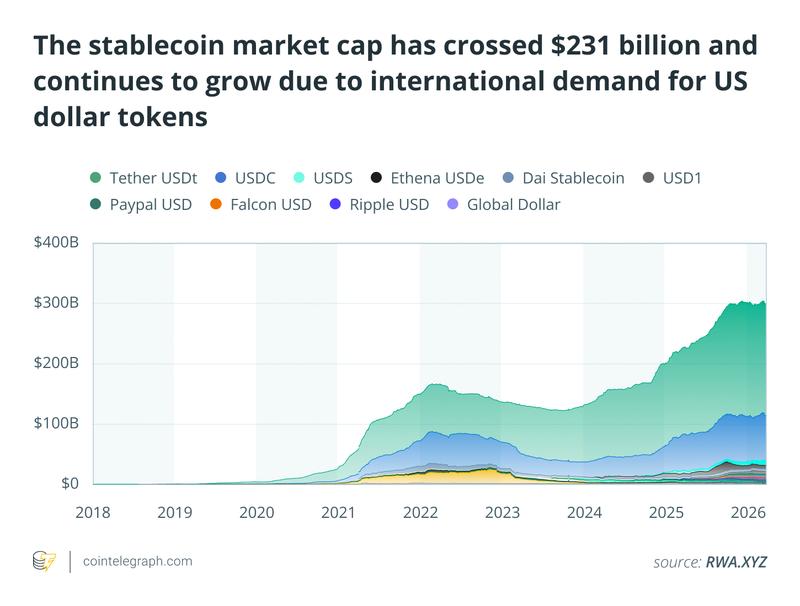
Should Stripe, utilizing Bridge, serve as the principal infrastructure collaborator, Meta obtains immediate access to an established, compliant payments infrastructure. This arrangement would enable Meta to circumvent the substantial undertaking of constructing regulated infrastructure independently. Stripe would control the sophisticated financial backend, encompassing settlement systems, regulatory compliance and reserve management. Meta, conversely, would dedicate resources to providing a seamless, compelling user interface throughout its extensive social platform network.
Regulatory changes have reshaped the industry
The transformation of regulatory frameworks represents a primary factor influencing Meta's decision to emphasize partnerships rather than control in its 2026 stablecoin initiative.
During 2025, the US enacted the GENIUS Act (Guiding and Establishing National Innovation for U.S. Stablecoins Act). This legislation established a comprehensive federal regulatory structure for payment stablecoins. It mandated stringent obligations for 1:1 reserve backing utilizing high-quality liquid assets. Additional regulatory mandates encompass issuer authorization and supervision, risk management protocols, transparency via monthly reserve reporting and consumer safeguards.
Although the GENIUS Act delivers essential regulatory clarity and encourages innovation within regulated stablecoin markets, it simultaneously enforces specific limitations. Exclusively authorized issuers, predominantly regulated banking institutions, their affiliated entities or qualified nonbank organizations, possess legal authority to issue payment stablecoins domestically.
This landscape advantages established, comprehensively regulated financial organizations and infrastructure suppliers over major consumer technology corporations. Through opting to work alongside compliant stablecoin creators and infrastructure operators rather than issuing a proprietary coin, Meta avoids regulatory obligations, compliance expenses and intensive governmental examination.
Did you know? The original Facebook payments system launched in 2009, allowing users to purchase virtual goods in games. It was one of Meta's earliest experiments in building a payments ecosystem inside social platforms.
Stablecoins as the foundation for AI-driven commerce
Under this framework, stablecoins might function as an optimal worldwide settlement infrastructure. These digital dollar equivalents provide instantaneous, programmable, borderless financial transactions that automated systems can process dependably and effectively.
For Meta, integrating stablecoin payment capabilities might activate numerous practical applications, such as:
- Rapid, economical international compensation disbursements to content creators worldwide
- Frictionless transactions within global marketplace platforms
- Automated procurement and payment execution triggered by AI agents
- Enhanced financial inclusion and payment capabilities in developing economies where conventional banking infrastructure remains inadequate
Within this framework, stablecoins transcend their identity as speculative cryptocurrency instruments. They evolve into critical infrastructure supporting machine-to-machine interactions and AI-facilitated commerce.
Did you know? Stablecoins are widely used for international remittances and cross-border payments, particularly in regions where traditional bank transfers are slow or expensive.
The wider competition among platforms
Meta isn't operating alone in investigating stablecoin payment integration.
Throughout the technology sector, leading platforms are actively pursuing methods to incorporate digital currencies into their operational frameworks. The primary objective has evolved beyond creating and launching new tokens. Instead, emphasis centers on commanding the payment infrastructure constructed upon existing stablecoins.
Shopify, as an example, enables USDC transactions on Base during checkout via collaborative arrangements with Coinbase and Stripe. PayPal's PYUSD serves payment functions on PayPal and enables transfers among PayPal, Venmo and external wallet platforms or cryptocurrency exchanges.
The underlying logic is clear. Whenever a platform enables and processes financial transactions, it obtains crucial intelligence regarding user economic patterns. This data empowers the organization to create additional products and services connected to payment activities.
Stablecoins deliver a viable answer. They facilitate programmable, immediate and borderless transactions without complete reliance on conventional banking systems. For organizations controlling hundreds of millions or billions of accounts internationally, this constitutes an exceptionally substantial opportunity.
Risks remain significant
Despite adopting a partnership-oriented strategy, Meta's stablecoin initiative continues facing considerable risks.
- Regulatory constraints: Regulatory scrutiny of major technology corporations remains intense, especially regarding their entry into financial services sectors. Government authorities might implement additional regulations or restrictions governing how platforms deliver or integrate digital payment solutions.
- Operational challenges: These encompass fraud exposure, requirements for robust wallet security infrastructure, elevated regulatory compliance costs and the intricate challenges of managing customer disputes at massive scale.
- User reluctance: Ultimately, the entire undertaking hinges on whether consumers actually adopt it. Should the registration procedure appear overly complicated, or if regulatory requirements introduce excessive friction, numerous individuals might simply maintain their preference for established payment alternatives such as credit cards or direct bank transfers.
Meta's challenge will involve satisfying comprehensive regulatory obligations while preserving a straightforward and accessible user experience.