Mastercard Introduces Multi-Blockchain Stablecoin Settlement for USDC, PYUSD, and RLUSD
The settlement expansion by Mastercard arrives after receiving New York BitLicense authorization and coincides with deepening stablecoin adoption by Visa, MoneyGram and Western Union.

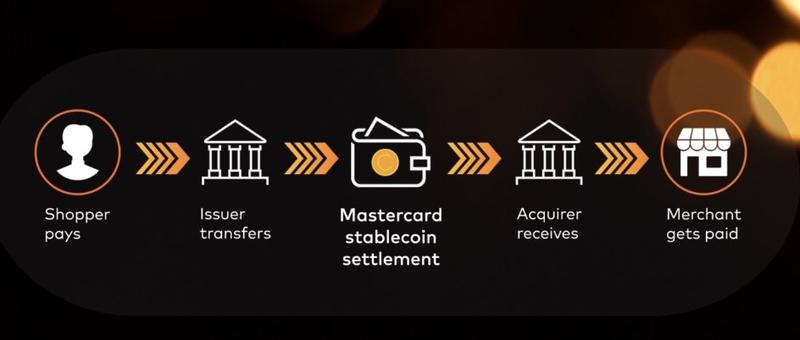
Mastercard has revealed its strategy to broaden settlement functionalities, enabling issuers and acquirers to process certain card-based transactions via regulated stablecoins.
During Wednesday's announcement, Mastercard outlined that these enhanced capabilities will encompass card settlement during intraday periods, weekends and holidays, accommodating both traditional fiat currencies and blockchain-based settlement through regulated stablecoins. According to the company, these additional options aim to provide partners with enhanced flexibility when it comes to managing both settlement liquidity and scheduling.
This expansion demonstrates how stablecoins are penetrating further into conventional financial infrastructure while major payment networks experiment with tokenized dollar solutions for settlement purposes. The development comes after Mastercard obtained a New York BitLicense during May, which permits its United States transaction services division to engage in regulated digital asset business operations within the state.
The settlement option involving stablecoins will accommodate Circle's USDC, PYUSD issued by Paxos, USDG and USDP, RLUSD from Ripple and SoFiUSD by SoFi. According to Mastercard, these stablecoins will be activated across compatible blockchain networks, encompassing Arbitrum, Base, Canton, Ethereum, Polygon, Solana, Tempo and XRPL.
Among the initial organizations anticipated to embrace stablecoin settlement options throughout the United States and Latin America are ARQ, previously operating as DolarApp, CBW Bank, Cross River, Lead Bank and Nuvei, according to Mastercard's statement.
Payment firms deepen stablecoin integrations
The stablecoin settlement expansion by Mastercard comes on the heels of multiple stablecoin-focused initiatives from prominent payments and money transfer corporations.
During April, Visa announced that its stablecoin settlement pilot achieved a $7 billion annualized run rate, representing a 50% increase from the preceding quarter, following the addition of five blockchain networks to expand its supported settlement platforms to nine total. According to the company, this expansion was designed to offer issuers and acquirers additional methods for settling with the network as stablecoins transition into mainstream payment infrastructure.
The total stablecoin market currently holds a valuation of approximately $320 billion.
The money transfer industry has similarly embraced stablecoins more extensively. During Tuesday's announcement, MoneyGram introduced MGUSD, a USD-backed stablecoin operating on Stellar, indicating that this token would facilitate treasury management settlement and currency trading within the United States, prior to a more extensive global deployment.
During early May, Western Union additionally unveiled its USDPT stablecoin denominated in US dollars on Solana, initially launching in the Philippines and Bolivia, with expansion plans scheduled for 2026.