Kevin Warsh: Trump's Federal Reserve Nominee Advocates 'Regime Change' at Central Bank
Donald Trump has selected Kevin Warsh to chair the Federal Reserve, though the financier's ambitions to reduce interest rates could face challenges from economic headwinds and a divided committee.
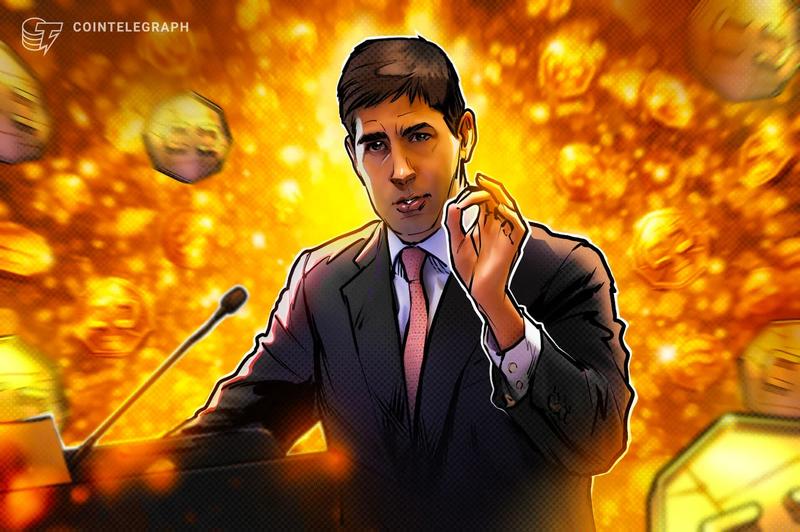
Confirmation hearings for financier Kevin Warsh as the incoming chair of the Federal Reserve may soon take place before the US Senate.
Having previously occupied a seat on the Fed's Board of Governors between 2006 and 2011, Warsh has been vocal in his criticism of the central bank's direction under Jerome Powell's chairmanship. His calls have included demands for "regime change" alongside advocacy for reduced interest rates.
On the subject of cryptocurrency, Warsh maintains a moderately balanced perspective. While he recognizes Bitcoin as a reliable store of value, he maintains it falls short of functioning as actual currency.
Reduced interest rates combined with a relatively receptive stance on cryptocurrency could signal positive developments for digital asset valuations, which the majority of market participants view as risk-on investments. However, even should Warsh secure confirmation, implementation of his anticipated reforms remains uncertain.
Can Warsh successfully implement lower Fed interest rates?
A Stanford and Harvard alumnus, Warsh launched his professional career at Morgan Stanley, advancing through the ranks to vice president and executive director positions. Following this, he took on responsibilities as executive secretary of the White House National Economic Council during the presidency of George W. Bush.
Bush put forward his nomination to the Board of Governors of the Federal Reserve in 2006, where his characteristically hawkish stance on inflation frequently put him at odds with fellow board members. He voiced strong criticism of aggressive balance sheet expansion, arguing it created an era of "monetary dominance" that artificially suppressed interest rates.
Recent years have witnessed what appears to be an evolution in some of these positions. Writing an op-ed for the Washington Post in November 2025, Warsh took aim at Powell's Fed leadership, asserting that "inflation is a choice, and the Fed's track record under Chairman Jerome Powell is one of unwise choices."
According to Warsh, "credit on Main Street is too tight" and the Fed's balance sheet, which has become "bloated" through previous crisis-management initiatives, "can be reduced significantly."
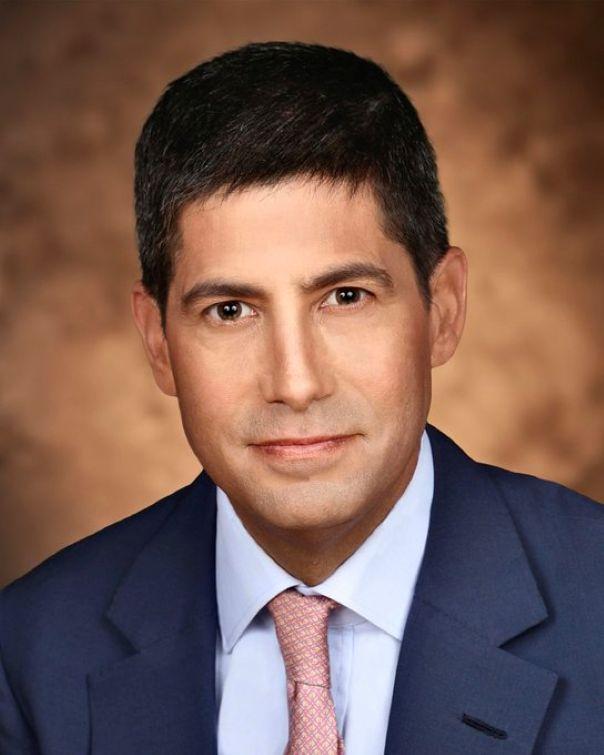
"That largesse can be redeployed in the form of lower interest rates to support households and small and medium-size businesses," he said.
These interest rate reduction proposals arrive during a period of significant economic uncertainty. The coordinated military action against Iran by the US and Israel, which may escalate to a full invasion depending on US President Donald Trump's decisions, has created substantial volatility in oil markets.
Rising oil prices exert immediate influence on the core inflation indicators that the Federal Reserve monitors when evaluating rate adjustments. Such developments could potentially derail any rate reduction strategies, particularly under Powell's current leadership.
In an interview with Barron's, Warsh characterized the "core theory of inflation that the Fed is using" as "mistaken." He emphasized that "we need to fundamentally rethink macro, which is a fundamental rethink of the core economic models that the Fed is using."
According to his analysis, wage increases and commodity price fluctuations aren't the primary drivers of inflation. Instead, "at the core, I think inflation comes about when the government spends too much and prints too much."
A shift back toward monetarism, coupled with reducing the debt holdings of the Federal Reserve, could serve as effective tools for managing inflation challenges, according to his perspective.
The financial sector and former officials from the Bush administration have expressed support for Warsh's nomination. Condoleezza Rice, former US Secretary of State, predicted the Fed would "benefit from his steady, principled leadership."
"He understands the central bank's key role for the United States and our allies around the world," she said.
Andrew Bailey, serving as Bank of England Governor, has similarly expressed approval of Warsh's nomination. He indicated familiarity with both Powell and Warsh, noting that "They're both very qualified."
Despite these qualifications, Warsh may encounter substantial obstacles in implementing his policy preferences.
Writing on the subject, Roger W. Ferguson Jr., the Steven A. Tananbaum Distinguished Fellow for International Economics at the Council on Foreign Relations (CFR), along with Maximilian Hippold, a research associate for international economics at CFR, suggested that Warsh won't revolutionize the Fed.
According to their analysis, the chairperson doesn't unilaterally determine inflation rate policy. "They are determined by the Federal Open Market Committee (FOMC), a twelve-member body that includes seven Fed governors and five regional Fed presidents." Policy modifications require the chair to secure majority support.
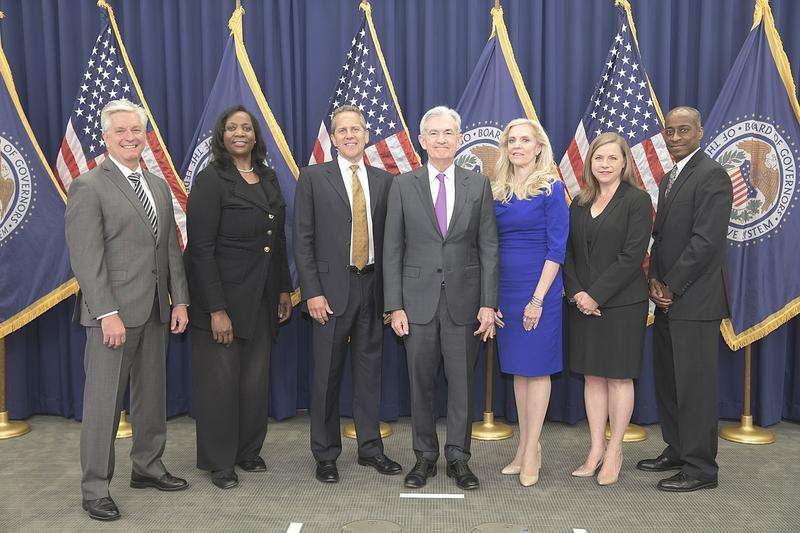
Alternative viewpoints suggest that Warsh's advocacy for lowering interest rates represents a recent shift rather than a deeply held conviction that will guide central bank strategy. Deutsche Bank's December 2025 analysis examined Warsh's conduct during the 2008 global financial crisis while serving as a Governor at the Fed.
"His views while he was a Governor around the GFC [global financial crisis] at times skewed more hawkish than his colleagues," the report read. "Although Warsh has argued for lower rates recently, we do not view him as structurally dovish."
Deutsche Bank also raised questions about Warsh's dual objectives of lowering interest rates while simultaneously reducing Fed balance sheet assets. "This trade-off would only be feasible if regulatory changes are made that lower banks' demand for reserves. While several Fed officials have made this argument recently, including Vice Chair of Supervision Bowman and Governor Miran, it is not obvious these changes are realistic in the near-term."
"The chair has just one vote amongst a particularly divided committee."
Federal Reserve independence and Warsh's nomination
Observers have also highlighted Warsh's ties to the Trump administration. Ronald Lauder, Warsh's father-in-law, shares a long-standing friendship with Trump dating back to their school days and has contributed substantially to his political campaigns.
His comparatively recent advocacy for reduced interest rates also positions him as particularly compatible with the role, at least from Trump's vantage point. Ferguson and Hippold observed, "Trump believes he has found a successor who will align with his economic priorities in Warsh."
The president has consistently criticized Fed officials who he perceives as promising rate reductions, only to implement increases after assuming office. "It's too bad, sort of disloyalty, but they got to do what they think is right," he said in a speech at Davos last year.
Trump has persistently advocated for lower interest rates, maintaining they are essential to advance his economic development agenda. Powell's unwillingness to comply with White House pressure resulted in political controversy.
The previous year saw the Department of Justice (DoJ) launch a criminal investigation targeting Powell, with allegations that he misappropriated billions of dollars for new Federal Reserve office facilities.
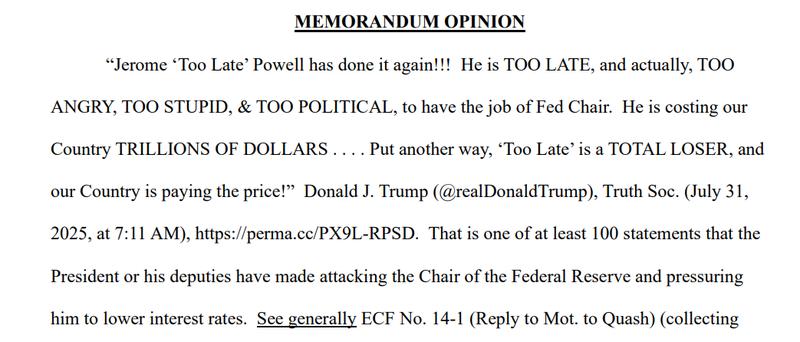
The DoJ's subpoenas in this matter were recently dismissed by a federal judge. In a memorandum opinion, Judge James Boasberg stated, "A mountain of evidence suggests that the dominant purpose is to harass Powell to pressure him to lower rates. For years, the President has publicly targeted Powell because the Fed is not delivering the low rates that Trump demands."
During a January press event held in the Oval Office, Trump commented on his selection, stating it would be "inappropriate" to question Warsh about his position on interest rates. "I want to keep it nice and pure, but he certainly wants to cut rates, I've been watching him for a long time."
Merely weeks afterward, during an NBC interview, Trump acknowledged that Warsh comprehends his desire for lower interest rates. "But I think he wants to anyway. If he came in and said 'I want to raise them' [...] he would not have gotten the job."
However, Warsh hasn't yet "gotten the job." He must navigate rigorous questioning from Democratic members of the Senate Banking Committee, potentially beginning as early as April 13.
Through a letter criticizing Warsh's involvement in the 2008 bank bailouts, Senator Elizabeth Warren, a committee member, declared, "I have no doubt that you will serve as a rubber stamp on President Trump's Wall Street First agenda."
Warren demanded written responses to these concerns, along with Warsh's perspective on Trump's "witch hunts" targeting Powell and Fed Governor Lisa Cook, with a deadline of April 2.