Bolivia considers adopting USDT as official payment method to address dollar crisis
The South American nation is developing a regulatory structure to permit USDT usage in commerce, savings accounts and financial transactions as part of its strategy to address an ongoing shortage of US dollars.
The Bolivian government is currently considering the incorporation of Tether's USDt into the nation's payment infrastructure, representing what could become among the most substantial stablecoin acceptance programs in Latin America while the country continues to face an enduring scarcity of United States dollars.
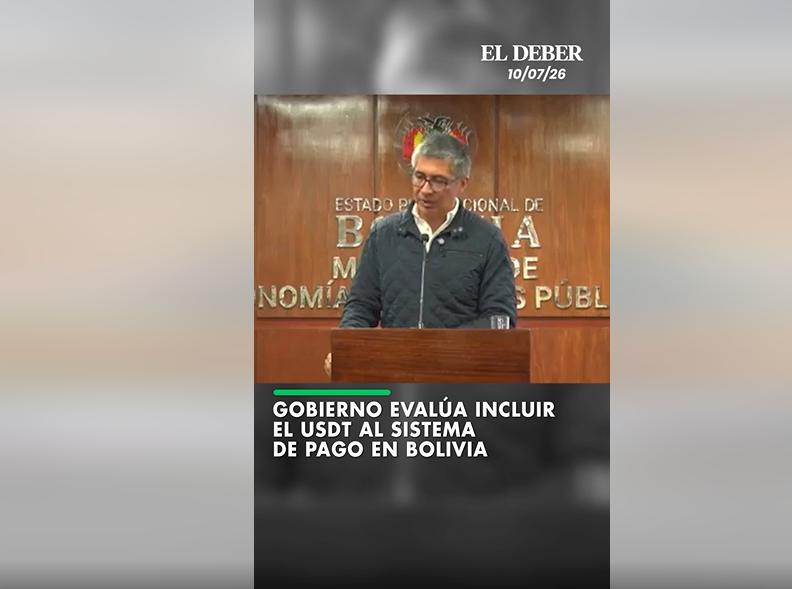
During a Monday press briefing, Economy and Public Finance Minister Jose Gabriel Espinoza announced that governmental authorities are examining a regulatory structure that would enable USDT to function "as just another currency," operating in parallel with both the boliviano and the US dollar.
The Spanish-language publication CriptoNoticias reports that this regulatory structure remains in the evaluation phase and, should it be implemented, would authorize USDT for routine financial activities, encompassing payments, savings and trade, eliminating the necessity for exclusive dependence on physical currency or conventional banking infrastructure.
Minister Espinoza emphasized that any implementation would necessitate a comprehensive regulatory structure and stringent anti-money laundering protections due to Bolivia's continued presence on the Financial Action Task Force (FATF) grey list, which designates jurisdictions subjected to enhanced monitoring for shortcomings in combating money laundering and terrorist financing.
This initiative represents a component of Bolivia's more extensive adoption of digital assets after removing its long-established prohibition on cryptocurrencies in 2024. Following his assumption of office in late 2025, President Rodrigo Paz Pereira's government has committed to incorporating digital assets into the official financial infrastructure, establishing the foundation for banking institutions to provide cryptocurrency-related products and services, including accounts based on stablecoins.
USDT holds the position as the globe's most dominant stablecoin, commanding a market capitalization that surpasses $184 billion, based on data from CoinMarketCap.
Dollar shortage fuels stablecoin push
The Bolivian stablecoin proposal emerges against the backdrop of the nation's struggle with a sustained scarcity of US dollars, which function as a widely utilized medium of exchange together with the domestic currency, the boliviano.
According to Reuters' coverage, Bolivia preserved an official exchange rate of 6.86 bolivianos per US dollar for purchases and 6.96 for sales starting in 2011 and continuing until earlier this year, at which point escalating strain on foreign exchange reserves compelled governmental authorities to relinquish the longstanding peg. This dollar scarcity subsequently catalyzed the growth of a parallel foreign exchange market, where the dollar commanded a significant premium compared to the official rate.
The expanding disparity between the official and parallel exchange rates has generated increased demand for dollar-denominated substitutes, including stablecoins like USDT, which have progressively been utilized for payment transactions.
Bolivia achieved a notable ranking in Chainalysis' 2025 assessment of crypto adoption throughout Latin America, recording $14.8 billion in total transaction volume during a 12-month period.