Treasury Department Fails to Develop Bitcoin Acquisition Strategy One Year After Reserve Launch
Twelve months following the establishment of America's Bitcoin reserve, holdings have seen minimal changes as officials have yet to formulate a strategy for acquiring additional BTC.

Twelve months have passed since US President Donald Trump issued an executive order creating a strategic cryptocurrency stockpile. A year has gone by, and the reserve's dollar value has declined by several billion.
During the early days of his presidency, Trump established a specialized working group tasked with examining optimal approaches for government implementation and oversight of digital currencies. The mandate encompassed both the Bitcoin (BTC) holdings and broader cryptocurrency reserves.
The intervening period has witnessed numerous developments. Trump's first year in office delivered an array of macroeconomic shifts and regulatory adjustments. Certain initiatives, such as crypto-friendly regulatory frameworks emerging from Washington, proved beneficial for digital assets. Conversely, other measures including aggressive tariff policies and heightened geopolitical tensions had adverse effects.
Currently, America's digital asset stockpile remains relatively static, with token quantities showing minimal variation from their initial establishment levels.
Trump's cryptocurrency holdings show minimal variation
Trump issued an executive order on March 6 that brought into existence the Strategic Bitcoin Reserve alongside the U.S. Digital Asset Stockpile.
The Bitcoin-specific reserve would exclusively contain that particular cryptocurrency, whereas the broader digital asset stockpile would encompass a varied portfolio of alternative coins. Prior to issuing the executive directive, Trump announced intentions to include XRP (XRP), Solana (SOL) and Cardano (ADA).
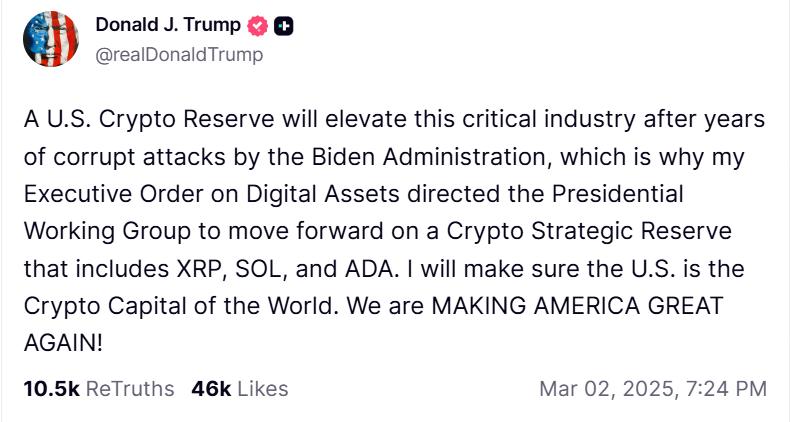
Neither reserve would "acquire additional assets for the U.S. Digital Asset Stockpile beyond those obtained through forfeiture proceedings."
The directive essentially centralized confiscated digital assets that had previously been distributed among numerous federal agencies responsible for regulation and law enforcement. The order additionally established a framework enabling the government to monetize seized cryptocurrency holdings.
"Taking affirmative steps to centralize ownership, control, and management of these assets within the Federal government will ensure proper oversight, accurate tracking, and a cohesive approach to managing the government's cryptocurrency holdings," the order stated.
Federal authorities do not make available comprehensive information regarding either the Bitcoin reserve or the cryptocurrency asset stockpile, however blockchain intelligence company Arkham Research has successfully traced multiple blockchain addresses linked to US government operations.
As of press time, governmental cryptocurrency assets carry a valuation of $22,393,867,000, with approximately $22 billion of that amount held in Bitcoin alone. Additional substantial positions include stablecoin USDC (USDC), Ether (ETH), Wrapped Bitcoin (WBTC) and BNB (BNB).
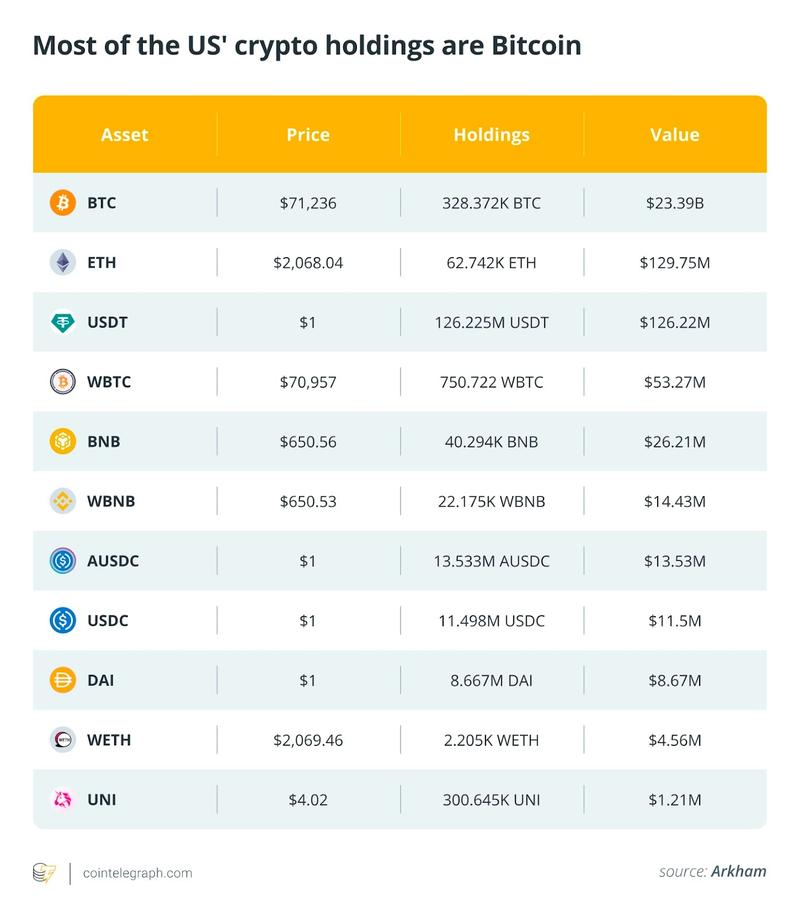
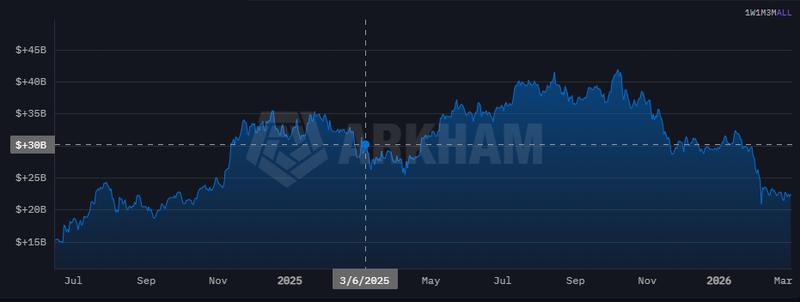
The extent to which these holdings represent the official stockpile, along with details about transfers or movements, remains undisclosed to the public. Nevertheless, the valuation in US dollars has experienced a substantial drop. Based on Arkham's analysis, America's aggregate crypto portfolio commanded a value exceeding $30 billion at the moment Trump executed the order. Current valuations stand at $22 billion, representing a 26% decrease.
The administration exhibits no concern regarding this development. Deputy Press Secretary Kush Desai commented on the recent market downturn, stating, "Volatility in a free market in which the government does not set prices is not going to change the Trump administration's commitment to ensuring American dominance in cryptocurrency and other cutting-edge technologies of the future."
US Bitcoin holdings remain static without purchasing plans
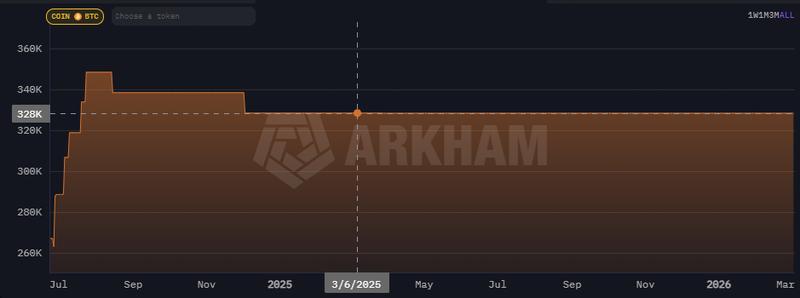
Contrary to expectations from Bitcoin proponents that federal authorities would commence purchasing Bitcoin, the quantity held has not changed. Following the executive order's implementation, the US government has maintained a position of 328,272 BTC.
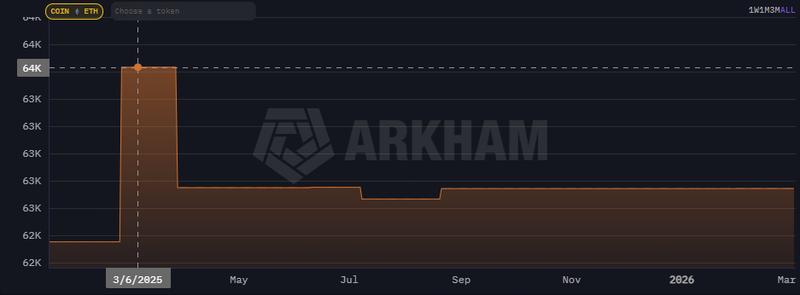
The quantity of Ether tokens, representing the second-largest holding by value in the government's digital asset portfolio, experienced a decline after the executive order took effect, indicating either a transaction or asset movement. However, following April 2025, Ether token quantities have remained relatively constant.
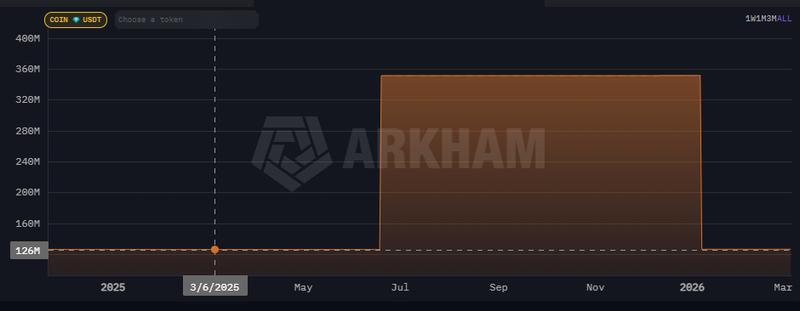
Holdings of Tether's USDt (USDT), which represents the most substantial stablecoin position by quantity in America's portfolio, experienced a notable increase during May 2025 exceeding 200 million tokens, subsequently declining to levels comparable to those before March 2026.
Transaction patterns involving purchases and sales lack transparency and clarity. As previously mentioned, federal authorities provide no public disclosure concerning transaction volumes.
Though the cryptocurrency reserve framework did not entirely prohibit government Bitcoin purchases, any acquisitions required adherence to budget-neutral implementation. AI and crypto czar David Sacks stated last year, "It cannot add to the deficit, it cannot add to the debt, it cannot tax the American people."
"It won't cost the taxpayer dimes, but if the secretaries can figure out how to accumulate more bitcoin without costing taxpayers anything, then they are authorized to do that."
Twelve months later, the existence or development of such an acquisition framework by the administration remains unclear.
Jason Yanowitz, co-founder of crypto firm Blockworks, told the BBC last year that a crypto stockpile made of several different assets could negatively impact markets. "Without a clear framework, we risk arbitrary asset selections, which would distort the markets and drive a loss of public trust."
"Ensuring transparency through independent audits and public reporting is crucial for fostering innovation instead of favouritism," he said.
The concept of Bitcoin reserves, whether maintained at governmental or corporate levels, gained momentum last year after software company-cum-Bitcoin investment vehicle Strategy demonstrated success. The characterization of Bitcoin as a digital equivalent to gold positioned the asset as an appealing option for government budget allocations.
Based on information from monitoring platform BitcoinTreasuries.net, 10 countries hold Bitcoin, including the US, China, Ukraine, El Salvador, the United Kingdom and North Korea.
Within the corporate sector, market observers anticipate consolidation as bearish market conditions persist. Wojciech Kaszycki, chief strategy officer of crypto infrastructure and treasury company BTCS, previously told Cointelegraph that companies with Bitcoin treasuries below net asset value will be acquired by operating businesses.
Bitcoin reserves represent an emerging concept that has not yet undergone testing through an extended cryptocurrency bear market cycle.