Tether Freezes Crypto Assets After US Treasury Blacklists 134 ISIS-K Digital Wallets
The US Treasury's OFAC has placed 134 cryptocurrency wallet addresses associated with ISIS-K on its sanctions list, with 131 Tron-based wallets having accumulated over $1.4 million in digital currency donations, data from Chainalysis reveals.

On Wednesday, the Office of Foreign Assets Control (OFAC), an agency within the US Department of the Treasury, imposed sanctions on 134 digital currency wallet addresses determined to be under the control of ISIS-Khorasan (ISIS-K), an organization that has held the designation of Specially Designated Global Terrorist since September 2015.
The digital wallet addresses were incorporated into OFAC's Specially Designated Nationals (SDN) list on Wednesday, a registry that encompasses individuals, organizations and cryptocurrency addresses associated with terrorist activities, drug trafficking and various forms of illegal operations.
According to a Wednesday analysis published by blockchain forensics firm Chainalysis, the stablecoin provider Tether has taken action to freeze the funds held in 131 Tron-based addresses, whereas the other three sanctioned addresses operated on the Monero blockchain network.
This action follows just over one week after OFAC's preceding wave of sanctions targeting individuals involved in ISIS cryptocurrency financing. On June 22, OFAC imposed sanctions on three persons and six organizations spanning Europe, the Middle East and West Africa, which included the Syria-based money service business Bitcoin Xchange and the Turkish money service business Spider.
According to OFAC, the earlier sanctions round focused on "key facilitators who enable ISIS to move funds among its regional affiliates."
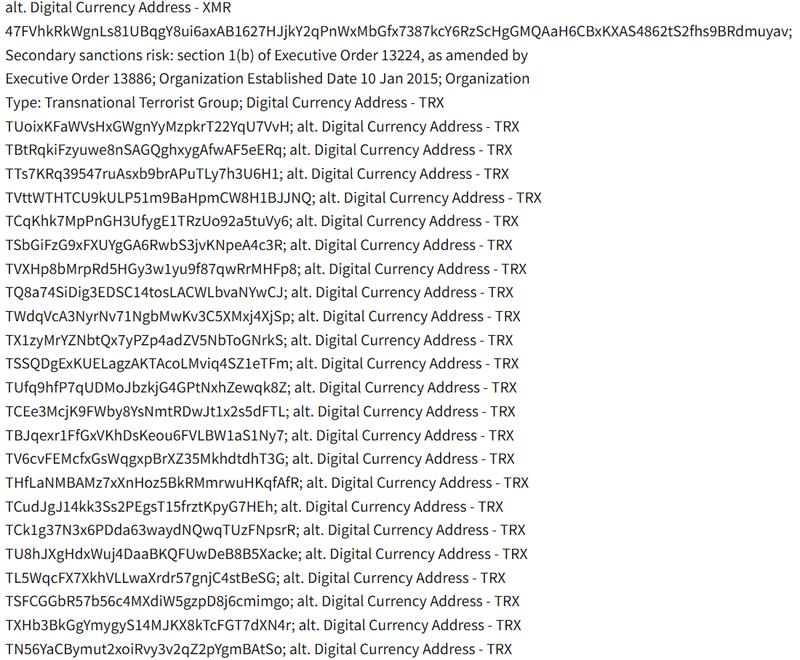
ISIS-K's 131 wallet addresses accumulated $1.4 million in cryptocurrency contributions
According to Chainalysis, ISIS-K has traditionally requested cryptocurrency donations through fundraising campaigns operating across multiple websites and messaging applications.
The analysis revealed that the 131 Tron-based addresses included in this most recent sanctions action have accumulated more than $1.4 million in cryptocurrency contributions from 2023 onwards and have dispersed in excess of $880,000.
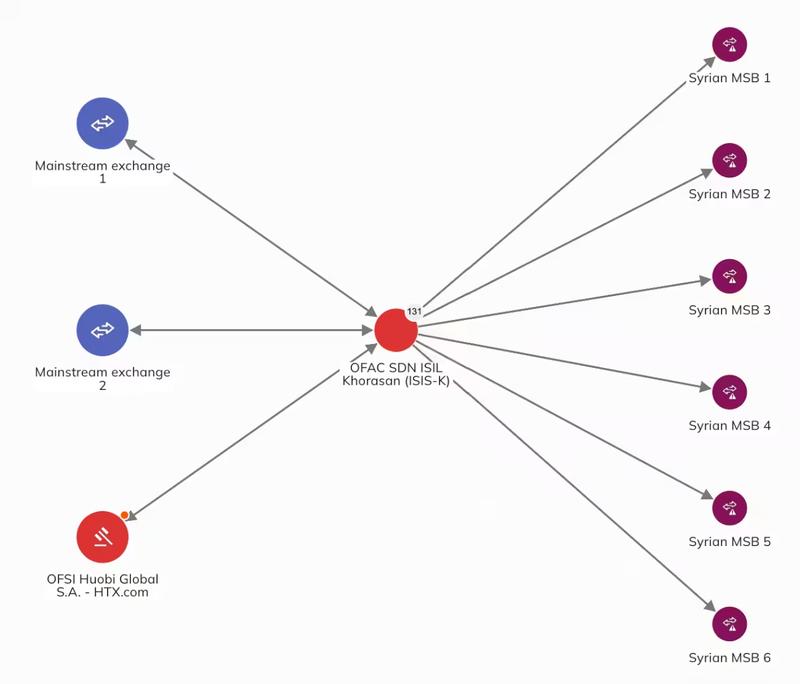
Chainalysis discovered numerous donation addresses utilized by the organization across the Tron, Monero and Bitcoin blockchain networks. The investigation revealed substantial connections to mainstream cryptocurrency services, with certain wallets transferring assets to digital currency exchanges operating from Syria.
Blockchain analysis technologies are assuming an ever more significant function in financial sanctions operations directed at combating illegal activities.
In April of this year, blockchain intelligence provider TRM Labs reported that evidence derived from blockchain transactions proved essential in obtaining convictions against three individuals for financing terrorism in Indonesia during 2024 and 2025.
"Indonesian courts have demonstrated that cryptocurrency evidence — wallet addresses, transaction histories, on-chain flows — is not only admissible but can anchor a terrorism financing prosecution," TRM said in a statement.