Should You Stake Your Retirement Future on Bitcoin's Volatility?
Those who champion Bitcoin view it as a near-guaranteed long-term bet, yet planning for retirement requires a distinctly different strategy. What level of cryptocurrency exposure crosses the line for retirement savings?

You're stacking sats regularly. You're actively farming yields, and parting with your BTC would be harder than selling your vehicle. But should that translate to staking your retirement years on Bitcoin's performance?
Numerous professionals working in the retirement industry, including MIT finance professor Jonathan Parker, argue there exists an optimal percentage for cryptocurrency holdings in a well-diversified retirement account:
"Yes, zero."
Parker's academic work covers portfolio choice, personal finance, retirement finance and Bitcoin, and he's remarkably direct regarding where he thinks cryptocurrency fits. His perspective, however, resonates with mainstream public opinion.
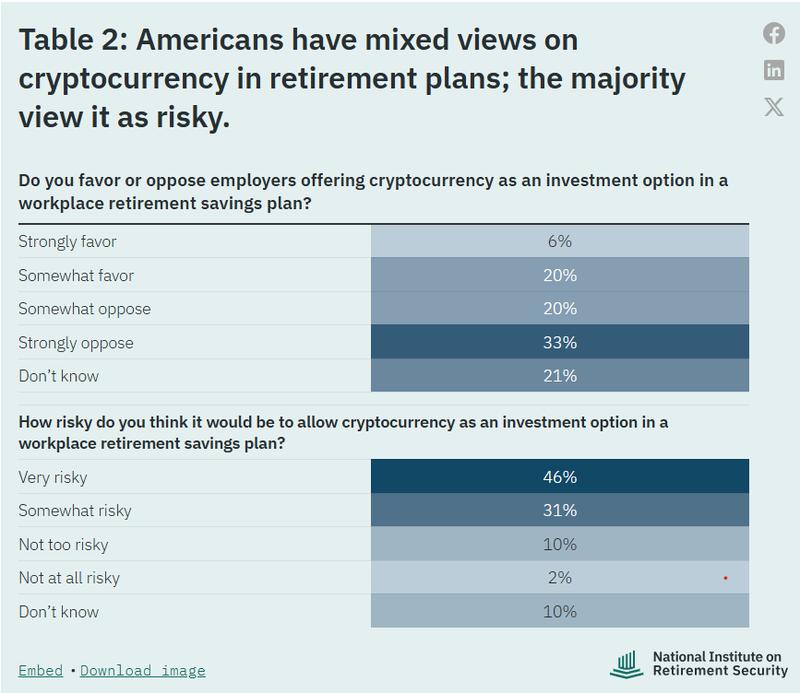
Recent polling conducted by the National Institute on Retirement Security revealed that 77% of Americans consider cryptocurrency in workplace retirement plans as risky.
Yet both regulatory bodies and financial institutions have gradually been widening access to increased cryptocurrency exposure within retirement accounts over recent years.
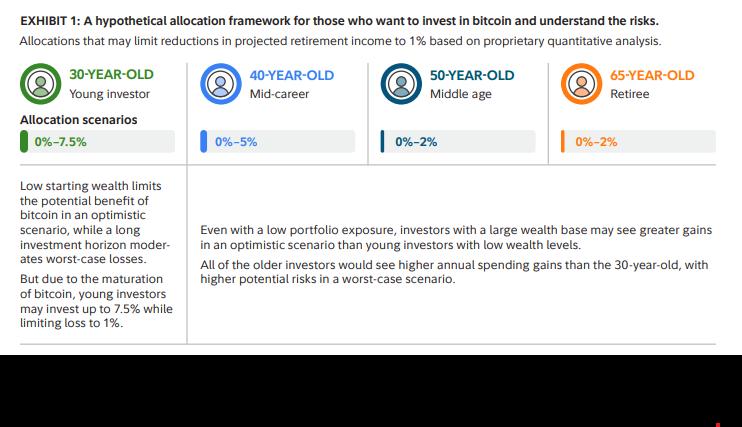
Take BlackRock as an example: the firm suggests a 1%-2% Bitcoin allocation can be reasonable for a diversified portfolio, where investors can tolerate the risk, while Fidelity says allocations of 2%-5% could improve retirement outcomes. Such a smaller position allows investors to benefit from Bitcoin's volatility while limiting the downside.
However, there exists a more compelling question than simply asking whether cryptocurrency carries excessive risk in theory.
Is it possible to be an ardent believer that Bitcoin represents the pinnacle of sound money, or that Ether will become the backbone of future finance — while simultaneously concluding your retirement nest egg is better positioned without exposure to it?
Bitcoin is already creeping into retirement portfolios
"Bitcoin offers higher return potential than stocks but with more volatility."
His basic guideline suggests that cryptocurrency holdings shouldn't represent more than 5% of your investable assets, further noting:
"The conservative approach is to invest only what you are willing to potentially lose."
Retirement funds are taking positions themselves
While the typical individual may view the cryptocurrency sector as excessively risky, institutional capital sees attractive opportunities.
Publicly available filings reveal pension funds and other major investors maintaining positions in regulated spot Bitcoin exchange-traded funds (ETFs), while additional institutions have secured exposure through publicly traded companies closely tied to the sector.
Consider CalPERS, for example, the largest public pension fund in the United States, which has disclosed an investment in Strategy, the largest corporate Bitcoin treasury holder, as part of its index-oriented public equity portfolio.
CalSTRS, is the largest educator-only pension fund. While it tells Magazine it has not made direct investments in cryptocurrency it has invested in firms that "some might consider crypto companies," such as Coinbase, "a publicly traded company that operates a cryptocurrency exchange platform."
The key distinction here is that institutional investors are attempting to capture exposure to the expanding crypto industry, as opposed to simply positioning Bitcoin as a fundamental retirement holding.
Your retirement portfolio has one job Bitcoin doesn't
The frequent price drawdowns and extended bear markets characteristic of Bitcoin create challenges for those approaching or already living in their retirement years.
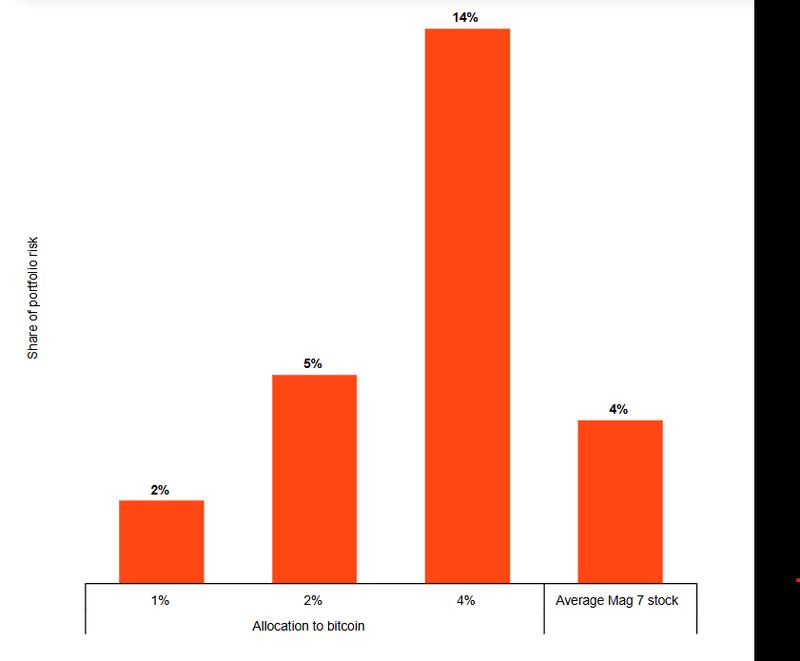
During your younger years, a price drawdown represents merely a temporary setback within a broader upward trajectory. Once you've entered retirement, withdrawing from savings that have experienced significant depreciation amplifies the damage considerably.
Bill Bengen, the financial planner and researcher whose work gave rise to the widely cited 4% retirement withdrawal rule, says capital preservation should be the "primary priority" for retirement portfolios.
He tells Magazine that although volatile assets like Bitcoin "can be useful," he recommends limiting them to no more than 5% of a retirement portfolio to "help prevent a disaster."
Firth suggests the real question isn't merely whether Bitcoin will eventually recover, but whether investors possess the financial runway to wait out that recovery:
"Will they stay invested and avoid a knee-jerk reaction when prices inevitably fall? [...] What if crypto goes to zero? How would that disrupt their plans and what's their backup plan?"
What if your investment thesis is wrong?
This concern has entered the thoughts of even the most committed Bitcoin HODLer: what portion of your future should hinge on a single investment thesis proving correct?
Consider the consequences if you've not only devoted your career but also your retirement savings to an investment that fails—whether Bitcoin succumbs to quantum attackers, or if something better than Bitcoin is invented.
Bengen points out that many people believe AI is in a bubble.
"Bubbles eventually pop. The same could be said for Bitcoin."
This challenge applies to anyone constructing a retirement portfolio centered on a high-conviction bet, given that strong conviction doesn't eliminate the risk of being incorrect.
Parker argues investors shouldn't hold cash in retirement accounts and shouldn't hold peer-to-peer digital cash either.
"Currencies are for transacting, not investing. Bitcoin is no different. People should invest in real assets that pay interest, coupon payments, or dividends."
His recommendation for investors seeking exposure to the cryptocurrency industry's potential success or failure is to purchase equity or debt of companies generating revenue from it, instead of holding Bitcoin itself.
You can believe in crypto without betting your retirement on it
The absence of Bitcoin from your retirement portfolio doesn't diminish your dedication to its long-term prospects.
There's no need to choose between viewing crypto as tomorrow's financial infrastructure and dismissing it as mere speculation unworthy of inclusion in a responsible portfolio, as Firth advises:
"It doesn't have to be an all-or-nothing proposition."
It's entirely possible to maintain faith that cryptocurrency will transform global finance — without tying your retirement security to being proven correct.