Latin America sees stablecoins eclipse Bitcoin in crypto transaction volume — Bitso data
New data from Bitso reveals a notable transformation in regional cryptocurrency preferences as stablecoins pegged to the US dollar become increasingly popular for daily transactions amid widespread inflation across Latin American markets.

The cryptocurrency landscape throughout Latin America is undergoing a transformation, with an increasing number of individuals now opting to convert their capital into stablecoins rather than Bitcoin — a development that underscores the mounting challenges posed by regional economic volatility.
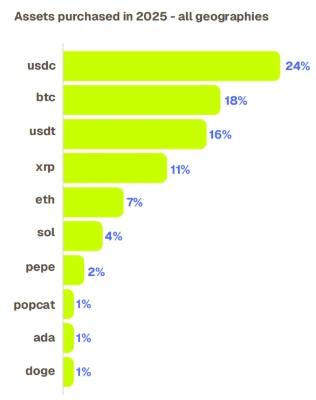
Data from Bitso's 2025 study on cryptocurrency adoption throughout Latin America reveals that 40% of all crypto transactions in 2025 involved stablecoins pegged to the US dollar, including Tether's USDt (USDT) and Circle's USDC (USDC), whereas Bitcoin (BTC) represented just 18%. This report represents the inaugural instance where stablecoin acquisitions have exceeded Bitcoin transactions within the region.
These insights draw from information collected across Bitso's user base of approximately 10 million retail customers utilizing its exchange infrastructure.
This development signals a wider transition toward what the regional cryptocurrency platform has characterized as "digital dollarization." Throughout nations grappling with ongoing inflation, diminishing currency values and constrained access to conventional banking infrastructure, stablecoins provide a comparatively straightforward method to preserve wealth and conduct transactions in US dollar-equivalent assets.
Although the US dollar is not entirely protected from inflationary pressures, it generally experiences slower devaluation compared to numerous regional currencies and continues to function as the globe's principal medium of exchange, positioning it as an appealing reference point for individuals pursuing financial stability.
The worldwide stablecoin sector has expanded to approximately $320 billion, experiencing increased acceptance throughout both advanced and developing markets. Their appeal within Latin America is especially utilitarian: individuals depend on stablecoins for safeguarding their financial reserves, executing payments and facilitating international money transfers.
Domestically-developed stablecoins are also experiencing growth from this expansion. Brazilian e-commerce titan Mercado Libre introduced in early April a cross-border money transfer service utilizing the Meli dollar stablecoin for customers in Brazil, Mexico and Chile, as reported by Cointelegraph Brasil. This development followed the company's decision to cease issuing its proprietary stablecoin, Mercado Coin, during the earlier part of this year.
Bitcoin remains dominant as a store of value
Although Bitcoin transactions have decreased proportionally within overall market activity, the Bitso study demonstrates the digital asset continues to occupy an essential position as a vehicle for long-term wealth preservation throughout Latin America.
"Bitcoin continues to function as Latin America's primary long-term digital store of value," the report said, highlighting that the cryptocurrency maintains presence in 52% of digital asset portfolios throughout the region in 2025. This represents merely a marginal decline from 53% during the preceding year.
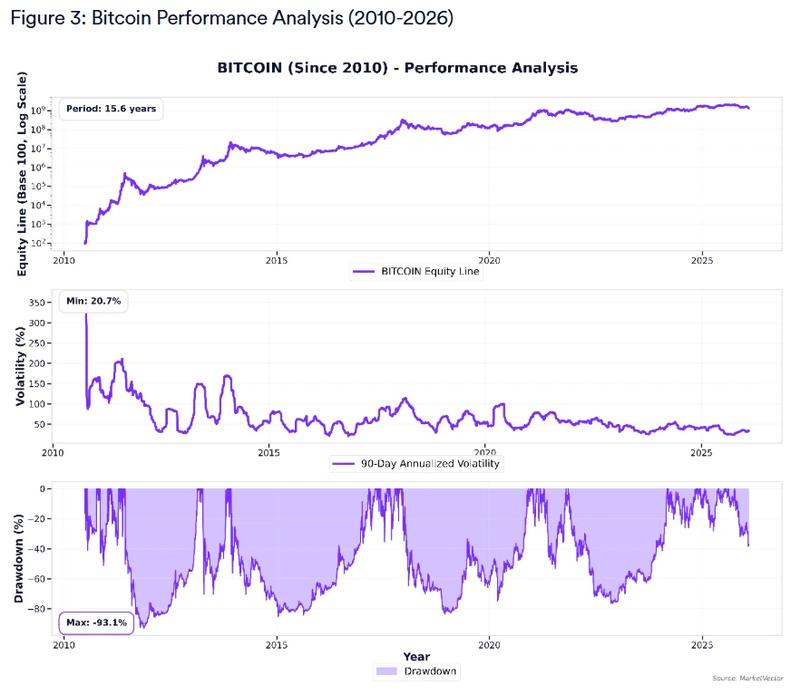
Bitcoin has historically been regarded as a store of value, notwithstanding episodes of price volatility and inconsistent performance when compared with earlier market cycles. The digital asset climbed beyond $126,000 in October before experiencing a significant retreat, with valuations subsequently fluctuating within the lower $60,000 territory.
Contemporary analysis conducted by index provider MarketVector repositions the store-of-value discussion beyond mere price movements, contending that Bitcoin and gold possess fundamental characteristics, such as scarcity, decentralization and immunity to supply manipulation, that establish their enduring value proposition.