European Central Bank Unveils Appia Strategy for Tokenized Finance Built on Central Bank Currency
Europe's central bank introduces Appia framework to steer the region's digital asset financial infrastructure backed by central bank currency, targeting initial Pontes testing phase in 2026.

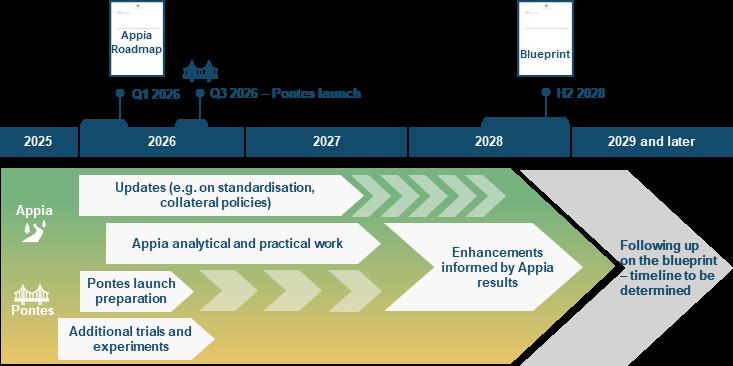
On Wednesday, the European Central Bank (ECB) made public its comprehensive Appia roadmap, outlining an extensive strategy for constructing wholesale financial markets based on tokenization across Europe, with central bank money serving as the foundation.
The strategic roadmap incorporates two interconnected initiatives at its core. The Eurosystem's distributed ledger technology settlement platform is known as Pontes, whereas Appia represents the overarching strategic vision for creating a tokenized financial ecosystem for the future. According to the ECB's announcement, the Pontes platform is slated for deployment during the third quarter of 2026.
With Appia, we are building a road from today's financial system to tomorrow's tokenized markets, firmly grounded in central bank money.
Piero Cipollone, ECB executive board member
Pontes serves as the Eurosystem's DLT platform, whereas Appia functions as a strategic framework
As a critical element within the Appia roadmap, Pontes presents the Eurosystem's distributed ledger technology (DLT) platform, engineered to facilitate settlement in central bank money for market-based transactions via interoperable network infrastructures.
The Eurosystem represents the monetary authority governing the euro area, consisting of the ECB along with the national central banks belonging to EU member states that have implemented the euro as their currency.
Pontes is targeting the end of the third quarter of 2026 as the timeframe to establish connectivity between market DLT infrastructures and the Eurosystem's "TARGET" Services, an acronym representing the Trans-European Automated Real-time Gross settlement Express Transfer system.
TARGET Services comprise a collection of payment and settlement systems operated by the Eurosystem that facilitate euro-denominated transactions throughout Europe. The suite encompasses three primary components: TARGET2 handles large-value payments, T2S manages securities settlement operations, and TIPS processes instant payments.
ECB solicits input from stakeholders in both public and private sectors
Concurrent with the launch announcement, the ECB initiated a public consultation process and extended invitations to participants from both public and private sectors to provide commentary on the roadmap and indicate their interest in participating in its execution.
The consultation process comprises two distinct sections: The first part gathers feedback regarding specific chapters within the roadmap, which may be made public alongside the respondent's identity, whereas the second part provides stakeholders with the opportunity to submit proposals for actively participating in Appia's foundational components, with all responses maintained under confidentiality.
The feedback received will play a crucial role in formulating the long-term framework for Europe's tokenized financial ecosystem. Interested parties must submit all feedback through the online survey platform no later than April 22.
The Appia rollout arrives while the ECB maintains its ongoing efforts on the digital euro initiative. Earlier during the current month, the central bank announced its intention to commence the selection process for payment service providers in 2026, in preparation for a 12-month pilot program that is scheduled to launch during the second half of 2027.