Digital ruble set for September 1 launch, confirms Russia's central bank chief
The European Union imposed sanctions on Russia's digital currency in 2025 before its launch, among a series of actions responding to Moscow's military operations in Ukraine.

Elvira Nabiullina, who serves as governor of Russia's central bank, has verified that the nation is on schedule to introduce its central bank digital currency (CBDC) within the next two months, adhering to the schedule established in the previous year.
Based on a Thursday article published by RIA Novosti, a Russian state-controlled media organization, Nabiullina indicated that preparations are complete for the digital ruble's Sept. 1 introduction. The nation's CBDC is designed to operate alongside Russia's traditional fiat currency, the ruble, with initial acceptance planned at credit and financial organizations.
In a statement provided through translation, Nabiullina expressed: "We want the digital ruble to be in demand by people and businesses, to be convenient, and, of course, we're constantly discussing [...] what functionality to develop."
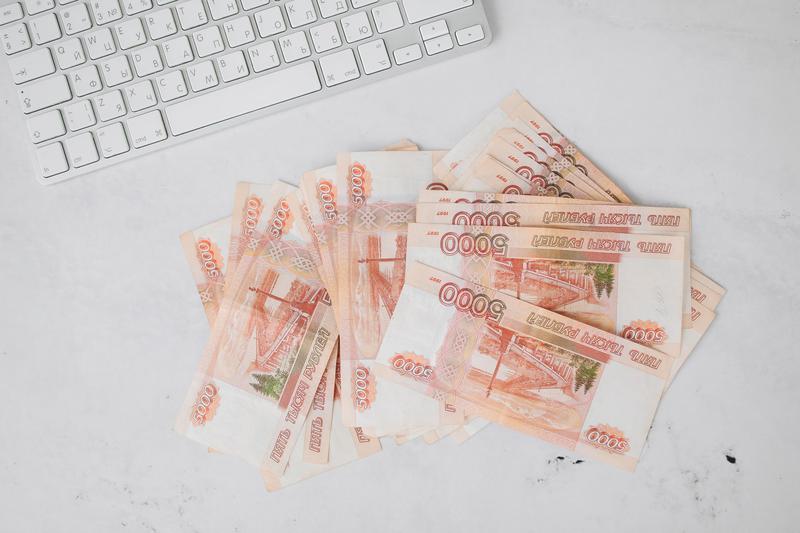
The introduction of the digital ruble, a project that commenced development in 2021, has previously become the subject of anticipatory sanctions imposed by authorities in the European Union, who revealed restrictions targeting the CBDC in April. The sanctions package was characterized by the European Council as a response to Russia's "war of aggression against Ukraine," a conflict that Moscow initiated in February 2022.
Vladimir Chistyukhin, serving as the Bank of Russia's first deputy governor, has stated that legislation enabling the digital ruble's operation will take effect on Sept. 1, accompanied by a transition period extending through July 2027.
In a February 2025 report, Dr. Jack Jarmon, a former USAID technical adviser who worked with the Russian government during the 1990s, suggested that the nation might encounter "structural limitations" if its digital ruble initiative proves unsuccessful and it turns to Bitcoin (BTC) along with other proof-of-work (PoW) digital currencies as tools for sanctions evasion.
Jarmon noted that "While Russia is replete with a surplus of oil and gas, the rest of its energy infrastructure is not well suited to handle such significant increases in demand for energy," in reference to PoW mining. "Its power grid is old and in need of investment and upgrade."
He added:
"The sanctions that Putin seeks to circumvent have cut Russia off from financial capital and technology. It has no domestic semiconductor industry to meet its needs and must rely on the People's Republic of China (PRC) for components [...]"
US President weighing legislation with four-year CBDC ban
Standing in stark contrast to Russia's approach, the United States finds itself one step from implementing a prohibition on its central bank's ability to issue or establish a CBDC through 2030. During this week, US President Donald Trump was presented with the 21st Century ROAD to Housing Act, a housing-focused bill that incorporates a digital dollar prohibition within a broader package of housing affordability legislation.
While Trump has indicated his refusal to sign the bill into law, demanding that Republicans initially advance legislation mandating in-person proof of US citizenship for voter registration, the measure will automatically gain legal status after 10 days without presidential action. Based on this timeline, the law would enter into force in July.