Coalition of 39 Companies Calls on EU to Accelerate Blockchain Regulation, Cite Risk of US Overtaking Europe
Coalition of 39 organizations, featuring Nasdaq among its members, has pressed the European Union to expedite modifications to its DLT pilot program, cautioning that Europe risks falling behind America in the tokenized finance sector.

An alliance of financial institutions and trade organizations from across Europe has pressed European Union policymakers and legislators to accelerate amendments to distributed ledger technology regulations, cautioning that the continent faces the threat of losing competitiveness to the United States in the tokenized finance arena.
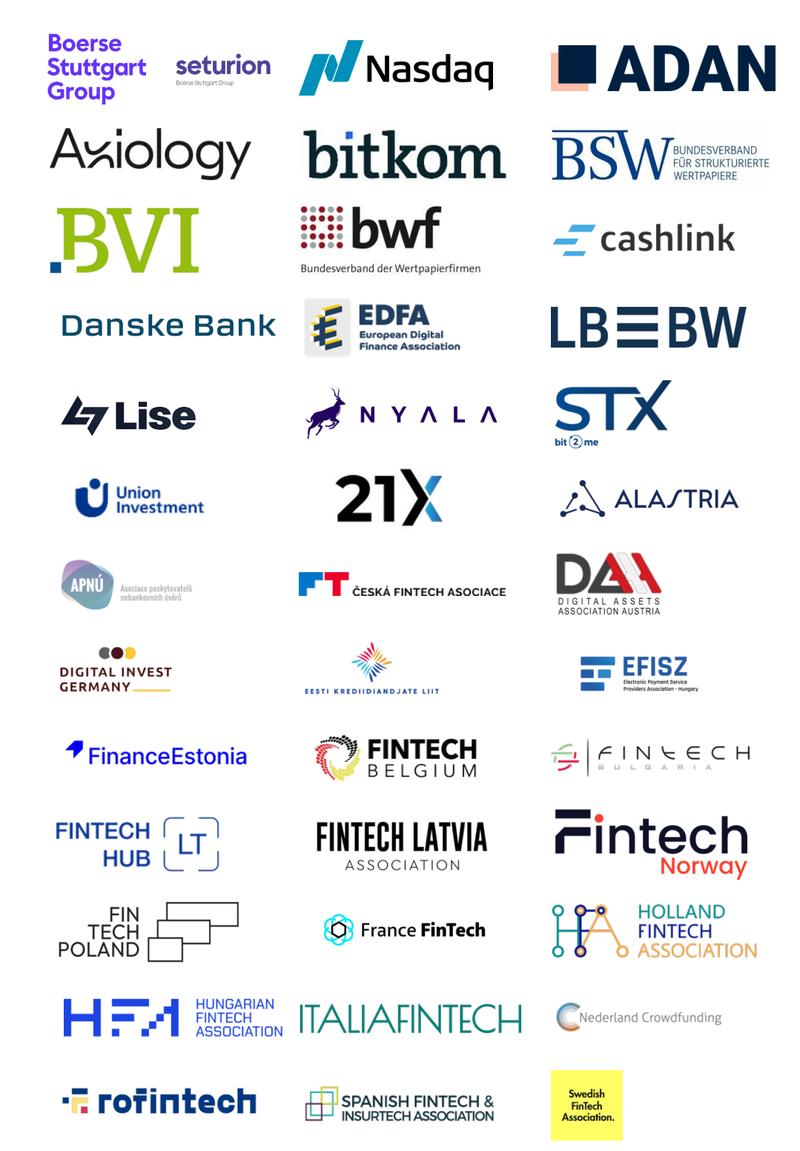
In a collective statement released on Tuesday, 39 signatories—among them Nasdaq and Boerse Stuttgart—appealed to the European Commission and Parliament to separate the DLT Pilot Regime from a more comprehensive legislative bundle and examine it as an independent piece of legislation, based on a copy of the communication distributed by cryptocurrency industry group Adan.
The coalition contended that incorporating the regime within the broader Market Integration and Supervision Package might postpone critical reforms necessary to maintain competitiveness with international progress. "Negotiations are likely to be lengthy," the communication, directed to Financial Services Commissioner Maria Luis Albuquerque, stated, further noting that postponements "risk dampening Europe's momentum in DLT adoption."
The DLT Pilot Regime represents an EU framework initiated in 2023 that permits financial institutions to experiment with blockchain-powered trading and settlement of financial instruments such as stocks and bonds within authentic market environments. It functions as a regulatory testing ground, providing temporary waivers from specific regulations to enable firms to explore tokenized finance opportunities.
EU firms push to expand DLT Pilot Regime limits
The coalition is advocating for multiple modifications to the existing pilot regime, including broadening the spectrum of permissible assets, increasing the aggregate volume ceiling to 150 billion euros ($176 billion), eliminating temporal restrictions on licenses and the removal of time limitation on licences. "These pragmatic adjustments enjoy broad support among market participants across Europe," the communication asserts.
According to the present regime, only comparatively modest financial instruments can be evaluated on blockchain platforms, including equity from corporations valued below $588 million, debt securities with issuance volumes under $1.17 billion and investment funds managing assets beneath $588 million.
The United States has taken steps to incorporate tokenized securities within its established financial infrastructure, with the Securities and Exchange Commission (SEC) providing clarity that broker-dealers are authorized to maintain custody of tokenized stocks and bonds in accordance with existing investor protection regulations. The regulatory body has additionally issued a no-action letter facilitating a Depository Trust & Clearing Corporation subsidiary to introduce a service that tokenizes real-world assets maintained in custody.
Cointelegraph contacted Nasdaq and Boerse Stuttgart for commentary, but had not received a response by publication.
EU tokenization firms ask for changes to DLT Pilot Regime
In February, a coalition of European tokenization and market infrastructure companies similarly called upon EU decision-makers to swiftly revise the DLT Pilot Regime, cautioning that stringent asset restrictions, limited issuance thresholds and licenses with expiration dates are preventing the expansion of regulated onchain marketplaces.
In a collaborative communication, a coalition of 9 enterprises, including Securitize, 21X and Boerse Stuttgart Group, maintained that absent a "quick fix" to the pilot regime, market liquidity and trading activity may migrate to the United States, eroding Europe's competitive standing in digital capital markets.