Canadian fintech Wealthsimple unveils Kalshi-backed prediction trading platform
The new platform arrives after receiving regulatory clearance in the first quarter of this year, at a time when prediction market services are encountering legal obstacles from financial regulators, traditional exchanges and government officials across multiple countries.

Wealthsimple, a financial technology company based in Canada, is introducing a prediction markets platform that operates on Kalshi's infrastructure, providing retail investors in the country with the ability to trade thousands of event-driven contracts after obtaining regulatory authorization in the earlier part of this year.
The new standalone application, which goes by the name Wealthsimple Predict, is set to become available during the summer months and will provide Canadian participants with the opportunity to trade approximately 4,000 event-based contracts that are listed on the Kalshi platform, spanning diverse categories such as financial market outcomes, economic data releases and climate-related events.

In March, the Canadian Investment Regulatory Organization (CIRO) granted authorization to the company to provide prediction market contracts connected to these specific categories. Wealthsimple becomes the second investment dealer to receive CIRO's approval for offering prediction market trading services to Canadian clients. Under the regulatory framework, the contracts will be classified as derivatives and are required to have minimum settlement timeframes of at least 30 days.
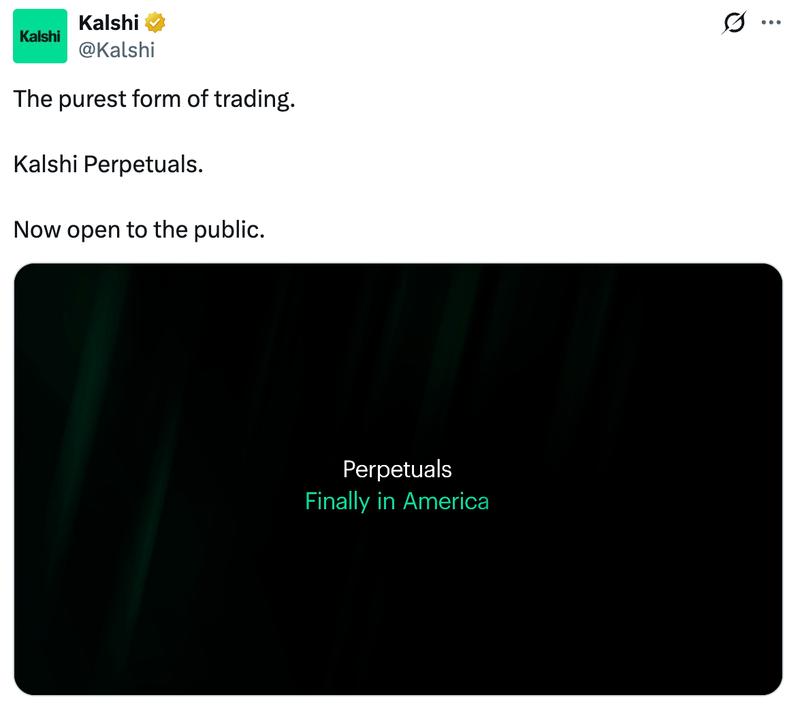
The launch in the Canadian market occurs as Kalshi pursues expansion strategies that extend beyond traditional prediction markets. The company announced on Thursday that its perpetual futures offerings have gone live and are now available for active trading, coming after a May 31 disclosure that signaled the firm's entrance into the cryptocurrency perpetual futures sector.
CME challenges CFTC's regulatory decisions on crypto derivatives
The expansion of Kalshi into markets beyond prediction trading is already encountering resistance from legacy derivatives trading platforms.
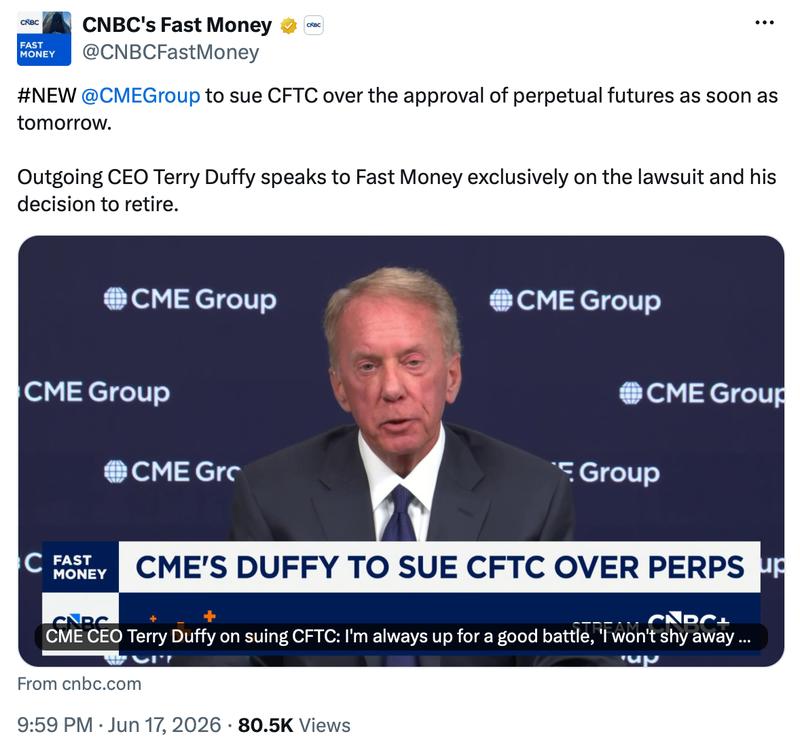
CME Group initiated legal action against the US Commodity Futures Trading Commission (CFTC) on Thursday, contesting the regulatory body's approval of cryptocurrency perpetual futures contracts provided by Kalshi and comparable offerings from Coinbase, with the lawsuit claiming that the regulator incorrectly classified these products under federal legislation. This legal filing came after CME's chief executive Terrence Duffy stated one day prior that the exchange intended to mount a legal challenge against the regulatory approvals.
The legal challenge emerges during a wider industry effort to establish crypto perpetual futures trading within domestic US markets. During May, the CFTC granted approval for Bitcoin perpetual futures contracts offered by Kalshi and published a no-action letter that permitted Coinbase to provide comparable products to its customers.
Following these regulatory developments, Coinbase broadened institutional investor access in the United States to international crypto derivatives trading venues, while Kraken introduced perpetual futures trading capabilities this week via its CFTC-regulated Bitnomial exchange platform.
Multiple nations implement restrictions on prediction market platforms
Even as prediction markets gain acceptance in Canada, these trading platforms continue to encounter regulatory opposition across various global jurisdictions. During May, regulatory authorities in Spain issued directives to internet service providers requiring them to block user access to both Kalshi and Polymarket while conducting investigations to determine whether these platforms were conducting operations that violated the country's gambling laws.
Regulatory bodies across Asia have similarly taken action against prediction market services. Indonesia implemented a ban on Polymarket in recent months following user activity on contracts speculating about whether President Prabowo Subianto would depart from office ahead of schedule, while Japanese cryptocurrency exchange Bitbank issued warnings to its customer base regarding transfers connected to Polymarket and law enforcement in South Korea has reportedly launched investigations into domestic users over potential violations of gambling regulations.
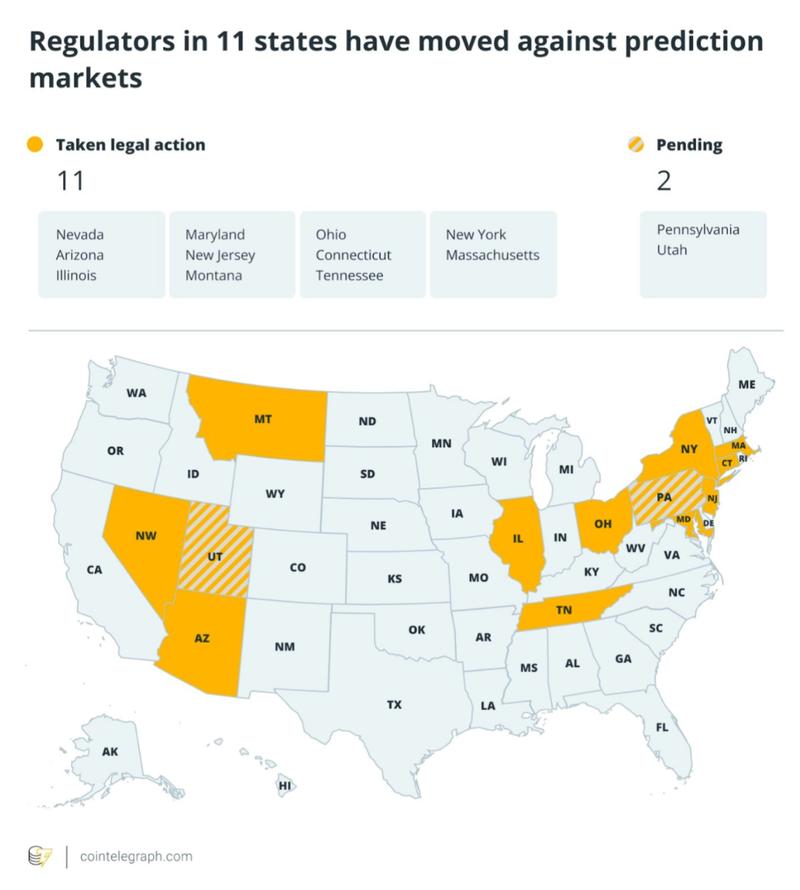
Within the United States, no fewer than 11 states have mounted challenges against prediction market operations in recent months. The central question in this ongoing dispute revolves around whether event-based contracts should fall under the jurisdiction of state-level gambling statutes or be treated as federally regulated derivatives subject to oversight by the CFTC.
During remarks delivered at Bitso's Stablecoin Conference held in Mexico City on June 16, Digital Chamber CEO Cody Carbone expressed the view that the escalating jurisdictional conflict between the CFTC and state gambling regulatory authorities will likely advance to the US Supreme Court for resolution.