Buterin Proposes Simplified 'One-Click' ETH Staking Solution for Institutional Players
Ethereum's Vitalik Buterin proposes DVT-lite technology as a solution to simplify ETH staking for institutional investors by streamlining the complex node setup process.

The co-founder of Ethereum, Vitalik Buterin, has disclosed that a streamlined version of distributed validator technology known as DVT-lite was utilized by the Ethereum Foundation to stake 72,000 Ether during February, representing a technology he believes could significantly simplify institutional staking operations.
In a statement shared on X this Monday, Buterin expressed: "My hope for this project is that in the process, we can make it maximally easy and one-click to do distributed staking for institutions."
According to Buterin's explanation, DVT-lite enables users to "choose which computers run their nodes, make a config file where they all have the same key, and then from there everything gets set up automatically."
As a streamlined variant of distributed validator technology, DVT-lite has been designed specifically for simpler implementation, particularly suitable for institutional environments or semi-professional Ethereum staking operations.
Traditional solo staking operations rely on a single computer to run everything, creating vulnerability to "slashing" penalties should the system crash, become compromised by hackers, or experience internet connectivity loss. Complete DVT distributes secret keys among multiple computers that maintain constant communication, offering superior security but requiring complex configuration.
By contrast, DVT-lite employs the identical validator key across multiple computers, enabling rapid failover to another machine if one experiences failure, which minimizes downtime and substantially reduces penalty risks.
The Ethereum Foundation launched its staking initiative using this technology during late February, with the staked assets currently positioned in the validator entry queue with an anticipated staking date of March 19.
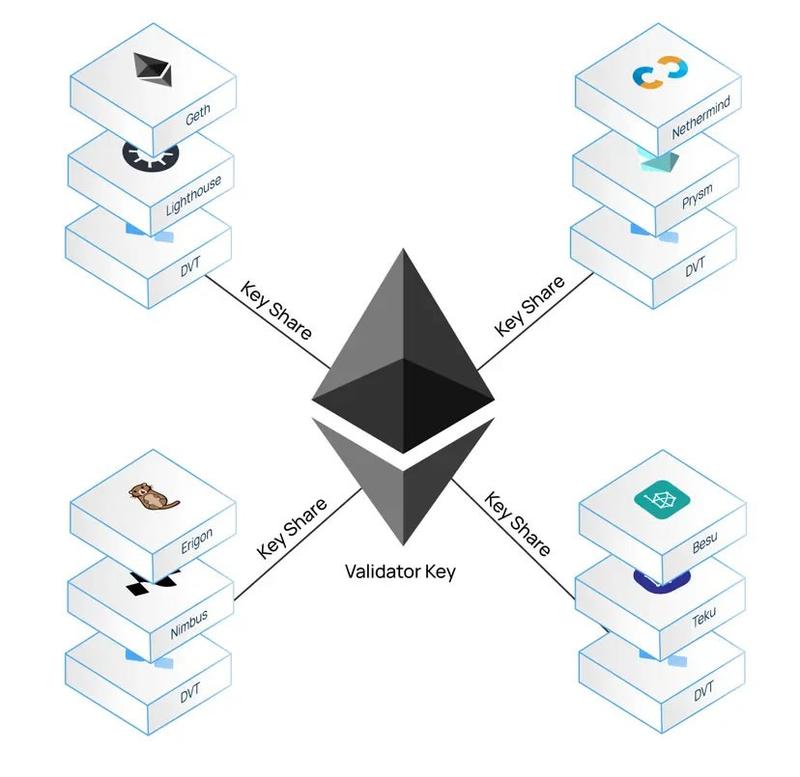
"One click" staking for institutions
According to Buterin, the prevailing notion that infrastructure operation represents this "scary complicated thing" requiring all participants to possess professional expertise is "awful and anti-decentralization, and we must attack it directly."
He further elaborated that there ought to be a "docker container" or "nix image" or comparable solution, featuring "one click" or command line per node to automate the staking process.
Buterin revealed his intention to personally adopt DVT-lite in the near future and expressed optimism that additional institutions holding ETH would embrace this staking methodology.
"We want the authority over staking nodes to be highly distributed, and the first step to doing this is to make it easy."
Back in January, he put forward a proposal for "native DVT" network integration, which would enable stakers to "stake without fully relying on one single node."
Big demand for staking despite low prices
Despite bearish market price movements, demand for Ether (ETH) staking continues to remain exceptionally strong.
According to ValidatorQueue data, the validator entry queue currently contains 3.2 million ETH, resulting in a 55-day waiting period, while the exit queue holds merely 29,000 with a 12-hour wait time.
At present, the total amount of staked ETH stands at 37.5 million, valued at approximately $76.5 billion based on current market prices (comparable to the market capitalization of companies like DoorDash or Motorola), which accounts for 31% of the entire supply.