BTC Surges Past $72K Following $280M Bear Liquidation Wave: Can This 'Delicate Peace' Last?
Global markets and Bitcoin experienced a surge following a US-Iran ceasefire announcement, though current data reveals BTC short sellers maintain their bearish positions.

Key takeaways:
- A ceasefire agreement between the US and Iran sparked rallies in both Bitcoin and equity markets, though BTC derivative indicators point to constrained bullish strength.
- Regulatory disappointments and an uncertain "fragile truce" between Washington and Tehran maintain bearish pressure with possible downside targets at $68,000.
Bitcoin (BTC) experienced a sharp 6% climb within a four-hour window on Tuesday, mirroring upward movements across global equity markets following the announcement of a two-week ceasefire agreement between the US and Iran. This unexpected surge caught many market participants unprepared, sparking a massive $280 million liquidation cascade across Bitcoin futures trading platforms.
Should the conflict with Iran reach a genuine resolution, Bitcoin short sellers may face significant challenges, yet BTC derivative metrics indicate that sustained upward momentum capable of pushing prices beyond $80,000 might require more time than bulls currently expect.
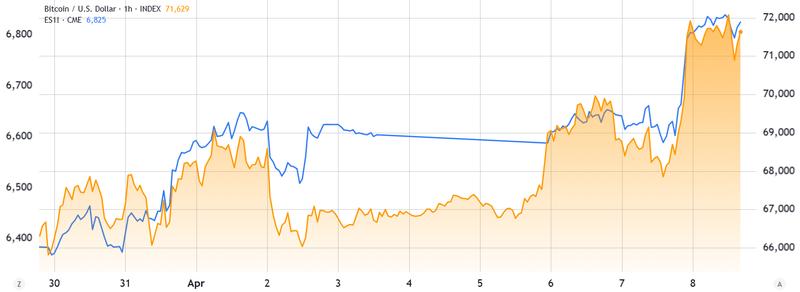
The strong correlation between Bitcoin and S&P 500 futures indicates that BTC's price movement was primarily driven by expectations surrounding the potential reopening of the Strait of Hormuz. According to US President Donald Trump, Iran has agreed to dismantle its nuclear program in return for relief from tariffs and sanctions. Nevertheless, bearish sentiment received fresh fuel when US Vice President JD Vance characterized the Iran ceasefire as a "fragile truce."
Continuing inflation concerns and underwhelming Bitcoin derivative indicators
A lasting de-escalation would probably result in decreased oil prices and diminished inflationary pressures, potentially creating conditions favorable for expansionary monetary policy. Despite evidence of labor market deterioration, the US Federal Reserve has maintained its reluctance to reduce interest rates. Market participants who had previously abandoned risk assets reconsidered their stance as the probability of severe economic disruption diminished.
Although $280 million in forced liquidations of bearish leveraged trades contributed to the rally's acceleration, the overall positioning in BTC derivatives markets remained largely unchanged.
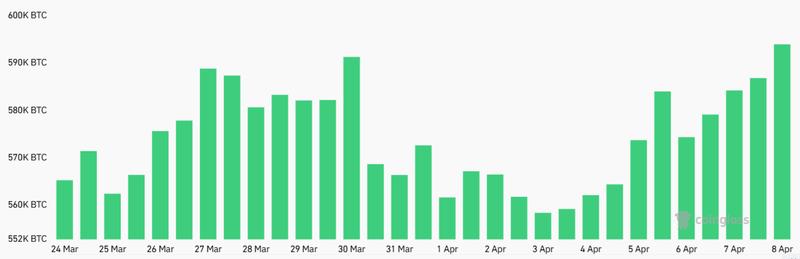
The aggregate open interest across Bitcoin futures platforms climbed to 593,930 BTC by Wednesday, representing a modest 2.5% increase from Tuesday's levels. Significantly, liquidation events ranging between $200 million and $300 million occur with notable frequency, having materialized on five separate occasions during the preceding 90-day period. When viewed against the total aggregate futures position of $42 billion, this particular $280 million liquidation event appears relatively modest.
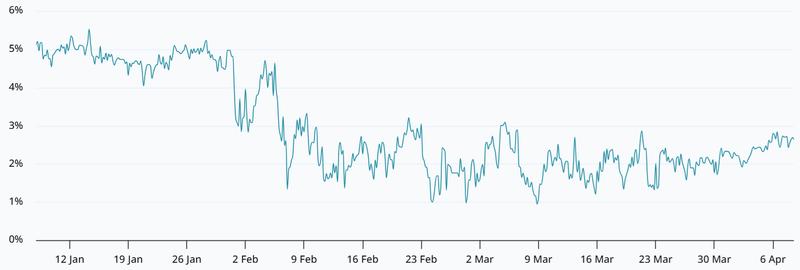
Wednesday saw the Bitcoin futures annualized premium compared to conventional spot markets holding steady at 3%, unchanged from levels observed two days earlier. Weak appetite for bullish exposure has kept this metric beneath the neutral 4% benchmark since the final days of January.
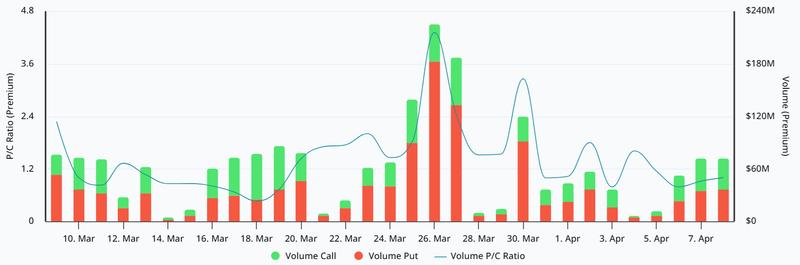
Throughout the past two weeks, demand for protective downside Bitcoin options has dominated trading activity. Put (sell) option premiums have exceeded those for call (buy) instruments, though they have retreated from the extreme fear territory witnessed on March 26.
Can Bitcoin's upward move survive regulatory obstacles?
Bitcoin bulls have faced multiple setbacks to their confidence, beginning with the Oct. 10, 2025, flash crash, continuing through regulatory letdowns and culminating in stalled progress regarding the US Strategic Bitcoin Reserve. The most recent version of the PARITY Act notably excluded tax exemptions for minor Bitcoin transactions and failed to provide deferred capital gains treatment for mining operations. Furthermore, David Sacks relinquished his position as the White House AI and cryptocurrency czar on March 26.
Throughout 2025, US Treasury Secretary Scott Bessent has repeatedly referenced "budget neutral" approaches for acquiring Bitcoin without imposing additional taxes, yet specific implementation details have never been revealed. Concurrently, members of the US Democratic Party have called upon regulators to investigate the Trump family's cryptocurrency business interests, citing potential conflicts of interest.
No evidence suggests that Bitcoin bears are hastening to exit their short positions following the recent price rally. Inflationary pressures remain persistent, with Brent crude oil maintaining its $95 per barrel price point, a significant increase from the $72 per barrel level recorded in late February. Most critically, a two-week ceasefire falls far short of representing a permanent resolution, keeping the possibility of a retracement toward $68,000 firmly in play.