Bernstein: Vertical integration in prediction markets may trigger acquisition spree
According to Bernstein, prediction-market companies are vertically integrating by internalizing exchange, clearing and brokerage operations, creating opportunities for mergers and acquisitions but also elevating antitrust and regulatory concerns.

Companies operating in the prediction-market sector are increasingly internalizing their trading infrastructure, representing a swift transformation that may catalyze an acquisition spree spanning crypto platforms, sportsbooks, brokerages and independent exchanges, Bernstein analysts suggest.
According to a research note published by Bernstein on Monday, the sector is experiencing "operational consolidation," characterized by leading platforms pursuing greater control over additional components of the prediction-market technology stack.
"Every consumer platform that matters has merged the front and back end of the prediction-market stack," they said. This encompasses distribution, brokerage, exchange and clearing. This integration has positioned companies that traditionally functioned in distinct industries into a unified competitive environment.
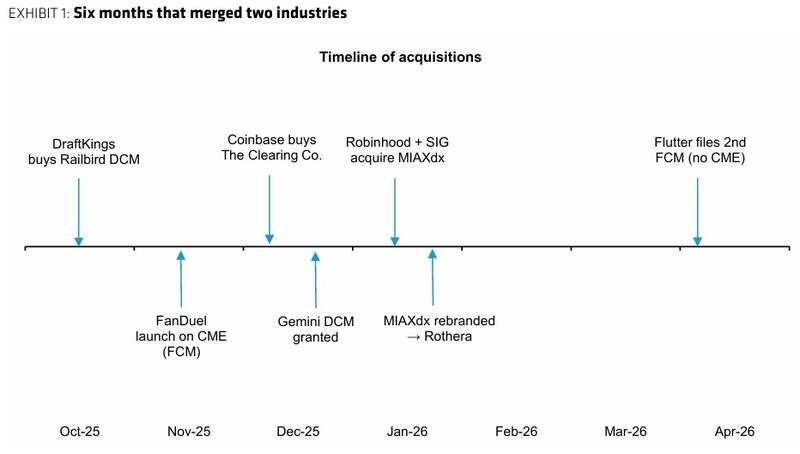
Bernstein highlighted Robinhood's decision to route significant World Cup contracts through Rothera, the exchange it co-owns with Susquehanna, and DraftKings' introduction of DKeX and subsequent migration of volume from CME and Crypto.com infrastructure. The research firm additionally referenced Coinbase's purchase of The Clearing Company and its rollout of event contracts as proof that consumer-facing platforms are pursuing greater ownership across the prediction-market stack.
Controlling the underlying infrastructure enables platforms to capture fees that were formerly directed to external partners, rendering acquisitions an expedited pathway to distribution channels, regulatory licenses, or filling gaps in the technology stack. Nevertheless, the identical integration that bolsters the rationale for consolidation may also intensify state and federal oversight by further obscuring the regulatory demarcation between financial trading and gambling.
Regulatory clash could constrain consolidation
According to Bernstein, regulatory oversight continues to represent a primary obstacle to more substantial integrations throughout the prediction-market industry.
Although merging crypto platforms with brokerages, sportsbooks and exchanges has the potential to enhance margins and decrease dependence on third-party partners, Bernstein indicated such transactions may invite antitrust examination and intensify disagreements regarding whether sports event contracts ought to be governed as financial derivatives or gambling offerings.
This development could additionally fuel the jurisdictional confrontation currently unfolding in multiple states. Minnesota passed what the Commodity Futures Trading Commission (CFTC) characterized as the nation's first complete prohibition on prediction markets, whereas Illinois implemented legislation mandating platforms secure a state license prior to offering sports event contracts.
Kalshi contested both states' limitations, contending that federally regulated exchanges are subject to the CFTC's exclusive jurisdiction.
The expanding pushback indicates that consolidation might offer commercial advantages but continue to be challenging to implement until regulators and judicial bodies determine where federal derivatives supervision concludes and state gambling jurisdiction commences.