Treasury Chief Bessent Intensifies Push for Congress to Approve CLARITY Act
Scott Bessent, the current US Treasury Secretary, emphasizes that the CLARITY Act is essential for establishing transparent regulations governing cryptocurrency, tokenized assets and decentralized exchanges, noting that America's competitive position hangs in the balance.

Scott Bessent, currently serving as US Treasury Secretary, has called upon lawmakers in Congress to approve the Digital Asset Market Clarity (CLARITY) Act with urgency, cautioning that available time for Senate floor proceedings is running short and immediate action is necessary.
Through an opinion piece published in the Wall Street Journal this Wednesday, Bessent emphasized that this piece of legislation plays a crucial role in establishing transparent regulatory frameworks for digital assets, encompassing cryptocurrencies, tokenized assets and decentralized trading platforms. He cautioned that as the worldwide cryptocurrency market has expanded to reach $3 trillion in value and approximately one in six American citizens now possess digital assets, the importance of maintaining US dominance in financial technological advancement has reached unprecedented levels.
To preserve it and rise to the challenge before us, Congress must pass the Clarity Act. Senate floor time is scarce, and now is the time to act.
The CLARITY Act received approval from the US House of Representatives during July 2025, however the bill has encountered continuous postponements within the Senate regarding questions about how yields on stablecoins should be addressed within the proposed legislation.
Established financial institutions have expressed concerns that yields generated from stablecoins might substantially diminish banking sector lending activities, whereas supporters from the cryptocurrency industry maintain these yields are crucial for unleashing innovation and maintaining American competitiveness on the global stage.
White House supports stablecoin yields
This Wednesday saw the release of analysis from White House economic advisors that disputed assertions from banking industry organizations claiming that stablecoin yields pose a substantial threat to conventional lending practices, demonstrating that prohibiting yields on stablecoins would produce negligible effects on banking sector lending volumes.
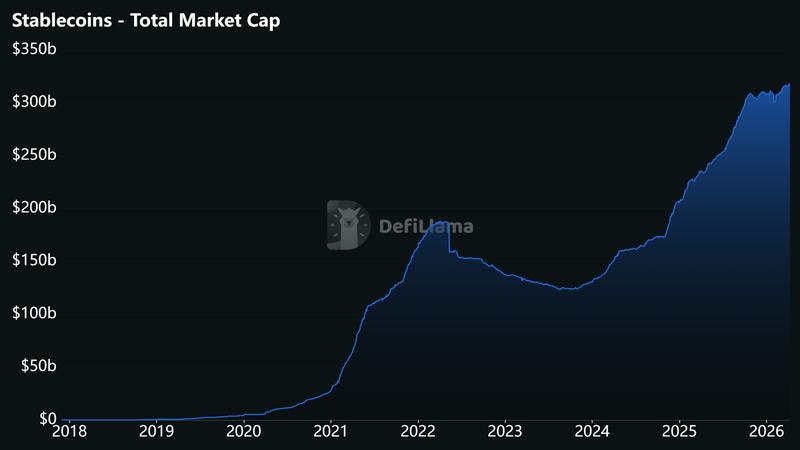
According to calculations from the Council of Economic Advisers, implementing a prohibition on stablecoin yields would increase aggregate US banking sector lending by a mere $2.1 billion, representing only 0.02% of the overall $12 trillion marketplace, while community banking institutions would see gains of merely $500 million. Conversely, their analysis determined that implementing such a prohibition would create an annual welfare loss totaling $800 million each year stemming from users' forfeited yield opportunities.
President Donald Trump has additionally criticized banking institutions for impeding cryptocurrency-related legislation, contending that these banks are leveraging disagreements surrounding stablecoin yields as a mechanism to hold both the CLARITY Act and GENIUS Act "hostage."
Treasury proposes stricter AML rules for stablecoin issuers
This Wednesday witnessed the Treasury Department putting forward new regulatory requirements under the GENIUS Act that would compel payment stablecoin issuing entities to establish and maintain Anti-Money Laundering and Counter-Terrorism Financing compliance programs. The proposed regulatory framework would make sanctions compliance mandatory and provide issuers with legal authority to block, freeze or decline specific transactions, effectively classifying them as financial institutions operating under Bank Secrecy Act provisions.
Professionals within the industry suggest this regulatory shift essentially transforms stablecoin issuing companies into gatekeepers functioning similarly to traditional banks. Snir Levi, who serves as CEO of Nominis, a blockchain intelligence company, shared with Cointelegraph that meeting these compliance requirements could result in dramatically increased instances of wallet freezing actions, transaction blocking measures and large-scale asset seizure operations.