Three critical metrics must reverse for ETH to break past $2,400
ETH's path to $2,400 remains blocked by spot ETF withdrawals, diminishing DEX trading activity and weakening futures premiums, though reversing these trends could spark an upward move.

Key takeaways:
- ETH faces challenges maintaining $2,400 as DEX trading volumes remain subdued and appetite for decentralized applications continues to weaken.
- Withdrawals driven by institutional participants and underwhelming futures premiums indicate ETH is missing the bullish momentum needed for a lasting upward movement.
Between Wednesday and Thursday, Ether (ETH) saw a 6% price decline, dropping back to test the $2,050 support level, a move that mirrored a broader risk-averse sentiment triggered by tensions related to the US and Israel-Iran war. ETH's performance has trailed the overall cryptocurrency market capitalization, prompting market participants to question which factors could ignite a durable advance beyond the $2,400 threshold.
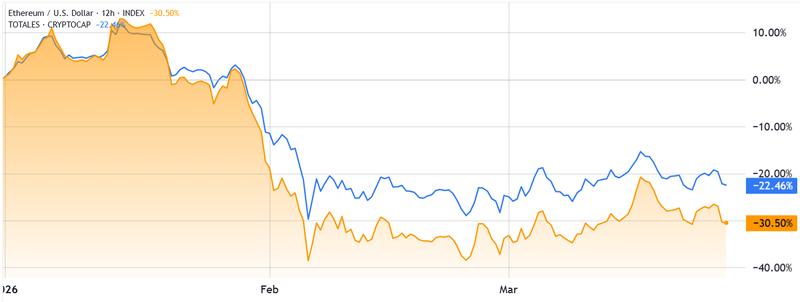
Since the beginning of 2026, Ether's value has fallen 31%, propelled by declining engagement with decentralized applications and an overall cautious sentiment throughout the digital asset sector. A significant portion of this downward pressure stems from stalled regulatory advancement in the United States, particularly after the Trump administration had generated optimism for a more favorable regulatory landscape for cryptocurrencies.
ETF redemptions and blockchain activity weigh on ETH
The US Senate is currently considering legislation that would prohibit yield payments on stablecoins held on trading platforms. Despite strong opposition from Coinbase, this proposal has introduced additional uncertainty for market participants. Banking industry representatives contend that the GENIUS Act already bars stablecoin issuers from directly paying yields to token holders, suggesting that routing payments through exchanges represents an attempt to circumvent existing restrictions.
Additionally, a recent Financial Action Task Force (FATF) report has called on countries to strengthen regulatory frameworks as stablecoins gain traction in payment systems and international transfers through self-custody wallet solutions. The international anti-money laundering organization emphasized that peer-to-peer transactions complicate authorities' ability to identify questionable financial movements.
Beyond regulatory headwinds, multiple indicators point toward constrained near-term growth potential for Ether.
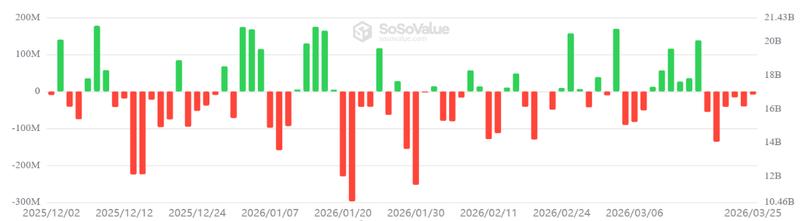
US-listed spot Ether ETFs have experienced $298 million in net redemptions beginning March 18, representing six straight trading sessions of withdrawals. Although these capital movements don't perfectly capture institutional appetite, particularly after the introduction of ETFs featuring built-in staking capabilities, the 2.8% native staking yield has failed to alter investor risk assessment.
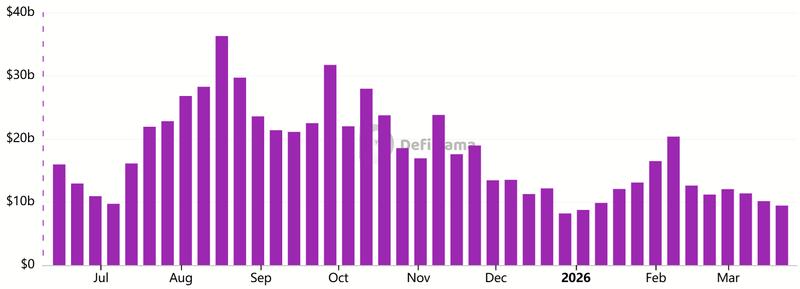
Declining transaction activity across Ethereum's decentralized trading platforms represents a significant red flag as interest in the token continues to wane. Current weekly average volumes of $9.4 billion reflect approximately 50% reduction compared to activity levels observed during the last three months of 2025. Without a reversal in this indicator, Ether will face considerable difficulty sustaining price levels above $2,400.
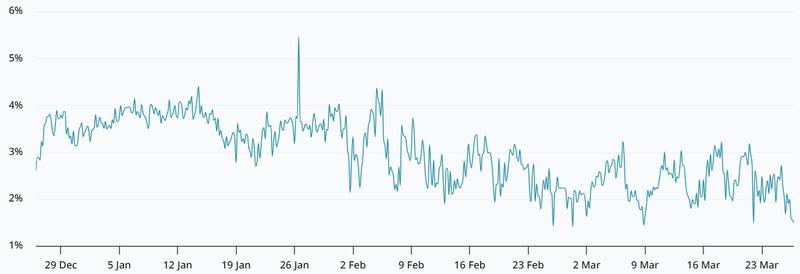
On Thursday, Ether monthly futures contracts showed a 2% premium compared to conventional spot trading venues, signaling insufficient appetite for bullish leveraged positions. During neutral market conditions, this indicator typically ranges between 4% and 8% to account for the extended settlement timeline. ETH sellers will probably maintain their conviction unless this measure climbs back into a neutral territory.
Socio-economic developments, particularly the US and Israel-Iran war, have undeniably served as primary catalysts for equity market weakness throughout the past two months. This risk-averse environment has contributed significantly to Ether's inability to recover the $2,400 level. Nonetheless, a rebound in Ethereum decentralized exchange transaction volumes and strengthened commitment from institutional market participants will be essential for sustained bullish price action.
Strategic accumulation of Ether by multi-billion dollar corporations including BitMine, SharpLink, and The Ether Machine has the potential to serve as a trigger for ETH to surpass the wider cryptocurrency market's performance once market conditions turn favorable. At present, though, Ether's price continues facing downward pressure.