Switzerland's Bitcoin Reserve Initiative Falls Short on Required Petition Signatures
An initiative aimed at mandating Bitcoin holdings for Switzerland's central bank will expire after campaigners were unable to collect sufficient signatures needed to force a public vote.

An initiative designed to mandate that the Swiss National Bank hold Bitcoin will expire after organizers were unable to collect sufficient petition signatures to initiate a nationwide referendum, according to a Reuters report.
The proposal aimed to modify Switzerland's constitutional framework to mandate that the central bank maintain Bitcoin (BTC) in its reserves alongside its existing gold and foreign currency holdings, however organizers acknowledged they managed to secure approximately 50,000 signatures—only half of the 100,000 legally required under the Swiss referendum system.
The Swiss National Bank (SNB) has consistently rejected proposals to incorporate cryptocurrencies into its asset portfolio, maintaining that digital currencies fail to satisfy its reserve management criteria due to volatility and liquidity-related challenges, according to Reuters reporting.
Initiative founder Yves Bennaim acknowledged to Reuters that the campaign faced long odds from the outset, though he maintained the initiative succeeded in stimulating broader discussions regarding Bitcoin's potential function in international financial systems.
Advocates behind the initiative argued that Bitcoin holdings could provide Switzerland with an opportunity to reduce concentration risk in its reserves by diversifying away from dollar- and euro-based holdings, which Reuters noted comprise approximately three-quarters of the SNB's foreign exchange reserves.
Countries experiment cautiously with sovereign Bitcoin reserves
Although 2025 witnessed numerous publicly traded corporations implementing Bitcoin treasury approaches, national governments have demonstrated considerably more restraint in embracing Bitcoin as a reserve holding.
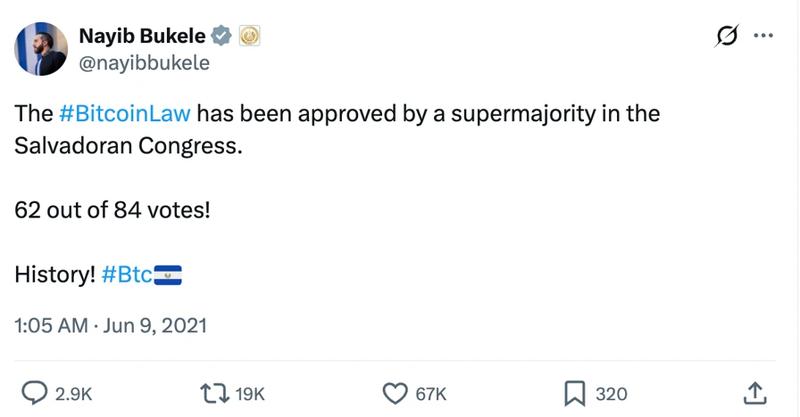
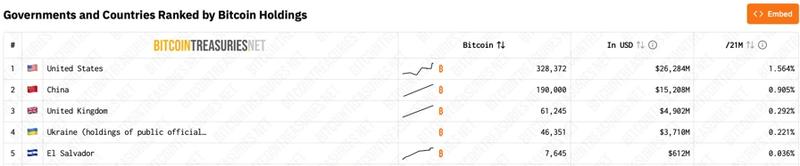
El Salvador became the pioneer nation to officially integrate Bitcoin into a sovereign reserve framework after President Nayib Bukele initiated government BTC acquisitions in 2021 in conjunction with the nation's decision to grant Bitcoin legal tender status. According to BitcoinTreasuries.com data, the country's current holdings stand at 7,645 BTC.
Bhutan, which also ranks among the largest government Bitcoin holders globally, accumulated the majority of its digital currency reserves through government-supported mining activities utilizing excess hydroelectric power generation capacity as a component of a comprehensive plan to convert renewable energy resources into digital exports and strengthen the nation's position in cryptocurrency markets.
Nevertheless, Arkham Intelligence data reveals that wallet addresses associated with Bhutan have experienced substantial reductions in their Bitcoin positions over recent months, with holdings declining from approximately 13,000 BTC at year-end 2024 to about 3,654 BTC by April 2026 after executing multiple large-scale transfers and what appear to be liquidation transactions.
In contrast to El Salvador and Bhutan, which proactively built Bitcoin positions through direct purchases or mining activities, the three nations with the largest sovereign Bitcoin holdings — United States, China and the United Kingdom — predominantly obtained their digital currency assets through law enforcement seizures and asset forfeiture actions.
On March 6, 2025, US President Donald Trump issued an executive order creating a Strategic Bitcoin Reserve funded with Bitcoin currently in government possession, stipulating that BTC allocated to the reserve "shall not be sold" and would be retained as strategic reserve holdings of the United States.
Although the executive order authorizes Treasury and Commerce department officials to investigate budget-neutral methods for obtaining additional Bitcoin, the reserve will initially consist exclusively of BTC already under government control as a result of asset forfeiture cases.