Sellers vanish as Bitcoin sell-side risk drops to historically low levels near $80K
Data reveals Bitcoin sell-side risk has plummeted to exceptionally rare lows while BTC maintained the majority of its gains from August, with investors displaying minimal panic selling behavior.

Fresh data reveals that Bitcoin (BTC) sell-side risk continues to hover near all-time lows following a cooldown in August profit-taking activity.
Key points:
- The sell-side risk ratio for Bitcoin dropped to 7 from 16 during September, representing one of the metric's lowest historical measurements.
- Despite Bitcoin maintaining the bulk of its 25% appreciation from August, selling pressure has subsided.
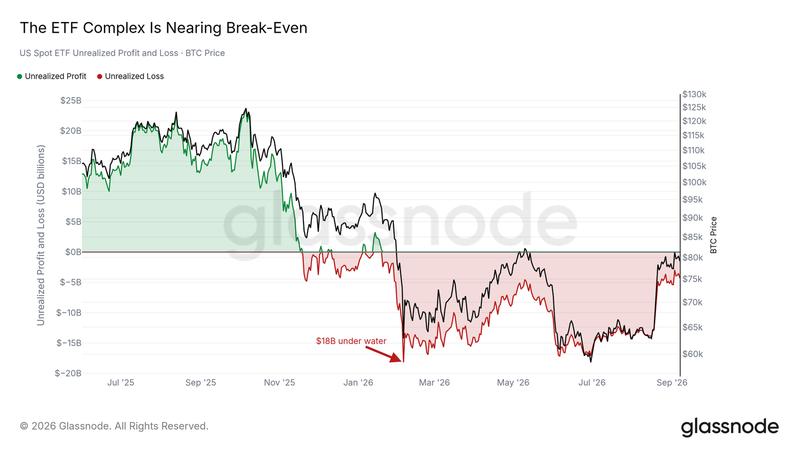
- US spot Bitcoin ETF market participants have remained underwater relative to their combined breakeven threshold of approximately $86,000 for 229 trading sessions.
September shows Bitcoin hodlers are "selling less," according to Glassnode
The sell-side risk metric aggregates all onchain realized gains and losses, then divides this sum by Bitcoin's realized market capitalization. This calculation produces a view of the United States dollar value that has been realized throughout a specific timeframe in relation to the realized cap.
According to Glassnode, reduced values function as indicators of "macro market bottoms, accumulation phases and relatively low sell-side risk environments."
The SSRR climbed to 16 when Bitcoin's valuation touched multimonth peaks exceeding $80,000 during late August. However, as of the current week, this indicator has declined by more than 50% to reach 7, ranking among the most minimal measurements ever recorded.
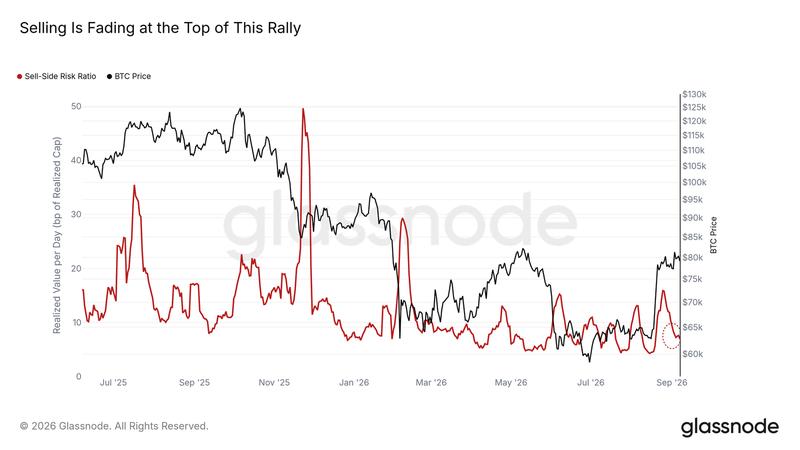
According to Glassnode, the Bitcoin price recovery witnessed in August has "drawn little supply," when evaluated through onchain activity metrics.
"At the July 2025 and October 2025 highs the same measure spiked to 35 and 23 basis points. Only a small share of days in the past year have run lower than today," it noted.
Additional data demonstrates that long-term holders — characterized as wallet entities maintaining a UTXO without expenditure for a minimum of six months — are experiencing reduced rates of onchain profit realization throughout this month.
"Long-term holders' share of realized profit has fallen to 47% from 88% at the August peak, and September's realized profit spike on September 3, 2026 was under half the size of August's," Glassnode continued.
"The sellers this month are recent buyers, and even they are selling less."
Breakeven point remains in focus for Bitcoin ETF buyers
The current SSRR measurement could help alleviate worries that even a minor Bitcoin price pullback might spark widespread panic selling behavior.
Various Bitcoin investor cohorts have shifted back into aggregate profitability following Bitcoin's recovery above $80,000, which could potentially amplify the incentive to liquidate holdings should the price experience further retracements. According to Cointelegraph's previous reporting, the spent output profit ratio (SOPR) has sustained net profit territory for its most extended period throughout 2026.
The SOPR metric captures the net profitability of coins that have been spent, with the value of 1 signifying breakeven status. Persistent measurements exceeding 1 have the potential to reinforce a positive long-term trend reversal.
Glassnode further noted that investors in US spot Bitcoin exchange-traded fund (ETF) products would shift back to aggregate profitability at the $86,000 price level. Bitcoin has concluded trading below this threshold for the previous 229 sessions, leaving ETF market participants with unrealized losses totaling approximately $3.9 billion at present.