Insider Stock Transactions Draw Attention as Bitcoin Mining Companies Shift to AI
Following a pullback in AI-focused mining company valuations, shareholders are scrutinizing executive share disposals, corporate oversight and stakeholder interests among top Bitcoin mining operations, Blocksbridge Consulting reports.

A number of publicly listed Bitcoin mining companies have experienced significant stock price appreciation following their strategic pivot into artificial intelligence infrastructure. However, market participants are now raising questions about whether company insiders and significant stakeholders took advantage of the upward momentum to exit positions before the recent sector downturn, prompting renewed governance questions, Blocksbridge Consulting reports.
This strategic transformation has placed insider trading activity under increased examination. Company leaders at TeraWulf, Cipher Digital, Riot Platforms and Core Scientific have all reported equity disposals, with numerous transactions conducted through predetermined Rule 10b5-1 trading arrangements. Although these structured plans are widely utilized and intended to prevent conflicts related to material nonpublic information, the transactions have drawn heightened attention amid the recent decline in artificial intelligence-related equities, according to Blocksbridge.
The pattern is not limited to corporate leadership teams. Major institutional investors have likewise decreased their holdings, including digital asset stablecoin provider Tether, which reduced its ownership position in Bitdeer following that firm's AI-fueled stock recovery.
Blocksbridge notes that market participants are progressively redirecting their focus away from the artificial intelligence expansion story toward concerns surrounding corporate governance and whether public equity holders will ultimately benefit from the technological transformation.
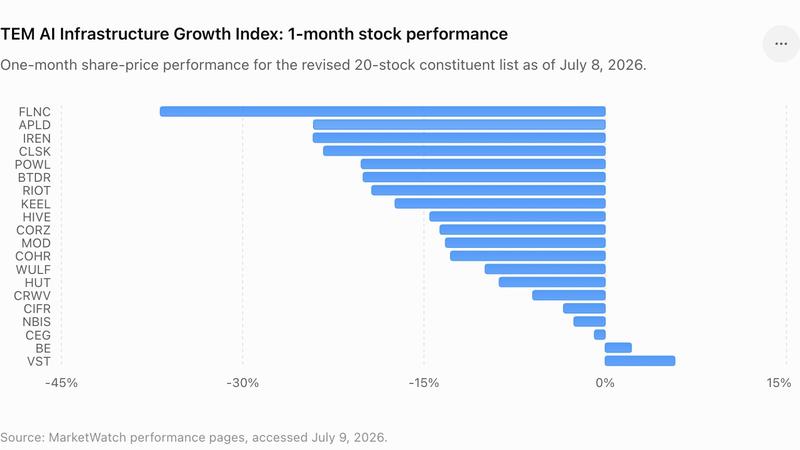
According to Blocksbridge, TeraWulf represents the most transparent illustration of this dynamic, as the organization remains among the largest beneficiaries of the shift toward AI infrastructure. Chief Executive Officer Paul Prager and Beowulf E&D Holdings, an entity under his management, disposed of approximately 1.59 million WULF shares prior to the company's Monday announcement of a 20-year AI infrastructure lease agreement with artificial intelligence developer Anthropic, a transaction that has been broadly interpreted as significant endorsement of its AI strategy.
AI spending raises questions about long-term returns
Numerous Bitcoin mining operations have reoriented their business models toward AI data center facilities as the economics of cryptocurrency mining have grown progressively more difficult, especially following Bitcoin's 2024 halving event that compressed profit margins across the industry. Nevertheless, the artificial intelligence sector has also experienced increased competition, with enterprises confronting mounting pressure from shareholders to validate substantial infrastructure expenditures against uncertain financial returns.
An analysis released by Deloitte in October characterized AI as a "paradox of rising investment and elusive returns," observing that numerous organizations anticipate AI capital allocations will require more time than originally expected to produce substantial value.
Additional research conducted by Teneo, drawing from a survey encompassing more than 350 public company CEOs, revealed that less than half of artificial intelligence programs have yielded returns that surpass their implementation costs.
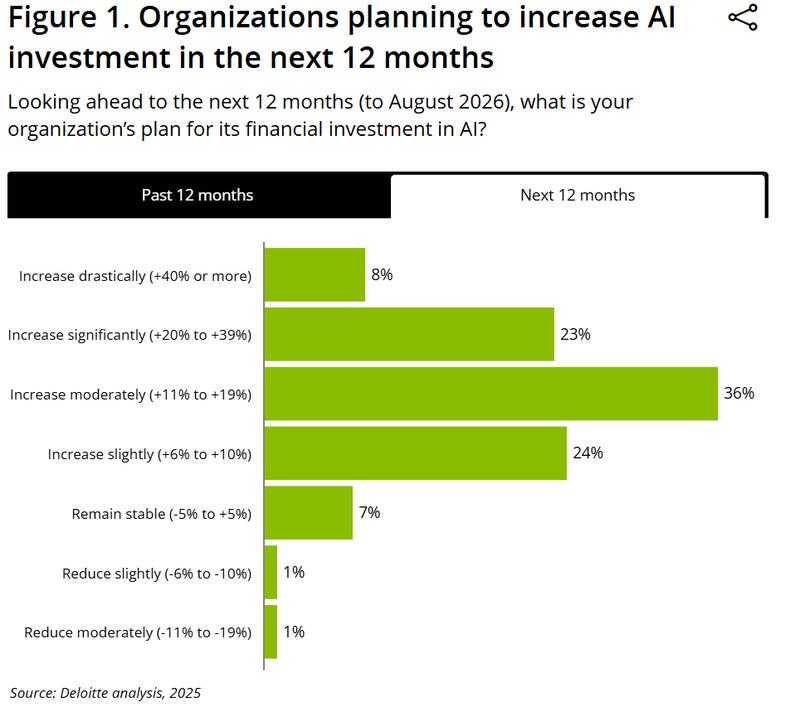
Notwithstanding these obstacles, corporations continue to allocate capital aggressively toward AI infrastructure buildouts, wagering that sustained demand for computational capacity will ultimately eclipse short-term profitability concerns.
Bitcoin mining enterprises, equipped with substantial power resources and established data center infrastructure, are strategically positioning themselves to seize this emerging opportunity.