Base network prepares to launch B20 token standard for digital assets and stablecoins
The B20 token standard is set for activation on Base this Wednesday at 6 pm UTC, providing developers with the ability to start building native tokens on the platform.

Base, the Ethereum layer-2 network supported by Coinbase, is preparing to launch its B20 token standard on the mainnet, providing developers with a built-in framework for building stablecoins, real-world asset tokens (RWAs) and various other fungible digital assets.
Base's official documentation indicates that the B20 standard is slated for mainnet deployment at 6 pm UTC, at which point developers will gain the ability to start building tokens utilizing the new framework.
Once activated, the new standard will allow developers to leverage Base's proprietary token framework for building stablecoins, tokenized real-world assets, equity tokens and additional fungible assets, eliminating the need to develop and conduct security audits on customized ERC-20 smart contracts.
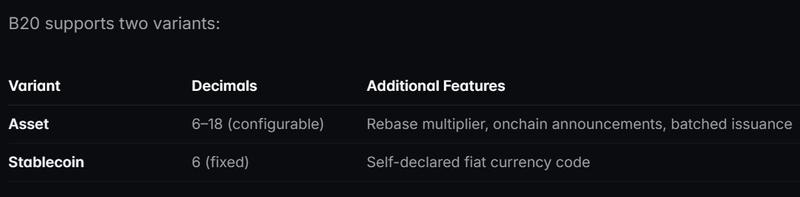
Two distinct variants are supported by the standard: one for assets and another for stablecoins. The asset version features adjustable decimal places ranging from six to 18, whereas the stablecoin version comes with a locked six-decimal structure and mandates that token issuers designate a fiat currency denomination, including options like the US dollar or euro.
The B20 standard was unveiled as a component of the network's Beryl upgrade, which became operational on June 26. This upgrade reduced the withdrawal waiting time from seven days down to five days and incorporated technical modifications designed to enhance overall network efficiency.
According to Base, B20 tokens maintain compatibility with conventional ERC-20 tokens while offering additional built-in controls for token issuers. These enhanced capabilities include the ability to set supply caps, establish transfer restrictions, perform minting and burning operations, implement pausing functionality and attach transaction notes.
B20 activation follows Base outages
The launch of the B20 standard comes on the heels of consecutive network disruptions related to the platform's sequencer infrastructure.
On June 25, the Base network experienced a service interruption stemming from a consensus-related issue. During that incident, the network reported that an invalid block had been processed by the sequencer, which prevented the creation of subsequent blocks. Block production on Base was restored the same day, following an outage that lasted approximately two hours.
In a detailed post-mortem analysis, Base revealed that a bug in the sequencer was responsible for the consecutive outages that occurred on June 25 and June 26. The initial incident persisted for approximately 116 minutes, while the second disruption lasted around 20 minutes after a race condition interfered with the sequencers' ability to synchronize following a system reset.
The first outage took place just hours prior to the planned Beryl upgrade, which was ultimately postponed by one day because of a distinct timing issue related to the B20 activation registry.