Aave V4 Expands to Avalanche Network, Paving Way for Real-World Asset Credit Infrastructure
Aave's fourth-generation protocol arrives on Avalanche in its inaugural multi-chain deployment, bringing advanced lending capabilities tailored for upcoming tokenized real-world asset markets.

The decentralized lending platform Aave has rolled out its V4 protocol on the Avalanche blockchain, representing the protocol's inaugural deployment outside of Ethereum and establishing the foundation for upcoming lending platforms backed by tokenized real-world assets.
This rollout brings Aave V4's innovative Hub & Spoke framework to Avalanche, enabling the creation of specialized lending platforms that can maintain independent collateral standards and risk management parameters while accessing unified liquidity throughout the entire protocol ecosystem.
Aave has indicated that among the initial markets planned for Avalanche will be one that facilitates borrowing against tokenized assets.
The framework has been engineered to accommodate a more diverse array of collateral options compared to earlier iterations of the protocol, according to Aave's announcement. Additionally, forthcoming specialized markets on Avalanche may include tokenized assets such as US Treasurys, money market funds, private credit and corporate bonds, with each market featuring tailored collateral requirements and distinct risk parameters.
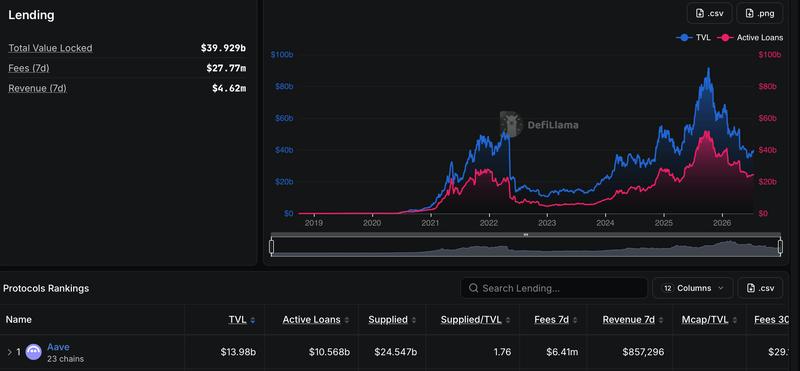
With almost $14 billion in assets distributed across 23 blockchains, Aave holds the position as the largest decentralized lending protocol measured by total value locked, based on DeFiLlama data.
Tokenized assets move beyond issuance
This deployment arrives amid rapid development by financial institutions and blockchain companies in building infrastructure and establishing partnerships that enable tokenized assets to serve as collateral throughout both traditional and decentralized finance ecosystems.
Franklin Templeton entered into a partnership with Binance in February, enabling institutions to utilize tokenized money market fund shares as off-exchange collateral while maintaining the underlying assets under regulated custody.
In the month that followed, Nasdaq revealed intentions to merge its collateral management platform with Talos' digital asset infrastructure, aiming to optimize institutional workflows for managing tokenized collateral. This integration seeks to unify collateral management, risk monitoring and trade surveillance into a single platform designed for institutional digital asset trading.
Market infrastructure providers have similarly made their entry into this space. DTCC announced in May that it would incorporate Chainlink technology into its tokenized collateral platform to enable near real-time movement, valuation and settlement of tokenized collateral in preparation for a fourth-quarter launch that is currently planned.
Most recently, the momentum has extended into institutional lending. Grove announced on Wednesday a $500 million warehouse lending facility in partnership with Galaxy Digital to fund institutional crypto-backed loans utilizing blockchain-based infrastructure.
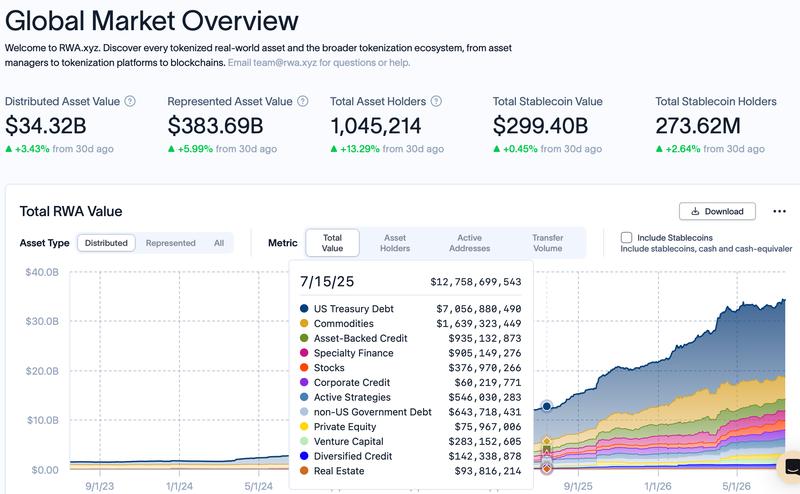
Real-world assets that have been tokenized represent one of the most rapidly expanding sectors within the digital asset industry. Data from RWA.xyz shows that more than $34 billion worth of real-world assets are currently tokenized on public blockchains, representing a significant increase from approximately $12.8 billion a year ago.