$50M Investment by Aptos Foundation and Labs Targets AI Agent Infrastructure Development
According to the Aptos Foundation, developing infrastructure capable of achieving sub-second finality with zero human intervention requirements represents a critical component for facilitating the upcoming surge in AI agent adoption.

A joint investment of $50 million has been pledged by Aptos Foundation and Aptos Labs toward Aptos development initiatives, placing particular emphasis on infrastructure and research for AI agents, which includes backing for two solutions they released in the previous year to address growing demand for AI agent activity on the blockchain.
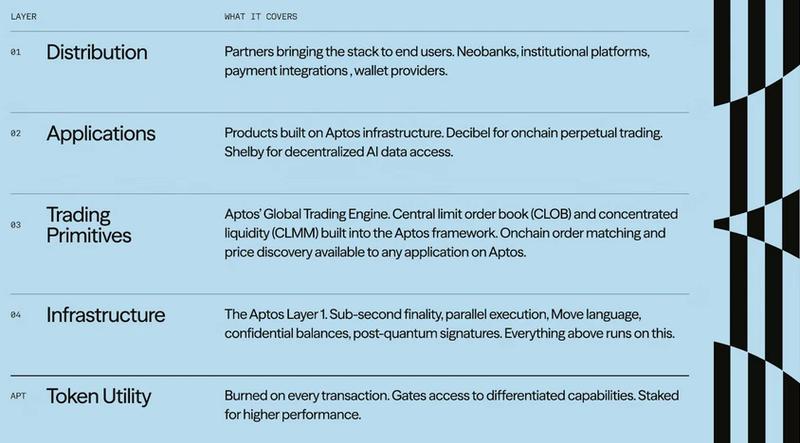
The two solutions encompass Decibel, which is an AI-driven onchain order book and perpetuals exchange that went live on Aptos mainnet during February, alongside Shelby, a storage protocol operating in a decentralized manner designed to handle the workloads generated by AI agents, according to Thursday's announcement from the Aptos Foundation.
"Autonomous agents are already transacting onchain at frequencies no human can match, routing to whatever venue is fastest, most consistent, and least gameable," the foundation stated.
The move positions Aptos among an expanding list of cryptocurrency protocols pursuing opportunities within the agentic AI economy space. According to Aptos, there exists a critical need for infrastructure development that provides sub-second finality alongside systems capable of operating "24/7 with no human to escalate to."
In the previous month, Brian Armstrong, CEO of Coinbase, forecasted that "more AI agents transacting online than humans very soon" would become reality, mirroring statements made by Circle CEO Jeremy Allaire during January when he suggested that "literally billions of AI agents" would conduct transactions onchain within a three to five year timeframe.
The World Economic Forum also anticipates significant growth in this sector, having issued a January prediction that the AI agent market could reach $236 billion by 2034, representing a 43-fold increase from the $5.4 billion market size recorded in 2024.
Blue-chip stablecoins serve as transaction medium for AI agents
Amazon Web Services announced on Wednesday that it had incorporated Coinbase's x402 payments protocol into Amazon Bedrock AgentCore, enabling AI agents to execute USDC (USDC) payments and utilize services via AWS-managed payment controls.
One week prior to that announcement, Oobit, a cryptocurrency wallet startup, unveiled a Visa-backed virtual card designed for AI agents to conduct online purchases using USDt (USDT) on behalf of business entities.
According to the foundation's statement, the Aptos (APT) token is positioned to serve a pivotal function within the ecosystem's AI agent economy through multiple mechanisms: being burned during transactions, serving as a requirement for accessing advanced AI agent features, and being staked to enhance performance.
The foundation indicated that the $50 million in funding would additionally support development of other components within the "Aptos stack," encompassing integrations with neobanking services, institutional platforms and wallet providers.
Additional plans for Aptos include developing encrypted mempools and providing confidential perpetuals trading capabilities, among other initiatives.
Privacy-focused coin deployment by Aptos occurred last month
In related developments, Aptos deployed a privacy-oriented coin — Confidential APT — on the Aptos mainnet on April 24 as part of an initiative to resolve a persistent trade-off between safeguarding user privacy while maintaining transparency necessary for compliance purposes.
In an interview with Cointelegraph, Sherry Xiao, founding engineer at Aptos Labs, explained that Confidential APT has the potential to assist businesses in concealing employee salaries paid onchain, in addition to hiding treasury movements, settlement flows and trading strategies that would otherwise be visible to competitors.