Veteran Bitcoin Holders Offload $271M: Could This Threaten the Bull Run?
Long-term Bitcoin holders disposed of approximately $270 million worth of BTC over the weekend, though consistent buying pressure from market participants may enable bullish forces to sustain current price momentum.

According to recent data, Bitcoin (BTC) holders who maintained their positions for more than seven years engaged in profit-taking activities last week, selling off $271 million worth of BTC.
A comparable pattern of selling activity from these "OG whale" investors occurred in January, which coincided with weaker market conditions characterized by insufficient buyer demand, resulting in a significant drop in BTC prices. Contemporary onchain metrics reveal a considerably more resilient market environment where robust BTC supply absorption coupled with diminished selling pressure could enable Bitcoin to sustain its position within the $70,000-$72,000 price corridor.
OG Whale BTC supply meets strong absorption
According to information from Capriole Investments, the Bitcoin "OG whale spent value" registered approximately $271 million in movement on Sunday. This represents the most substantial increase in activity for this investor group since Jan. 10, when a $280 million outflow surge foreshadowed a 13% price correction down to $78,700 from $90,000 over the subsequent two-week period.
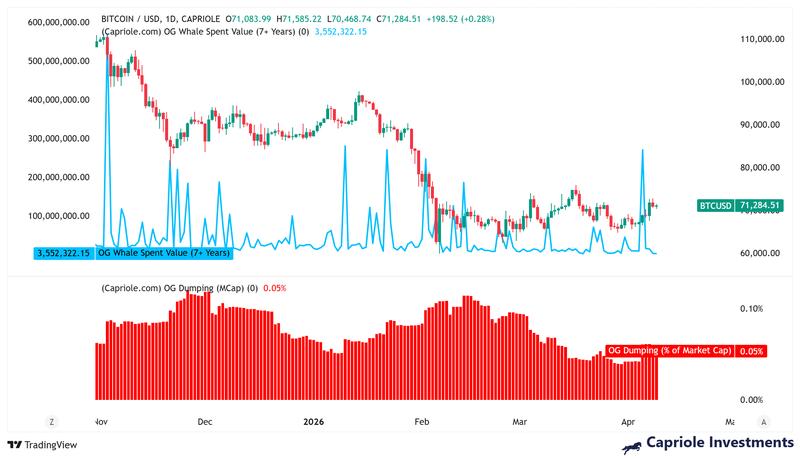
Although the whale activity might trigger apprehension among market participants, this type of behavior has historically been consistent with calculated profit-taking strategies rather than panicked or disorderly selling.
Data from Glassnode points toward enhanced absorption capabilities from other market participants. The metrics indicate that the 30-day net position change for long-term holders stayed positive at 88,000 BTC as of April 9. This represents a turnaround from significantly negative flows of -152,000 BTC that were documented in February, alleviating the previous overhead supply pressure.
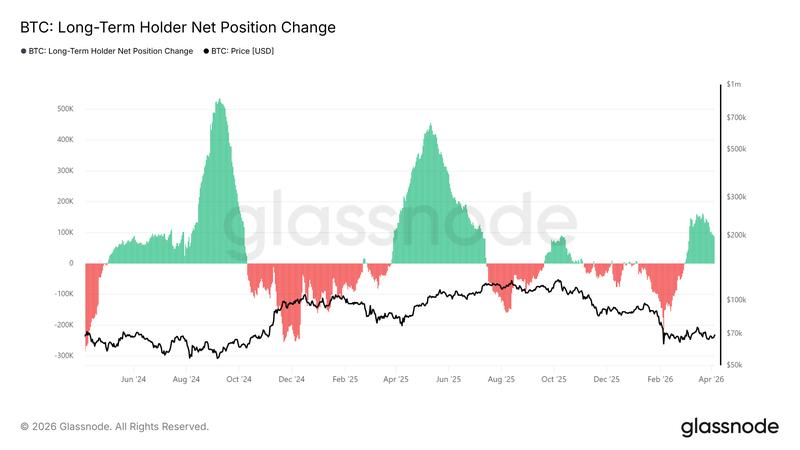
The accumulating investor groups also maintained their expansion of holdings. Cointelegraph previously reported that the aggregate balance surpassed 4.3 million BTC on Tuesday, subsequently climbing to 4.5 million on Thursday.
This demonstrates an ongoing transfer of cryptocurrency units into more resilient hands, thereby diminishing the influence of selling activity from older wallet addresses.
Bitcoin "stress cycle" has not reversed yet, says analyst
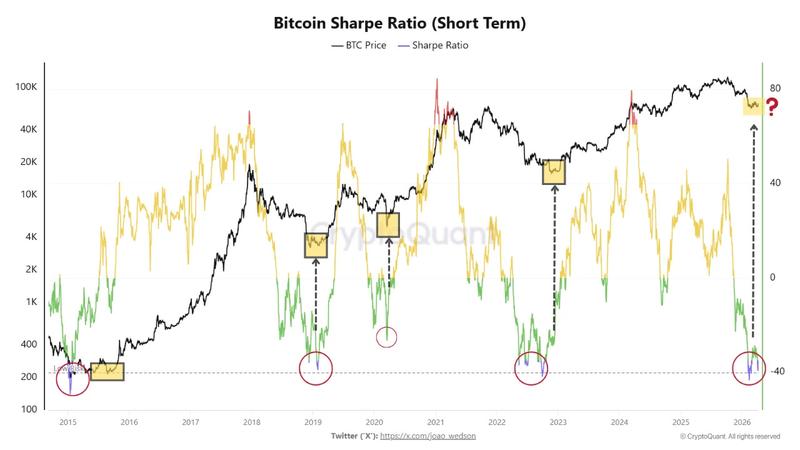
Analyst MorenoDV from CryptoQuant identified two critical indicators that are influencing the current BTC market positioning. The short-term Sharpe Ratio has declined to -40, a threshold that has historically been linked to significant accumulation phases during 2015, 2019, 2020, and 2023.
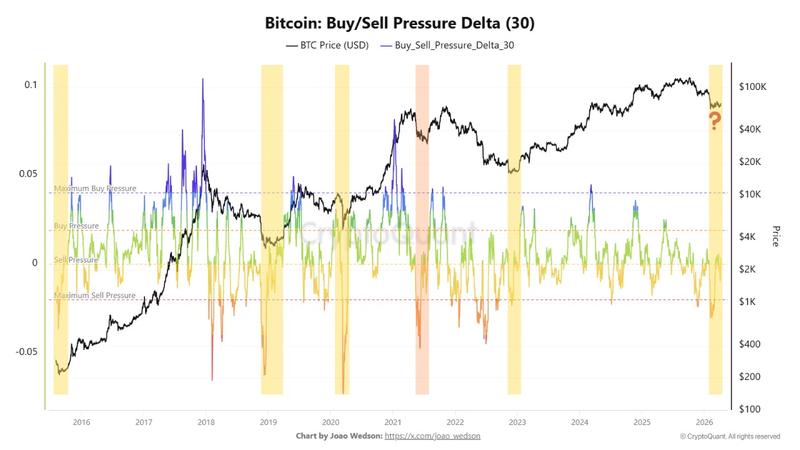
Concurrently, the buy-and-sell pressure delta (30) suggests a finalized capitulation phase, characterized by significant sell pressure falling below -0.05. The indicator is currently transitioning toward neutral territory, demonstrating that forced selling has subsided while buying demand progressively strengthens.
Historical cycle patterns demonstrate that the most significant asymmetry develops once the delta returns to confirmed buy-pressure zones. The present readings are positioned between exhaustion and validated demand recovery.
The analyst emphasized that macro conditions and liquidity flows remain influential factors shaping the pace of this transition, adding,
"For investors with a cycle-aware framework, the data suggests we are closer to the beginning of an opportunity than the end of one."