The Evolution of Memecoin Promotion: From Digital Hype to Physical Consequences
Memecoin promotional strategies are crossing dangerous boundaries, with campaigns escalating from digital engagement to dangerous real-world stunts including alcohol challenges and permanent body modifications.
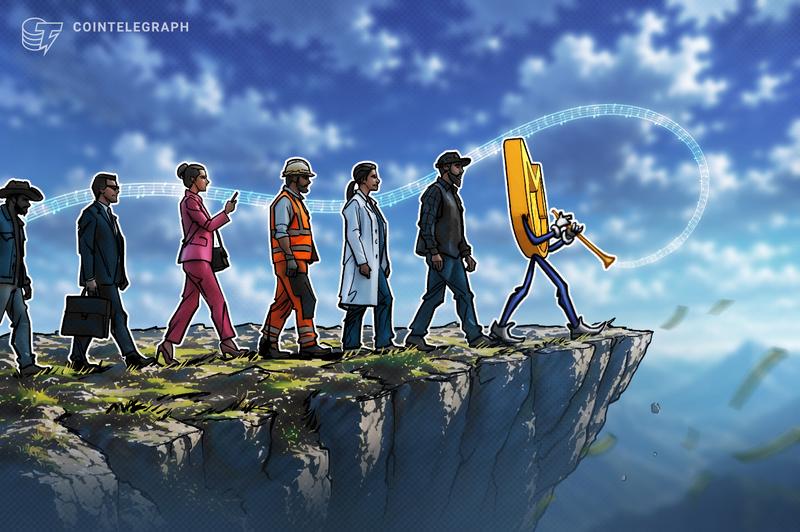
The shift from digital promotion to physical stunts
The memecoin sector has never claimed legitimacy through conventional means. While traditional blockchain ventures typically market themselves through commitments to enhanced transaction speeds, improved network scalability, or innovative decentralized applications (DApps), memecoins derive their attraction from comedy, ridiculous concepts, and digital community trends.
An image of a canine companion can transform into a multi-billion-dollar digital commodity. A single amphibian illustration can spark widespread trading frenzy. Online communities unite around common inside jokes, memorable phrases, and shared enthusiasm, frequently with minimal reasoning beyond the momentum of collective involvement.
Throughout most of their history, memecoins remained confined to digital spaces. The primary dangers were monetary in nature. Market participants risked losing capital while pursuing price movements, yet the memes themselves seldom extended beyond digital platforms and exchange platforms.
This separation is beginning to erode.
Recent scandals involving Pump.fun, a token creation platform built on Solana, indicate that memecoin advertising strategies may be shifting toward more concerning territory. Individuals have allegedly received digital currency compensation for performing acts such as shaving their entire heads, consuming excessive quantities of alcoholic beverages, and permanently marking their skin with token symbols through tattoos.
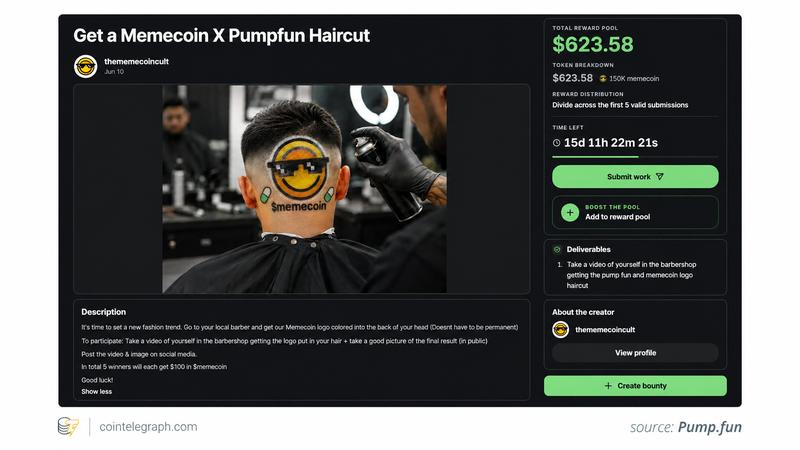
The question of whether this represents an innovative approach to community building or a concerning indicator of attention economy dynamics requires careful examination.
The attention-driven foundation of memecoin economics
Memecoins operate without requiring robust technological frameworks or well-defined practical applications to draw in purchasers. Their worth frequently derives from something more fundamental: the quantity of individuals observing, distributing, and discussing them.
The majority of cryptocurrency projects attempt to justify their valuation through practical applications, including novel technological solutions, enhanced performance capabilities, or innovative financial frameworks. Memecoins function according to different principles.
Their market capitalization relies predominantly on public awareness.
Dogecoin, created as a parody in 2013, evolved into among the planet's most valuable cryptocurrencies primarily through grassroots support and high-profile endorsements. PEPE extracted its power from viral digital culture. BONK gained traction through enthusiasm within the Solana network. Innumerable additional tokens have experienced dramatic rises and spectacular failures based solely on collective energy.
This characteristic does not automatically render memecoins fraudulent. Financial markets have historically attributed worth to intangible assets, including brand recognition, narratives, and cultural significance. However, it does indicate that visibility serves as the limited commodity upon which all other factors rely.
Within memecoin trading environments, visibility draws market participants. Market participants generate trading volume. Trading volume can drive valuations upward. Increasing valuations capture additional visibility. The pattern becomes self-reinforcing. While the dialogue persists, the digital asset maintains viability.
Did you know? Decades before cryptocurrency emerged, radio broadcasting companies employed outlandish marketing tactics to capture listener attention. Certain unusual competitions allegedly resulted in physical harm, demonstrating that the pursuit of public awareness has historically involved concealed dangers.
Pump.fun's transformation of token launch dynamics
Pump.fun revolutionized memecoin deployment by enabling quicker, more affordable, and more accessible launches for users without technical expertise.
Creating a token previously demanded programming expertise, promotional infrastructure, and initial funding. Pump.fun streamlined that entire workflow. Using minimal financial resources, virtually anyone could deploy a token in mere moments.
The consequences were substantial. Reportedly, millions of tokens have been deployed via the service. Advocates interpret this as significant progress toward democratized participation.
Nevertheless, democratized access also generated unexpected complications.
When essentially anyone can deploy a memecoin, differentiation becomes the primary hurdle. Token creation no longer represents the central barrier. Visibility does.
This dynamic elevated promotional activities to among the most critical components of the memecoin marketplace. In environments constructed around visibility, competitive pressures frequently escalate toward increasingly extreme conduct.
Compensating individuals for viral content creation
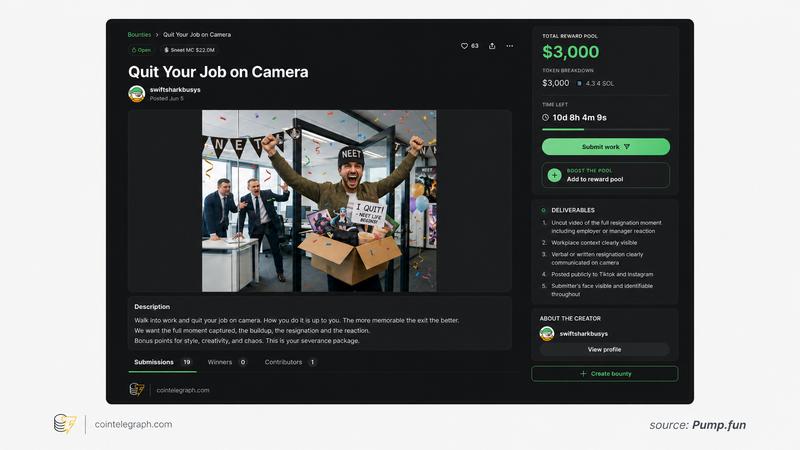
Pump.fun's GO bounty platform transformed memecoin advertising into a more explicit transaction. It enabled participants to compensate others for marketing activities, including attention-seeking stunts designed to generate widespread engagement.
The concept was straightforward. Participants could propose compensation in return for advertising tasks. Certain assignments were relatively benign. Others ventured into more problematic domains, with contributors accepting payments that required shaving their scalps, consuming alcohol while being filmed, and executing progressively outlandish public displays.
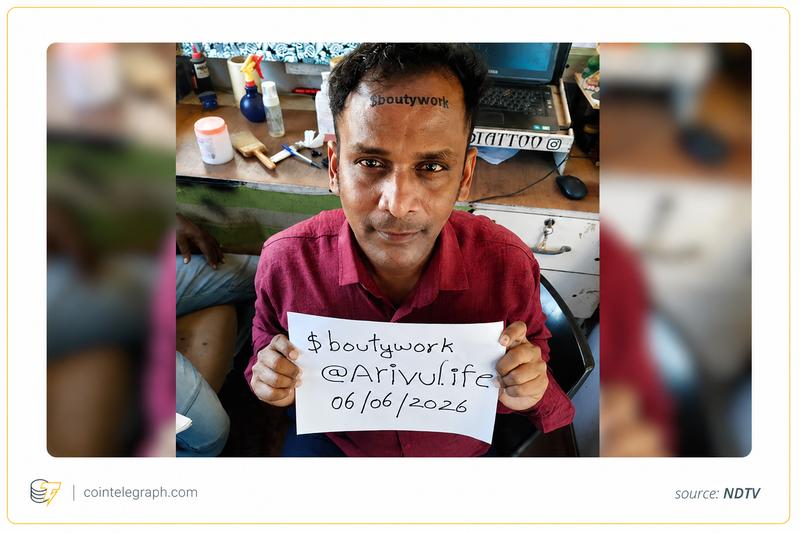
Among the most extensively circulated instances involved Arivu, an individual residing in Tamil Nadu, India. He permanently inked the ticker symbol "$boutywork" on his forehead while attempting to fulfill a bounty requirement. The incident contained a peculiar irony: The ticker symbol itself included a misspelling.
What began as a marketing action transformed into an irreversible physical alteration connected to a fleeting digital phenomenon. Market speculators continued trading on the associated tokens. The internet community shifted attention to subsequent distractions, yet the tattoo persisted.
Did you know? The concept "meme" originated with evolutionary biologist Richard Dawkins in 1976 to characterize how concepts propagate through societies. Digital memes subsequently gained sufficient influence to impact economic markets.
The economic logic behind extreme promotional behavior
Initially, these incidents may appear merely ridiculous. What would motivate someone to irreversibly alter their physical appearance or accept genuine hazards to advertise a speculative digital token?
The explanation resides in attention economics.
Digital audiences acclimate rapidly. Content that provokes responses today can appear mundane tomorrow. Social media personalities and marketing professionals recognize this dynamic thoroughly. To remain noticeable, content producers frequently experience pressure to escalate their approaches.
Increasingly extreme conduct can produce more powerful reactions. More powerful reactions can result in broader dissemination. That expansion, consequently, captures additional visibility. In memecoin trading environments, visibility can immediately influence market activity.
Public criticism can also function as advertising. Individuals who condemn extreme publicity stunts may nevertheless magnify them through sharing images, publishing analyses, and sustaining the discussion. The stunt integrates into the token's character. In certain instances, the controversy may constitute the intended outcome from inception.
Creator incentive structures driving speculative risk-taking
Contemporary memecoin culture currently resembles a combination of reality programming and high-stakes digital speculation. Contributors are not exclusively pursuing financial profits. They are simultaneously competing for social visibility, where viral status itself can represent a form of capital.
Multiple psychological mechanisms help illuminate this conduct.
The initial factor is disproportionate potential gains. A comparatively modest sacrifice can appear justifiable when even a minimal probability exists for substantial financial compensation.
The subsequent factor is economic necessity. For individuals confronting genuine financial difficulties, cryptocurrency rewards can appear considerable relative to regional income levels.
Third, digital celebrity possesses independent worth. A viral incident can generate followers, authority, and subsequent possibilities that extend beyond any individual token.
Finally, the anxiety of exclusion can exert powerful influence. When individuals observe others obtaining visibility and potential compensation, they may disregard hazards they would ordinarily approach with prudence.
None of these motivational factors are exclusive to cryptocurrency. What cryptocurrency contributes is velocity and speculative concentration. Combined, they can amplify each of these dynamics substantially.
Innovative community engagement or manipulative exploitation?
Advocates of these methodologies contend that detractors are exaggerating the problem. From their perspective, involvement is consensual.
Individuals frequently embrace risk in return for compensation, visibility, or amusement. Reality program participants engage in degrading competitions. Social media personalities endorse questionable merchandise. Professional competitors risk severe injuries for earnings and fame. The position is that cryptocurrency bounties should not be regarded as fundamentally distinct.
This perspective contains certain validity. Not every bounty is predatory. Community-led initiatives can also be inventive, entertaining, and collaborative. Certain memecoin communities capture attention specifically because they oppose conventional commercial advertising.
Detractors, nevertheless, perceive a more nuanced situation. Consent is not invariably straightforward, and economic pressure can compromise decision-making. Contributors may undervalue extended consequences when immediate compensation is presented before them.
Platforms may also profit indirectly from the elevated interaction and market activity that provocative material generates. Audiences, simultaneously, may begin anticipating larger and more dangerous stunts to sustain interest.
This creates an uncomfortable moral dilemma: At which threshold does consensual involvement transform into exploitation?
Recurring patterns within cryptocurrency culture
The present controversies are not completely unprecedented. Pump.fun has encountered criticism previously regarding its video streaming capabilities. Reports indicated that certain creators employed increasingly extreme conduct to capture investor and viewer attention.
This purportedly encompassed sexually graphic material, intimidating conduct, and additional sensational performances intended to boost token visibility. The service subsequently paused livestreaming before reintroducing it with content moderation protocols.
The overarching pattern is recognizable. Novel formats capture audiences. Competition intensifies. Contributors escalate their conduct further to differentiate themselves. Public criticism accumulates, and platforms implement stricter regulations in response.
This sequence has occurred repeatedly throughout television broadcasting, social platforms, and influencer culture. Cryptocurrency may simply be replicating a recognizable pattern, with token-based rewards adding another motivational dimension.
Did you know? Behavioral economics researchers have discovered that social validation can profoundly affect choices. When individuals observe others participating in risky trends, they may perceive those hazards as less significant and become more inclined to replicate them.
The ambiguous regulatory landscape
These developments present challenging questions for regulatory authorities. Bounty schemes are not readily classifiable.
Based on their configuration, they might be interpreted as advertising initiatives, promotional competitions, casual employment arrangements, high-risk compensation structures, or phenomena that existing legislation was not constructed to address.
Consumer protection agencies may question whether contributors are adequately informed about the hazards. Labor oversight bodies may evaluate whether individuals motivated by economic necessity warrant additional protections. Securities enforcement agencies could investigate whether token-based compensation alters the legal characterization of promotional activities.
The conclusions are expected to vary across different legal jurisdictions.
Absent more explicit guidelines, platforms may encounter an extended period of regulatory ambiguity.
Uncertain trajectories for memecoin promotional strategies
Optimistic observers interpret recent incidents as exceptional aberrations rather than indicators of a broader pattern. They maintain that the framework can still evolve positively.
According to this perspective, bounty mechanisms could develop into more beneficial modes of community participation. Properly designed bounty frameworks could incentivize creativity without promoting harmful conduct.
Alternative viewpoints anticipate the contrary. They maintain that competition for visibility will persistently drive contributors toward increasingly dangerous actions until a severe incident compels substantial regulatory intervention.
The most probable result may occupy intermediate territory. Platforms may implement more rigorous content oversight policies. Certain categories of challenges may be prohibited entirely. Communities may also reject approaches they recognize as exploitative.
Eventually, the marketplace may determine where audiences establish boundaries.