New York Times Brings Adam Back Speculation Back to Forefront in Search for Bitcoin's Mysterious Founder
An investigation by The New York Times suggests Adam Back could be Satoshi Nakamoto, though the Blockstream CEO has refuted the claims and skeptics argue conclusive evidence remains absent.

On Wednesday, The New York Times released an investigative piece suggesting that the British cryptographer Adam Back, creator of Hashcash, represents the most probable candidate operating under the Satoshi Nakamoto alias that Bitcoin's founder employed.
Back has refuted this assertion, informing Cointelegraph that he was directing journalists to his statement on X following his previous rejections of comparable efforts to link him with Satoshi. In his post, Back restated his position that he is not Satoshi, further explaining that he "was early in laser focus on the positive societal implications of cryptography, online privacy and electronic cash, hence my ~1992 onwards active interest in applied research on ecash, privacy tech on cypherpunks list which led to hashcash and other ideas."
John Carreyrou, a French-American investigative reporter who gained prominence for his work uncovering the Theranos scandal, spearheaded the investigation. In his report, he asserts that Back, whose work received a citation in Nakamoto's Bitcoin white paper, maintained active discussions about electronic cash for an extended period, then went silent precisely when Bitcoin (BTC) made its debut, before resurfacing once Satoshi had gone dark.
The piece resurrects one of the cryptocurrency world's most enduring enigmas by positioning one of the network's earliest and most significant cryptographers as the focal point of a fresh effort to unmask Satoshi, though the evidence presented remains circumstantial in the absence of cryptographic verification.
The investigative report also relied upon stylometric examination, contending that Back's writing exhibited characteristics similar to Satoshi's, such as formatting patterns, hyphenation preferences and comparable technical terminology. However, the report stopped short of presenting this analysis as definitive confirmation.
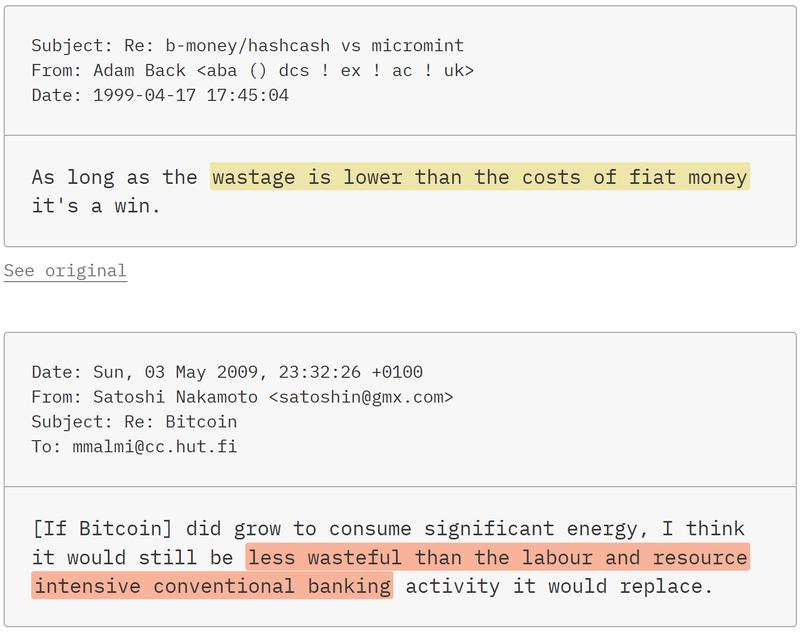
The report alleged that among contributors to the mailing lists, individuals who posted on the Cypherpunks, Cryptography and Hashcash forums, Back alone hyphenated "proof-of-work" and made reference to the relatively unknown Russian payment system WebMoney, both of which appeared in Satoshi's correspondence. Additionally, Back was identified as one of only two contributors to use "partial pre-image," matching Satoshi's phrasing, and was the sole individual to discuss "burning the money" in the context of digital currencies.
Adam Back's career mirrors Satoshi's path
According to Carreyrou, Back's professional trajectory strengthens the theory that he could be Bitcoin's mysterious creator. He observed that Back initially steered clear of Bitcoin, but in 2013 suddenly became deeply involved, establishing Blockstream as a co-founder, recruiting leading developers and securing funding exceeding $1 billion.
It all seemed consistent with what Satoshi might do if he decided to reappear under the cover of his real name and take back the reins of his creation
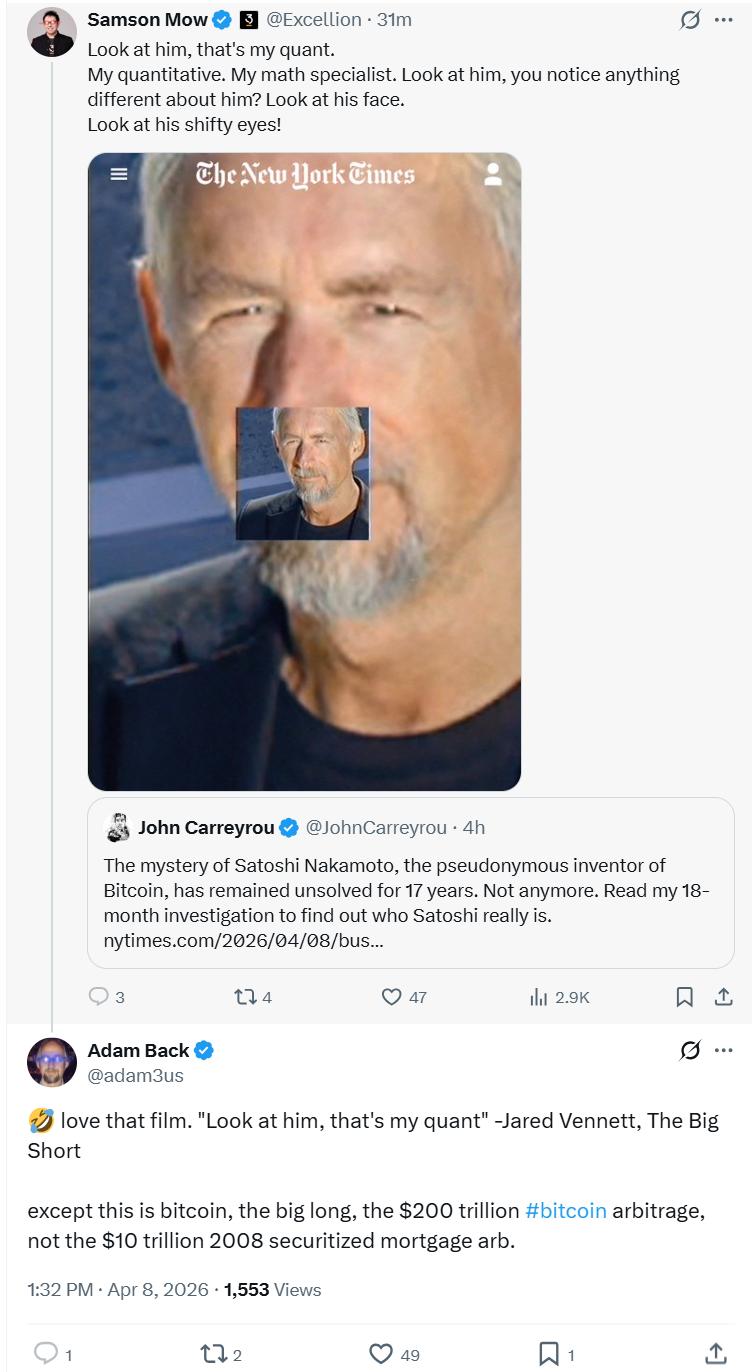
Back has maintained a consistent pattern of denying that he is Satoshi. "I'm not. But also the documentary will presumably be wrong, as no one knows who Satoshi is," he wrote in 2024 in response to an HBO documentary that identified Peter Todd as Bitcoin's pseudonymous creator. Todd also denied the claim at the time.
Crypto community remains skeptical
Members of the cryptocurrency community have expressed doubt regarding Carreyrou's recent assertion. Jameson Lopp, who serves as co-founder and chief security officer at self-custody platform firm Casa, stated that Nakamoto "can't be caught with stylometric analysis."
Carreyrou himself conceded that his findings fall short of constituting conclusive proof, noting on X that cryptographic evidence would represent the only genuine smoking gun.