Glamsterdam Fork Recovery Gets AI Agent Boost, New 'Steal My Bitcoin' Challenge Emerges: Hodler's Digest
Ethereum developers deploy AI Agent coordination platform to address Glamsterdam fork issues, mirroring Hugging Face incident tactics. Meanwhile, a new website challenges hackers to 'Steal My Bitcoin' if they're able.
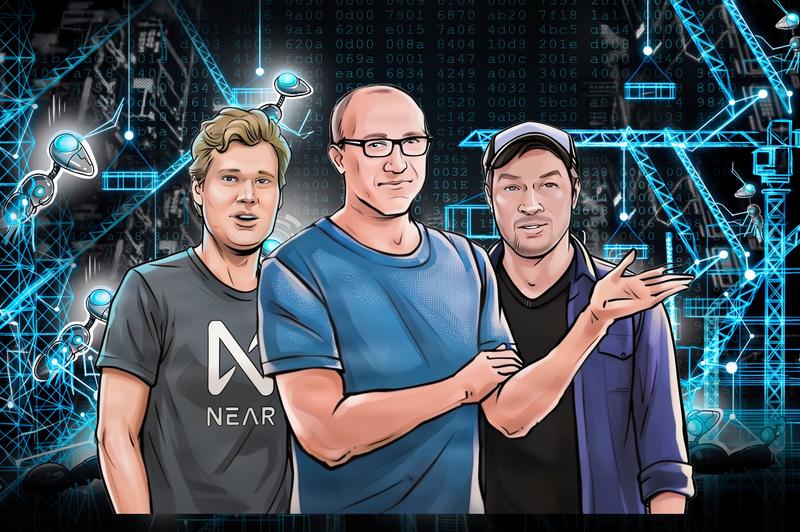
Researchers deploy AI agent coordination platform to address Glamsterdam fork complications
Ethereum's Glamsterdam hard fork saw its second and ultimate testnet iteration cancelled during the week after ChainSecurity discovered critical vulnerabilities within the gas scaling Ethereum Improvement Proposals that posed significant risks to no fewer than 13 DeFi contracts.
These security flaws were linked to EIP-8037/8038 and had the potential to break contracts that depend on current gas behavior patterns when calls exhaust their gas allocation. While technically complex, the vulnerabilities could have enabled attackers to exploit the weaknesses that would have been created.
The hard fork testnet rehearsal scheduled on Hoodi has been postponed indefinitely until researchers can fully analyze all secondary effects of the fork implementation. In a post shared on X today, Derek Chiang representing Eth Labs highlighted that the vulnerability emerged at the eleventh hour, which was far from optimal, "causing everyone to scramble to deal with the fallout."
"In the future, protocol designers would do well to conduct much more thorough analysis of potential breakages that their update might introduce, and to do so much earlier in the process."
It's challenging to understand why such comprehensive analysis wasn't prioritized initially for a blockchain processing $19 trillion in stablecoin volume annually — though it's preferable to address it belatedly than not at all. Chiang explains that teams from Eth Labs and the Ethereum Foundation had been separately utilizing AI Agents to examine contracts for security weaknesses, and upon discovering they were both implementing identical approaches they "set up a message board for their agents in the form of a github repo" to synchronize their efforts.
He drew parallels to the OpenAI <> Hugging Face hack where malicious agents established a coordination board to organize their attacks. "Well, turns out the same pattern is useful for the good agents too," he stated. The initiative has proven so effective that an additional AI Agent message board has been established to analyze the implications of EIP-8198, also known as "Quick Slots" which has been recommended for the following Hegota hard fork.
New 'Steal My Bitcoin' platform attempts to demonstrate Bitcoin's resilience against PHP2Shell vulnerability
A newly launched website that remains unpatched for PHP2Shell vulnerabilities seeks to demonstrate that a Bitcoin wallet can withstand the year's most significant cybersecurity threat. The Steal My Bitcoin platform has concealed the key to a Bitcoin wallet valued at approximately $2000 which can be accessed by the PHP user account via a binary designated print-flag.
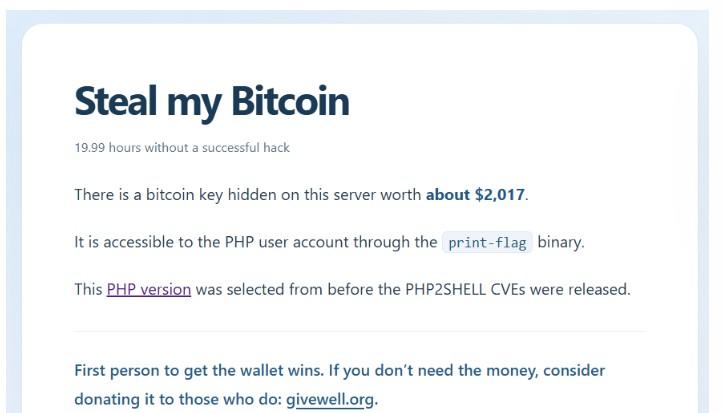
As of this writing the platform has remained operational for 25 hours without any successful breach, though it has intermittently experienced downtime due to substantial traffic and hacking attempts.
PHP represents a programming language extensively utilized for powering websites and web applications, including various content management systems. Government organizations and additional institutions across the Netherlands, Australia, Japan, Finland and other nations took websites offline on Wednesday as a preventative measure while PHP distributed emergency patches addressing two associated critical vulnerabilities. These security gaps could potentially permit unauthenticated attackers to execute code on vulnerable servers without authentication.
Alpenglow, Solana's major consensus upgrade, activates on mainnet
Solana's inaugural significant consensus upgrade, Alpenglow, became active on mainnet at approximately 1:54 pm UTC on Wednesday, based on data from the Solana Foundation's Alpenglow dashboard.
According to Agave developer Anza, the duration required for a transaction to achieve finality has decreased from approximately 12.8 seconds to roughly 150 milliseconds, representing a 99% reduction. To this point DeFi activity has remained stagnant or experienced slight declines, though the implementation remains in its early stages.
The upgrade's initial phase, Votor, substitutes the current voting and finalization mechanism with direct validator voting and a certificate-based infrastructure. The overall transaction count will decrease by approximately 60% as a consequence of these modifications. A subsequent phase will implement Rotor, a novel block data-distribution protocol designed to supersede Turbine.

StarkNet community approves research toward post-quantum L1 transformation
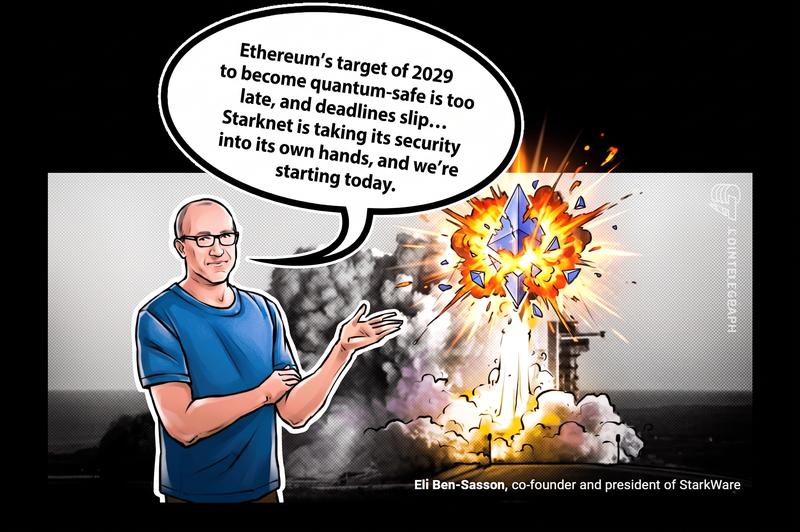
Starknet's community has cast votes supporting research initiatives to transform into an independent, post-quantum layer-1 blockchain.
The network's prospective separation from Ethereum received substantial support. The governance vote that continued for seven days concluded on Thursday. The poll attracted approximately 3,200 votes, with 93.52% of voting power supporting the transition.
The transformation itself would necessitate a separate, binding governance vote. Currently, Starknet will maintain operations as an Ethereum layer-2 network.
"We're beginning work on a whitepaper even before we start the weekend, and hope to release a draft for public scrutiny in November," StarkWare CEO Eli Ben-Sasson told Cointelegraph. StarkNet experienced the most significant decline among the top 100 coins during the week, losing one quarter of its value.
Senate Democrat investigates Tether following allegations of deal with former Trump crypto advisor
Senator Richard Blumenthal, the leading Democrat on the Senate's investigations subcommittee, has demanded information from Tether CEO Paolo Ardoino following the Wall Street Journal's report of a $6.3 million agreement with a marketing company co-founded by former White House crypto adviser Bo Hines.
In a Thursday correspondence to Ardoino, the Connecticut legislator stated that the Senate Permanent Subcommittee on Investigations required "records and information related to contracts, payments, communications, and lobbying" concerning the deal which might violate regulations surrounding ethics, corruption and lobbying. Tether maintains an external investigation "found no evidence of wrongdoing."
Winners and Losers
At the conclusion of the week, Bitcoin (BTC) is trading lower by 1.2% at $80,549, Ethereum (ETH) has declined 1.9% to trade at $2,343 and XRP (XRP) has risen 0.9% to $1.20. The total market cap stands at $2.68 trillion according to CoinMarketCap.
Among the largest 100 cryptocurrencies, the top three altcoin gainers of the week are MemeCore (M) posting a 24.4% gain, Venice Token (VVV) at 14.8%, and Ethena (ENA) at 14.1%.
The top three altcoin losers of the week are StarkNet (STRK) which declined 24.9%, Aerodrome Finance (AERO) down 12.5% and Sei (SEI) down 12.5%.
Prediction of the Week
JPMorgan forecasts Bitcoin superiority over US equities and gold in coming decade
JPMorgan Asset Management forecasts Bitcoin (BTC) will deliver superior performance compared to stocks and gold throughout the next decade, though warns that its volatility renders it inappropriate for portfolio diversification at present.
On Monday, JPMorgan released its 2027 Long-Term Capital Market Assumptions report, forecasting a 10% annualized return for Bitcoin, in comparison with 7.5% for large-cap US stocks and 5.5% for gold.
"At the moment, we do not make a case for Bitcoin as a diversifier in portfolios due to its unstable market correlations," the report said. "We see Bitcoin as a speculative asset and a hedge against monetary easing."
Top FUD of the Week
New York AG pursues $1.37B from NovaTech founders in Ponzi scheme case
New York Attorney General Letitia James has petitioned a court to mandate defunct crypto and forex trading platform NovaTech's founders, Cynthia and Eddy Petion, and associated companies to remit $1.37 billion over its Ponzi scheme.
The AG is pursuing the recovery of approximately $1.13 billion in investor funds, plus $232.5 million in interest, based on a Thursday court filing.
Over 11,000 New Yorkers suffered losses of tens of millions of dollars through NovaTech and a previous crypto mining scheme, AWS Mining, the AG's office stated. The complaint asserted that promoters specifically targeted Haitian and other immigrant communities through prayer groups, social media and WhatsApp, offering high returns and recruitment bonuses.
Bitcoin Core revises security policy citing AI's enhanced bug discovery capabilities
Bitcoin Core is modifying its approach to handling security vulnerabilities, noting that large language models have rendered certain software flaws considerably easier to identify.
Bitcoin Core developer Antoine Poinsot explained that historically, vulnerabilities were typically maintained under extended disclosure embargoes to provide users adequate time to upgrade before information became public.
Nevertheless, Poinsot indicated LLMs have rendered some flaws so simple to rediscover that postponing fixes provides minimal protection.
"The embargo period achieves little but it delays the availability of a fixed release," said Poinsot. "We are therefore updating our policy disclosure to accommodate those."
Pentagon prohibits US forces from utilizing military information for prediction market wagers
US Defense Secretary Pete Hegseth has prohibited all Pentagon personnel from leveraging undisclosed information to place wagers on future military action, including on prediction market platforms like Kalshi and Polymarket.
In a memo distributed to senior Pentagon and defense agencies on Tuesday, Hegseth stated all Department of War personnel are prohibited from engaging in financial transactions using nonpublic information. This involves both classified and unclassified information.
Top Magazine Features of the Week
5 alternatives to Ledger to store your Bitcoin
Hardware wallets aren't the only way to protect your crypto, but from ETFs and passkeys to multisig accounts, each alternative has its own risks and trade-offs.

Agents can trade 24/7 — but Yat Siu warns you could lose access at any time
The Animoca Brands chairman explains that AI agents can make trades while you sleep, but users need to plan for the day they lose access to the bots.